Algeria
 Egypt
 Libya
 Morocco
 Sudan
 Tunisia
 Benin
 Burkina Faso
 Cabo Verde
 Côte d'Ivoire
 Ghana
 Guinea
 Guinea-Bissau
 Liberia
 Mali
 Mauritania
 Niger
 Nigeria
 Senegal
 Sierra Leone
 The Gambia
 Togo
 Cameroon
 Central African Republic
 Chad
 DR Congo
 Equatorial Guinea
 Republic of the Congo
 São Tomé and Príncipe
 Burundi
 Comoros
 Djibouti
 Eritrea
 Ethiopia
 Kenya
 Madagascar
 Malawi
 Mauritius
 Mozambique
 Rwanda
 Seychelles
 Somalia
 South Sudan
 Tanzania
 Uganda
 Angola
 Botswana
 Eswatini
 Lesotho
 Namibia
 South Africa
 Zambia
 Zimbabwe
A family case, but above all a test for financial justice
In Libreville, the word “wealth” refers not only to properties in Paris or bank accounts. It also raises a broader question: how can an African state move on from a system in which the line between public wealth, political power and private interests was long blurred? The Gabonese ill-gotten assets case has brought this tension back to the fore as the country continues to seek a break with more than half a century of Bongo family dominance.
Gabon belongs to CEMAC, the Central African economic and monetary community, alongside Cameroon, the Republic of the Congo, Equatorial Guinea, the Central African Republic and Chad. In this sub-region, cross-border corruption cases are never purely national: they involve banks, property-holding companies, notaries, currency exchange networks and the credibility of financial institutions. The Gabonese case therefore goes beyond the Bongo family alone. It also raises questions about oversight mechanisms in a region where capital flows remain a sensitive issue.
What France’s financial prosecutor is seeking
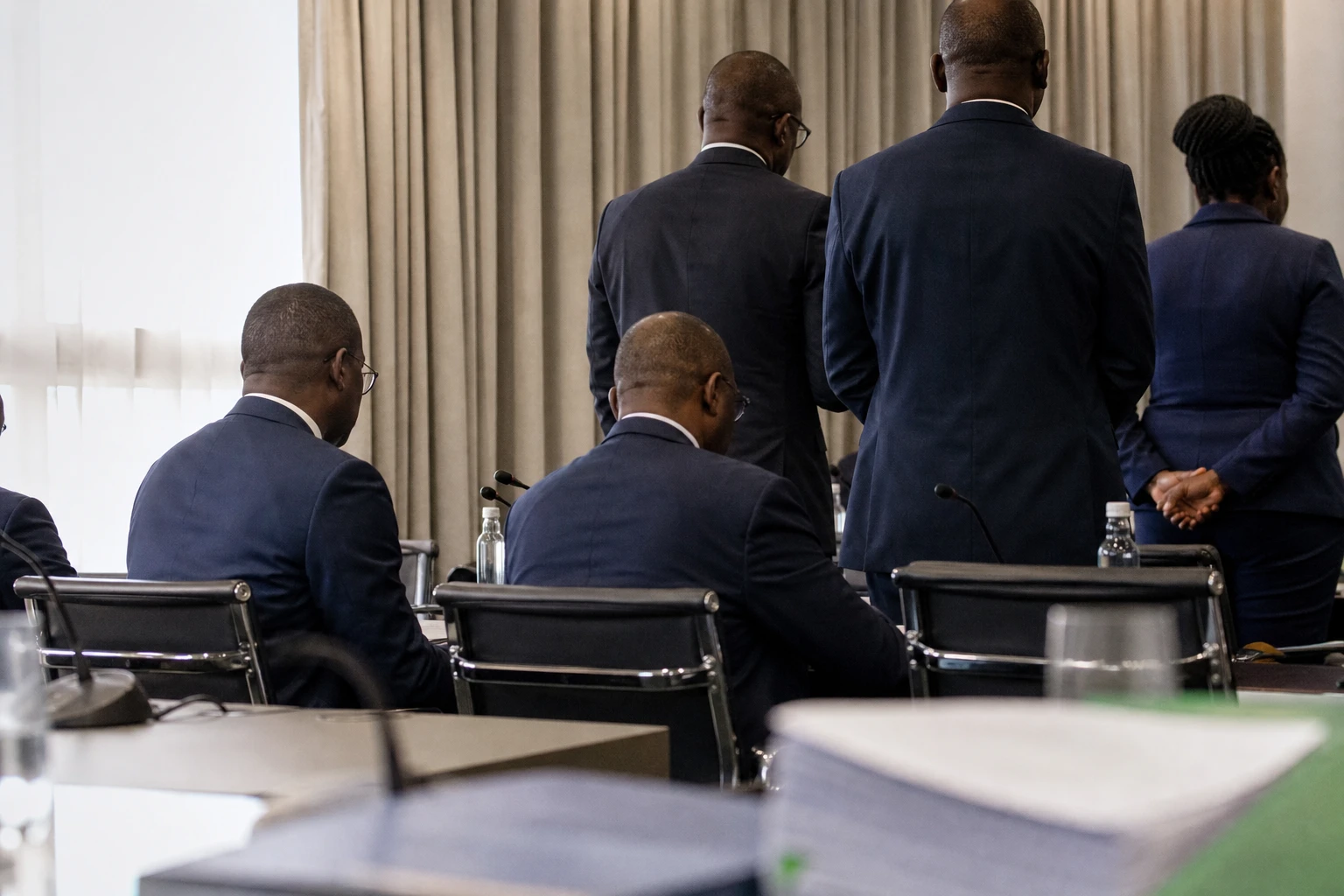
France’s national financial prosecutor has asked for 23 individuals and legal entities to stand trial, including five companies and 18 individuals, in the French investigation into Gabonese assets acquired fraudulently. Those targeted include several of Omar Bongo’s children, the First Lady of the Republic of the Congo, Antoinette Sassou Nguesso, and former Miss France Sonia Rolland, according to a judicial source quoted by AFP.
BNP Paribas is also implicated. Prosecutors allege that, between 1996 and 2008, the bank enabled at least €35 million of criminal origin to be converted through property transactions involving the Gabonese company Atelier 74. The bank denies any criminal liability. French investigators, for their part, believe Omar Bongo handed the company several tens of millions of euros in cash to buy property in France.
The case also targets well-known figures from the Bongo clan. Pascaline Bongo, Omar Bongo’s eldest child and her father’s former chief of staff, is suspected of acquiring several flats in Paris’s 8th and 16th arrondissements. Prosecutors are also seeking to send her to trial on charges of handling the proceeds of embezzled public funds, money laundering, active and passive corruption, and misuse of company assets. Antoinette Sassou Nguesso is cited in connection with a flat in the 17th arrondissement.
A total of 52 properties have been seized in the proceedings. The French investigation was opened in late 2010 following a complaint filed by Transparency International in 2007. The judicial investigation phase ended on 4 April 2025, paving the way for the prosecutor’s submissions and then a decision by the investigating judge on a possible trial, which could take place before spring 2026.
Why the case still matters in Libreville
The case touches on a central political symbol. Omar Bongo led Gabon from 1967 to 2009, after which his son Ali Bongo held the presidency until the coup of 30 August 2023. Since then, the country has been undergoing a political transition led by Brice Clotaire Oligui Nguema, who was elected in April 2025 in a vote that his supporters presented as a return to constitutional order.
In this context, the ill-gotten assets case is not merely a distant legal matter. It feeds a narrative of breaking with the old system. It also underlines that Gabon’s transition is playing out on two stages at once: at home, with promises of reform and accountability, and abroad, where the French justice system retains control over assets seized in Europe. This duality explains the case’s political significance for the authorities in Libreville, as well as for those close to the former regime.
The social dimension is just as clear. A fortune estimated by French justice officials at about €85 million represents far more than an abstract figure in Gabon. It brings to mind hospitals, schools, roads and jobs that were never created. The country remains an oil-based economy, but its recent growth also depends on infrastructure, manganese and timber. The question is whether the fight against illicit enrichment can lead to more transparent management of public resources.
A regional signal beyond the Bongo case
The Gabonese ill-gotten assets case resonates across the continent because it spans several spheres at once: Central Africa, France, European financial centres and the intermediary networks that allow public money to be moved out of its country of origin. In the sub-region, CEMAC and anti-money-laundering bodies have monitored this type of case for years, as it affects the banking system’s reputation and confidence in financial flows.
The precedent also matters. The ill-gotten assets case did not begin with Gabon: it has become an emblematic legal saga involving several African leaders, including Equatorial Guinea’s Vice-President Teodorin Obiang. This helps explain why the Gabonese case is being watched well beyond Libreville. It is a test of the ability of domestic and foreign justice systems to document questionable wealth without giving way either to impunity or to systematic political trials.
What happens next now depends on the decision of the French investigating judge. A trial is not automatic, but the prosecutor’s submissions mark a turning point. For Gabon, the challenge is twofold: to settle a difficult legacy and show that the new political phase is more than a change of face at the top. Across Africa, the case is a reminder of a simple reality: transparency about wealth is becoming as much a marker of sovereignty as a judicial requirement.