Algeria
 Egypt
 Libya
 Morocco
 Sudan
 Tunisia
 Benin
 Burkina Faso
 Cabo Verde
 Côte d'Ivoire
 Ghana
 Guinea
 Guinea-Bissau
 Liberia
 Mali
 Mauritania
 Niger
 Nigeria
 Senegal
 Sierra Leone
 The Gambia
 Togo
 Cameroon
 Central African Republic
 DR Congo
 Equatorial Guinea
 Gabon
 Republic of the Congo
 São Tomé and Príncipe
 Burundi
 Comoros
 Djibouti
 Eritrea
 Ethiopia
 Kenya
 Madagascar
 Malawi
 Mauritius
 Mozambique
 Rwanda
 Seychelles
 Somalia
 South Sudan
 Tanzania
 Uganda
 Angola
 Botswana
 Eswatini
 Lesotho
 Namibia
 South Africa
 Zambia
 Zimbabwe
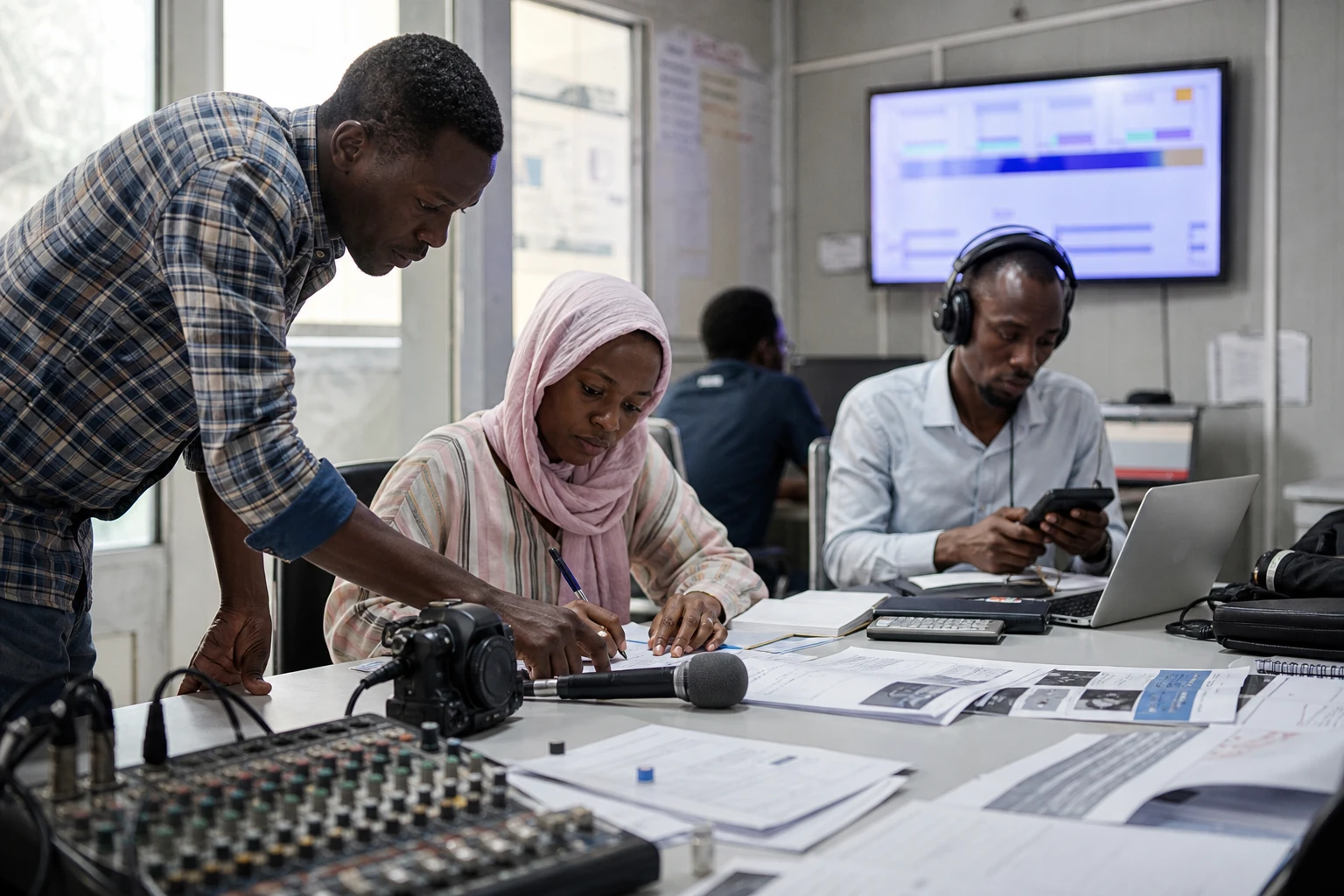
In N’Djamena, public revenue collection changes course
In Chad, the question is no longer just how the state collects its revenue. It is also how it tracks and secures it, and brings it closer to users, in a country where cash payments remain widespread and digital inclusion is advancing slowly. The authorities are now banking on practical tools: payment terminals, mobile money and connected public services.
This approach is part of a broader trajectory. In N’Djamena, the government has made digital transformation a driver of administrative modernisation, with support from the Chad Digital Transformation Support Project, funded by the World Bank. The programme aims to expand connectivity, strengthen digital public services and support digital skills, particularly among women and young people.
What the Chadian state has received
On 24 July 2026, Chad’s finance ministry received 3,000 electronic payment terminals. According to information made public, the equipment is intended to help modernise public revenue collection, improve the transparency of transactions and limit the use of cash in government payment systems. A leading local source confirmed the receipt of the terminals in N’Djamena.
The acquisition did not come out of nowhere. It extends a process that began at the start of the year, when the state issued several signals in favour of cashless payments. On 8 February 2026, a working meeting brought together the main mobile money operators in Chad, including Moov Money, Airtel Money, Konoom and Cashi Tchad, to speed up the establishment of an operational framework for digitising public-sector payment flows.
In the same vein, the finance ministry also issued an order in 2026 setting out exceptions to the requirement that spending from public funds be paid exclusively electronically. In other words, digital is becoming the rule; paper and cash must now be justified and regulated, rather than treated as the norm.
Why these terminals matter beyond the announcement
The first issue is budgetary. A payment terminal cannot by itself address the weaknesses of a tax administration, but it can reduce the scope for opacity. When a payment leaves an electronic record, it becomes easier to monitor the flow, reconcile data and limit certain revenue leakages. This is an important change for a state seeking to broaden its domestic revenue base.
The second issue is practical. For users, a payment terminal can sometimes save an unnecessary journey, a queue or a visit to a cash desk. For public servants, it can reduce the handling of cash, and therefore the risk of disputes and wasted time. For small businesses, traders and service providers, accepting electronic payments can also speed up settlement times with the state.
But the reform remains constrained by a tougher reality. Chad remains one of the continent’s least digitally advanced markets. According to the ITU, internet penetration among individuals stood at just 12.6% in 2024. The country also has 72.9 mobile subscriptions per 100 inhabitants, indicating widespread access to mobile phones, but not necessarily full and seamless digital use.
The obstacle is therefore not only technical. It is also geographical. In large cities, digital payments can spread faster thanks to network coverage, banking services and users’ familiarity with them. In the provinces, rural areas and places far from major routes, continuity of service still depends on network coverage, electricity and support for local administrations. This is precisely why the World Bank emphasises rural broadband access and public-sector digital use in the case of Chad.
A financial reform, but also a social and geographical one
This transition directly affects households, entrepreneurs and civil servants, but not in the same way. For central government, it promises better reporting of revenue. For local authorities, it could improve the traceability of local taxes. For mobile money operators, it opens up a larger market. For citizens, it could reduce the cost of making payments, provided fees remain under control and services are accessible.
Chad is not embarking on this path alone. Across the CEMAC region, the digitisation of public payments is gaining ground, driven by the growth of electronic platforms, digital treasury services and electronic payment systems. It is a regional trend, reflecting a shared logic: to track public money more closely, reduce leakages and modernise the interface between government and the real economy.
This shift also has continental significance. The African Union has for several years promoted the idea of inclusive digital transformation, while UN agencies point out that African countries remain below the global average for e-government. In this context, every successful rollout matters. It serves as a test for fragile administrations, landlocked states and countries where digital technology must contend with incomplete infrastructure.
The decisive question remains: will technology keep pace with reform? The PATN, supported by the World Bank, is specifically intended to expand connectivity, strengthen digital public services and train beneficiaries, including at least 25,000 women and girls and 2,000 people with disabilities. What happens next will show whether the 3,000 terminals received in N’Djamena become merely a political signal or the foundation of a clearer, faster and more reliable public payment chain.