Algeria
 Egypt
 Libya
 Morocco
 Sudan
 Tunisia
 Benin
 Burkina Faso
 Cabo Verde
 Côte d'Ivoire
 Ghana
 Guinea
 Guinea-Bissau
 Liberia
 Mali
 Mauritania
 Niger
 Nigeria
 Senegal
 Sierra Leone
 The Gambia
 Togo
 Cameroon
 Central African Republic
 Chad
 DR Congo
 Equatorial Guinea
 Gabon
 Republic of the Congo
 São Tomé and Príncipe
 Burundi
 Comoros
 Djibouti
 Eritrea
 Ethiopia
 Madagascar
 Malawi
 Mauritius
 Mozambique
 Rwanda
 Seychelles
 Somalia
 South Sudan
 Tanzania
 Uganda
 Angola
 Botswana
 Eswatini
 Lesotho
 Namibia
 South Africa
 Zambia
 Zimbabwe
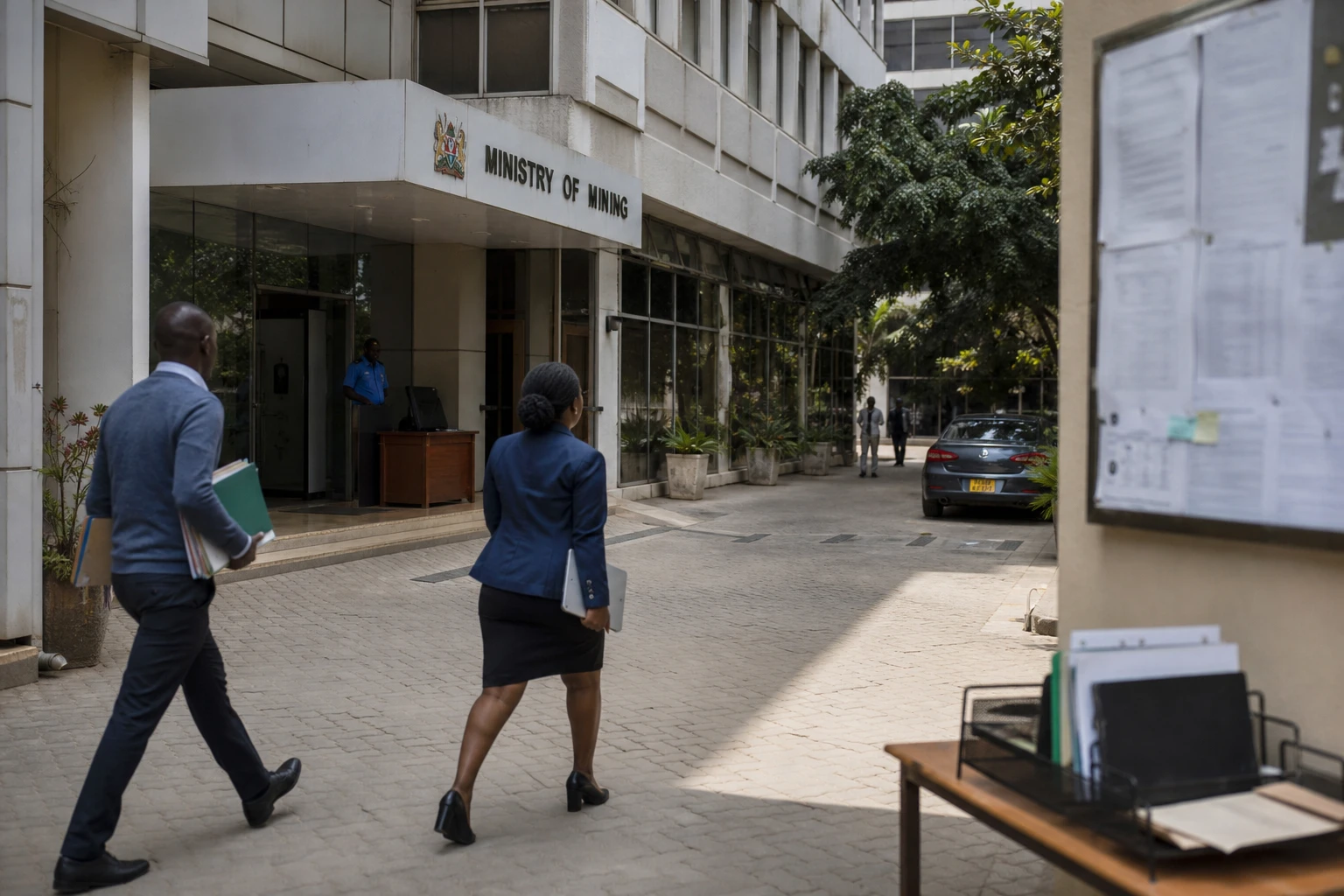
In Kwale, coveted mineral wealth becomes a test of sovereignty
On Kenya’s coast, an unassuming hill is now the focus of ambitions that stretch far beyond Kwale County. Mrima Hill is no longer merely a potential mining site: it is a project where local industrialisation, competition between powers and the promise of new revenue for Kenya intersect. In a global market shaken by the race for rare earths, the country is seeking to avoid the familiar trap of exporting raw materials.
The issue is also part of a broader regional dynamic. East Africa wants to attract more industrial value, and Kenya, a member of the East African Community, has for several years pursued a policy of moving up the value chain: explore, process, then export more higher-value products. This positioning meets a global trend reinforced by the G7, which sent multiple signals in June 2026 in favour of diversifying critical minerals supply chains.
What Nairobi has launched, and why the contest is accelerating
The Kenyan government has officially put Mrima Hills out to tender. The State Department for Mining’s file describes the area as covering 31,9300 km² in Kwale County, and targeting niobium and rare earths. Public documents show that a request for proposals for a detailed feasibility study was published as early as December 2023, followed by a call for expressions of interest in spring 2026. The closing date was set for 11am Kenya time on 21 April 2026.
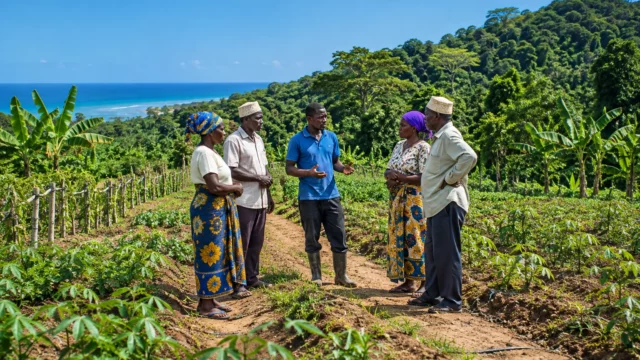
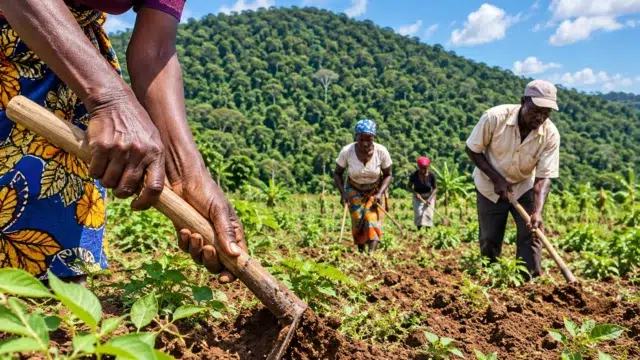
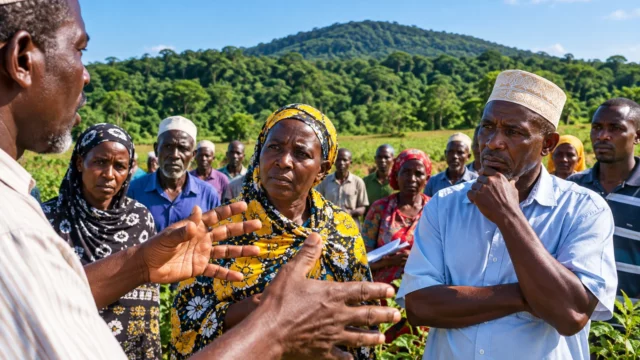
In January 2026, the ministry responsible for mining had already taken care to speak of inclusive consultations around Mrima Hills. The message was clear: the project was not to be reduced to a simple transfer of a deposit. The aim was to open a process while taking account of the expectations of local communities in Lunga Lunga, in a county where mining must contend with agriculture, pressure on land and coastal livelihoods.
Tensions escalated in July 2026. Critical Metals Corp announced on 21 July that its Mrima Earth consortium was among three finalists selected for the final stage of Kenya’s process. A few days later, Australian company RareX also said it had passed the prequalification stage. The competition is therefore no longer theoretical: Nairobi has entered a phase in which financial credibility, technical capacity and promises of local processing carry as much weight as the geology itself.
Kenya’s calculation: attract capital, but retain value locally
The central question is not simply who will extract the ore. It is where the initial processing will take place, and where the margins will be captured. President William Ruto said at the G7 summit in France in June 2026 that Kenya was close to an agreement with the United States on critical minerals, with a commitment to process resources locally. The statement immediately gave Mrima Hill diplomatic significance.
For Washington, the stakes are strategic. Rare earths and niobium feed into value chains relevant to electric vehicles, wind turbines, electronics and certain defence applications. For Nairobi, the interest is broader: attract partners, but also break with a model in which Africa exports raw materials and later buys back the finished product. Ruto’s G7 remarks pointed precisely in that direction, linking national resources with domestic processing.
The figures circulating about the site give a sense of the stakes, but should be treated as estimates. Assessments often cited in the Kenyan press put the potential value of the subsoil at Mrima Hill at about 5.4 trillion Kenyan shillings, or some $41.7 billion. The estimate has fuelled international interest, but on its own says nothing about industrial feasibility, extraction costs, energy needs or the actual profitability of a project of this kind.
The political balance of power within the country must also be considered. The government wants to appear open to investors, but it knows that sensitive mining projects are also won on the ground. In Kwale, any decision on Mrima Hill has implications for local jobs, land compensation, the coastal environment and perceptions of the state in areas that have often been left out of major national projects.
What Mrima Hill says about this moment in Africa
Mrima Hill matters beyond Kenya. The project comes at a time when several African countries are seeking to regain control over their strategic minerals. South Africa, the Democratic Republic of the Congo, Zambia and Madagascar have already shown that the contest is no longer only about the deposit, but about control of the intermediate stages: refining, separation, component manufacturing and access to finance. Kenya is now trying to enter that field, with a more ambitious industrial narrative than simple extraction.
The project’s continental significance also stems from the diplomatic context. The G7 strengthened its coordination on critical minerals in June 2026 to reduce its dependence on China, while Nairobi seeks to benefit from competition among buyers without being confined to the role of a passive supplier. If the Mrima Hill tender leads to a credible agreement, it could set a precedent for other African countries seeking to negotiate mining projects tied to local processing, rather than the export of raw materials alone.
The next steps remain. The final choice of developer will depend on the candidates’ ability to finance the operation, secure markets and present a plan for local value addition. That is where an important part of Kenya’s strategy will be decided, beyond Mrima Hill: turning a coveted resource into an instrument of industrial policy without losing control of the pace or destination of the ore.