
 Algeria
 Egypt
 Libya
 Morocco
 Sudan
 Tunisia
 Benin
 Burkina Faso
 Cabo Verde
 Côte d'Ivoire
 Ghana
 Guinea
 Guinea-Bissau
 Liberia
 Mali
 Mauritania
 Niger
 Senegal
 Sierra Leone
 The Gambia
 Togo
 Cameroon
 Central African Republic
 Chad
 DR Congo
 Equatorial Guinea
 Gabon
 Republic of the Congo
 São Tomé and Príncipe
 Burundi
 Comoros
 Djibouti
 Eritrea
 Ethiopia
 Kenya
 Madagascar
 Malawi
 Mauritius
 Mozambique
 Rwanda
 Seychelles
 Somalia
 South Sudan
 Tanzania
 Uganda
 Angola
 Botswana
 Eswatini
 Lesotho
 Namibia
 South Africa
 Zambia
 Zimbabwe
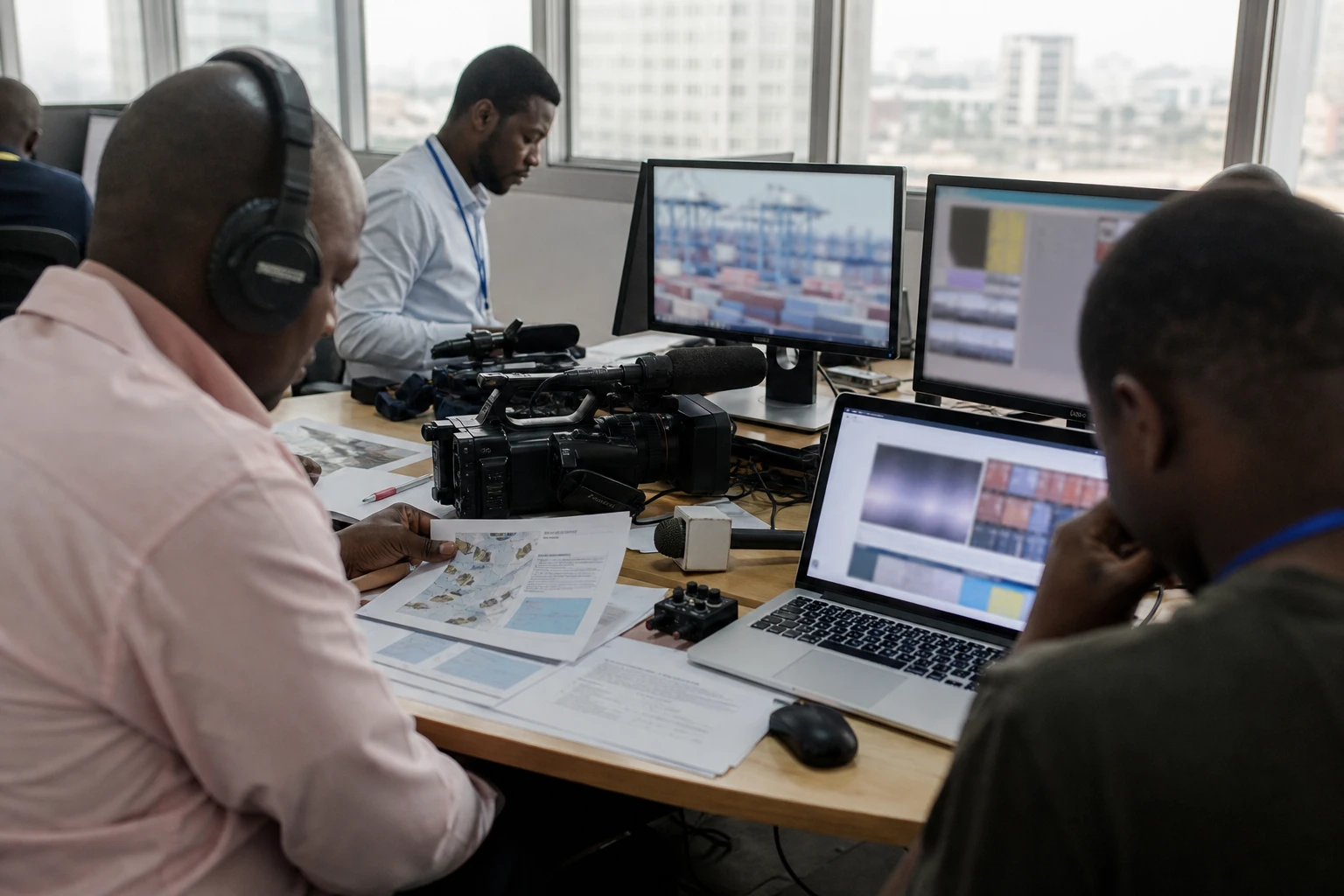
In Lagos, the anti-drug fight spills beyond the docks and affects trade
In Nigeria’s largest city, legal and illicit cargoes sometimes travel in the same containers. This is what worries the authorities: when drugs pass through Apapa or Lagos airport, they threaten not only public health. They also undermine the logistical reputation of a country seeking to attract more investment and facilitate trade.
Nigeria, whose capital is Abuja, occupies a central position in West Africa. Its ports in Lagos are at the heart of regional trade, and ECOWAS, the Economic Community of West African States, closely monitors anything affecting the security of transport chains. At this level, the issue is not only a policing matter. It also concerns the reliability of maritime corridors, the competitiveness of ports and the confidence of private-sector operators.
Massive seizures in one week, from air freight to maritime terminals
Last week, Nigerian anti-drug agencies announced several interceptions in Lagos. Drugs were found in cartons of food, among cosmetics and in vehicles used as hiding places. The total value announced by the authorities reached 10 billion naira, or several million euros at the exchange rate cited by security services.
During the same period, a shipment of opioids from India was seized at Lagos airport following intelligence work carried out with customs. Here too, the modus operandi is familiar: traffickers mix legitimate products with banned substances to reduce the risk of detection. At Apapa, Lagos’s main container terminal, more than 2,300 kilos of cannabis were also discovered in a container loaded with vehicles.
The figures circulating about this port are particularly high. Data reported in the local press indicate that more than 71,000 kilos of drugs were seized there in the first quarter of the year. A recent official note from the anti-drug agency also confirms that Apapa port remains one of the country’s main interception points, with several tonnes of cannabis known as “Canadian Loud” and other shipments intercepted in June and July. The agency detailed this series of operations on its official website.
These developments do not describe an isolated operation. Rather, they point to a deepening trend: Lagos has become a strategic hub for networks using West Africa’s sea and air routes. Traffickers exploit the density of trade, the volume of goods and the complexity of checks. The World Customs Organization has also warned that criminal networks infiltrate maritime supply chains on a large scale, often with internal complicity. For its part, the United Nations Office on Drugs and Crime says maritime routes are playing an increasingly important role in international trafficking. Ports are now considered major points of vulnerability.
Why this case goes beyond security alone
In Nigeria, the significance of these seizures extends well beyond the courtroom. Lagos’s ports handle an essential share of the country’s trade flows. When they become associated with drug trafficking, indirect costs rise: tighter checks, longer delays, higher risk premiums, pressure on freight forwarders and damage to commercial reputations. For formal businesses, this means greater uncertainty. For the informal economy, it often means greater vulnerability to criminal networks.
The problem is also political. Federal authorities want to show that they are in control of a port area where customs, police, the military, intelligence services and private operators intersect. Announcements of seizures therefore serve both to strike at traffickers and to demonstrate that agencies are working together more effectively. In Lagos, this cooperation has become a priority because the ports of Apapa and Tin Can Island remain major gateways for imports, exports and, at times, illicit cargoes.
The impact varies. For the authorities, every major seizure is a signal of capacity. For importers and exporters, it is a reminder that the supply chain can be hijacked at any time. For Lagos residents, the issue takes on another dimension: drugs also circulate in domestic markets, fuelling addiction, petty crime and the revenues of already well-organised networks. In several Nigerian states, the same routes are also used to transport cannabis, tramadol, cocaine and other synthetic substances.
The issue also affects the entire West African coastline. The ports of Lomé, Tema, Cotonou and Abidjan are seeing the same evolution in trafficking. When a major port such as Apapa becomes a hotspot, the effects ripple across the Gulf of Guinea and ECOWAS trade. Port security is therefore no longer a technical matter reserved for specialists. It has become an indicator of economic sovereignty.
A test of Nigeria’s credibility in West Africa
Nigeria wants to be seen as a commercial and logistics power in the sub-region. That requires reliable infrastructure, but also port governance capable of resisting corruption and criminal infiltration. The seizures in Lagos show that the battle is not being fought only at the borders. It is also being fought in terminals, warehouses, transit networks and loading areas.
What happens next will depend on the ability of Nigerian agencies to maintain pressure, strengthen joint work with customs and better secure cargo flows. It will also depend on the level of transparency around results, because repeated seizures alone are not enough to measure the effectiveness of public policy. What matters now is the ability to dismantle sustainably the networks using Lagos as an entry, transit or exit point to other African and international markets.
Across the continent, the stakes are clear: when a major African commercial hub strengthens its security, it protects trade, public health and the image of the entire West African Atlantic coast. Nigeria, with Abuja as its political centre and Lagos as its economic engine, therefore finds itself at a crossroads. A tough anti-drug stance has become a test of national and regional credibility.



