Algeria
 Egypt
 Libya
 Morocco
 Sudan
 Tunisia
 Benin
 Burkina Faso
 Cabo Verde
 Côte d'Ivoire
 Ghana
 Guinea
 Guinea-Bissau
 Liberia
 Mali
 Mauritania
 Niger
 Nigeria
 Senegal
 Sierra Leone
 The Gambia
 Togo
 Cameroon
 Central African Republic
 Chad
 DR Congo
 Equatorial Guinea
 Gabon
 Republic of the Congo
 São Tomé and Príncipe
 Burundi
 Comoros
 Djibouti
 Eritrea
 Kenya
 Madagascar
 Malawi
 Mauritius
 Mozambique
 Rwanda
 Seychelles
 Somalia
 South Sudan
 Tanzania
 Uganda
 Angola
 Botswana
 Eswatini
 Lesotho
 Namibia
 South Africa
 Zambia
 Zimbabwe
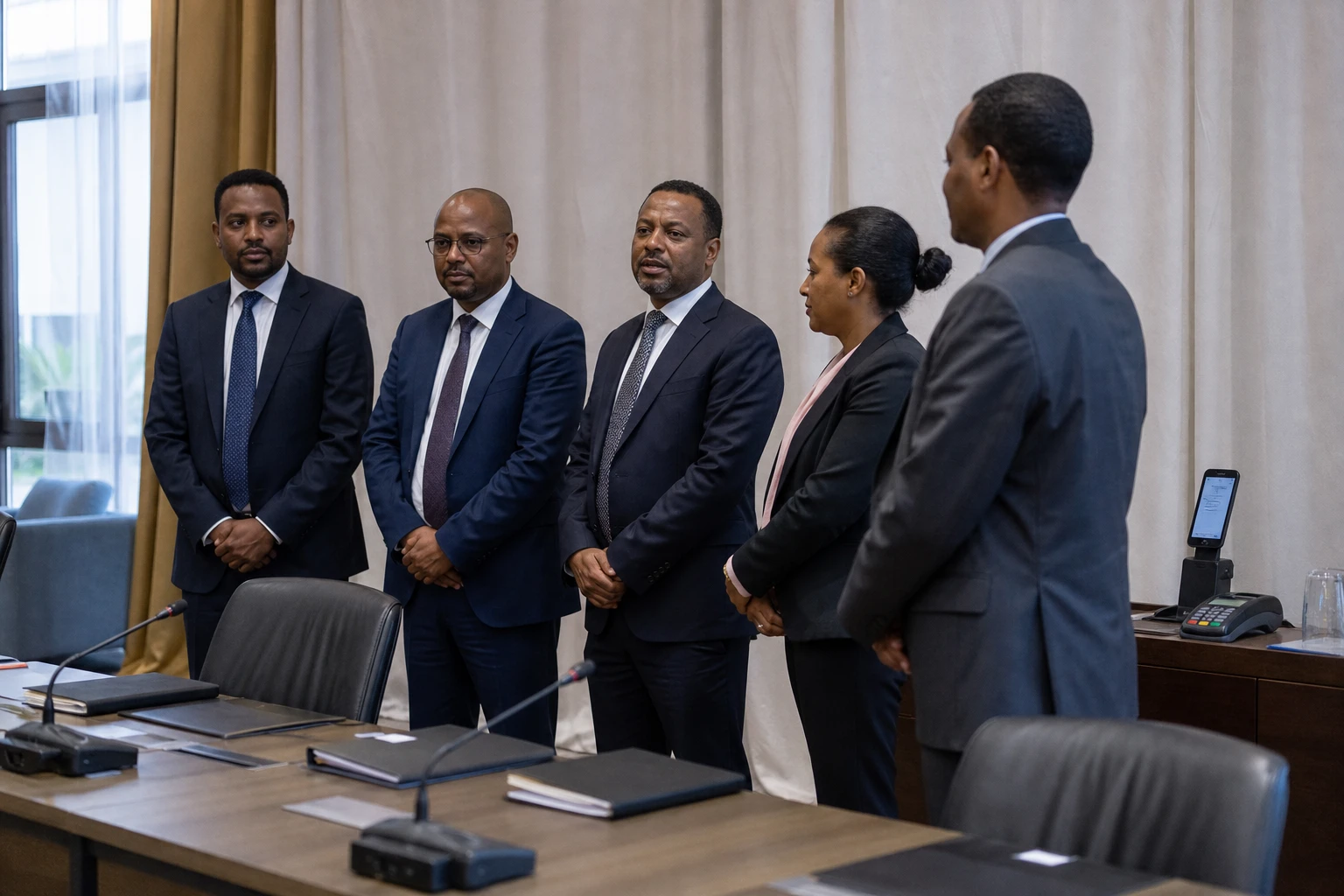
In Addis Ababa, digital growth becomes a revenue stream
In Ethiopia, the digital battle is no longer fought solely over network coverage. It is also reflected in turnover, everyday use and the ability to move money without going through a bank counter. In this shift, Ethio Telecom remains one of the country’s most influential players, connecting connectivity, mobile payments and some public digital services. The latest financial year illustrates this clearly: the state-owned operator recorded revenue of 215.82 billion birr, up 33.2% year on year, according to its annual results published in Addis Ababa.
This result says more than that one operator is doing well. It shows that in Ethiopia, the mobile phone has become an economic tool in its own right. Mobile payments, internet access and digital services now shape consumer behaviour, commercial exchanges and administrative services. This momentum forms part of the national Digital Ethiopia 2030 strategy, which builds on efforts in recent years to modernise the economy, and the growing strength of a digital market still structured around powerful public institutions.
Telebirr, 4G and the network’s role in the real economy
Telebirr remains at the heart of Ethio Telecom’s growth. The mobile payment platform has handled a cumulative 9.13 trillion birr in transactions since its launch, including 4.19 trillion in the latest financial year. The company also says its credit and microfinance services have reached 21.64 million customers, while its Zemen Gebeya marketplace generated 340.3 million birr in transactions. These figures, published by the operator and reported by Ethiopia’s official news agency, confirm that digital finance is no longer an ancillary service. It has become a revenue driver and a tool for inclusion.
This growth is part of a broader trend. The National Bank of Ethiopia has made digital payments a focus of regulation and market opening, with revised rules for mobile money operators and a national strategy being updated for 2026-2030. The framework therefore remains regulated, while encouraging greater interoperability and more digital financial services. In this landscape, Telebirr has a rare advantage: it is a payment tool, a distribution channel and a gateway to other services.
The network is following the same pattern. Ethio Telecom says it invested 76 billion birr in infrastructure during the financial year. The operator added 603 base stations, bringing the total to 10,613, and 246 new 4G sites, taking the total to 1,200. 4G population coverage is now estimated at 82.23%, up from 70.83% a year earlier. 5G is available in 33 cities. The company also says it extended connectivity to 117 rural districts, reaching around 1.5 million additional people.
These figures should be treated with caution, but they confirm a trend already visible in Ethiopia: broadband growth is accompanying the growth of mobile payments. As connectivity improves, uses diversify. As uses diversify, revenue shifts from voice to data, services and transactions. Ethio Telecom says data and internet services accounted for 31.1% of its total revenue, ahead of mobile voice at 23.5%.
What these figures mean for the state, businesses and households
For the Ethiopian state, Ethio Telecom’s performance has implications beyond the company’s balance sheet. The operator remains a pillar of public revenue and an instrument of digital policy. It supports the implementation of Digital Ethiopia 2030, as well as the more specific goal of digitising public payments, everyday purchases and some administrative processes. The fact that institutions such as the World Health Organization in Ethiopia have already switched to Telebirr for certain payments shows that the ecosystem is gaining ground beyond individual consumers.
For businesses, the stakes are different. A denser network and smoother payments reduce commercial friction, particularly in Addis Ababa and in cities where shops, services and SMEs depend on receiving payments quickly. The rise of digital services also creates new opportunities for the entrepreneurial ecosystem, particularly in e-commerce, business services and payment solutions. The agreement signed with Ericsson in spring 2026 to modernise and expand the network also confirms that the operator is seeking to stay ahead of demand for bandwidth and 4G and 5G capacity.
For households, the picture is more mixed. In urban centres, mobile payments and internet access are becoming mass habits. In rural areas, the challenge remains ensuring access to a stable, affordable and straightforward service. Ethio Telecom says it has extended coverage to 117 rural districts, signalling a commitment to narrowing the gap between the capital and the rest of the country. But digital inclusion is about more than installing masts. It also depends on the cost of devices, levels of digital literacy, network quality and trust in payment tools.
An Ethiopian trend with wider significance for the Horn of Africa
Ethio Telecom’s experience resonates beyond Ethiopia. In the Horn of Africa, the digitisation of payments and telecommunications is becoming an issue of economic sovereignty. It concerns the circulation of money, access to services and states’ ability to build resilient infrastructure. The Intergovernmental Authority on Development, which brings together countries in the region, is also promoting discussions on digital integration and regional service markets. Ethiopia, a pivotal country in the region, plays a particular role because of its population, market size and institutional weight in Addis Ababa, the seat of the African Union.
Competition also warrants close attention. The opening of the telecommunications sector in recent years has created new competitive dynamics, particularly with Safaricom Ethiopia. This competition is forcing Ethio Telecom to invest more, improve service quality and strengthen its digital offerings. At the same time, public policy aims to ensure that a more open market does not remain concentrated in a few major cities. The next test will therefore come on three fronts: network stability, the depth of digital use and the ability of telecoms revenue to finance sustainable modernisation without leaving peripheral areas behind.