Algeria
 Egypt
 Libya
 Morocco
 Sudan
 Tunisia
 Benin
 Burkina Faso
 Cabo Verde
 Côte d'Ivoire
 Ghana
 Guinea
 Guinea-Bissau
 Liberia
 Mali
 Mauritania
 Niger
 Nigeria
 Senegal
 Sierra Leone
 The Gambia
 Cameroon
 Central African Republic
 Chad
 DR Congo
 Equatorial Guinea
 Gabon
 Republic of the Congo
 São Tomé and Príncipe
 Burundi
 Comoros
 Djibouti
 Eritrea
 Ethiopia
 Kenya
 Madagascar
 Malawi
 Mauritius
 Mozambique
 Rwanda
 Seychelles
 Somalia
 South Sudan
 Tanzania
 Uganda
 Angola
 Botswana
 Eswatini
 Lesotho
 Namibia
 South Africa
 Zambia
 Zimbabwe
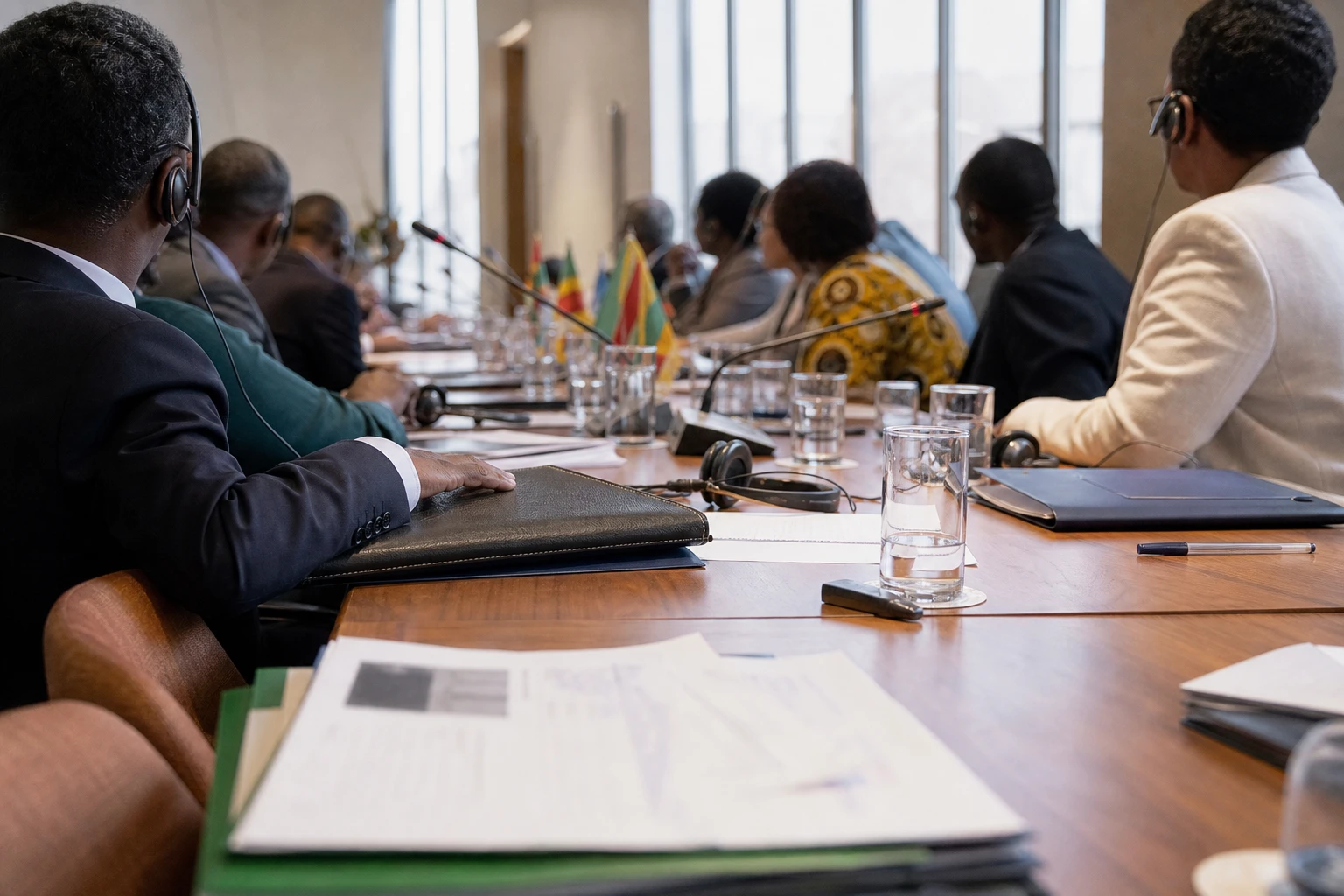
As digitalisation advances, security must keep pace
In Togo, going digital is no longer an abstract slogan. It is already affecting the administration, municipal authorities, public services and several identity and data projects. But the more a state digitises, the more it must protect its systems. That is the challenge at the heart of Luxembourg’s latest support for Lomé. Togo wants to accelerate while ensuring that the same tools that make life easier for users do not become entry points for attacks.
This development is also part of a regional trajectory. In West Africa, digital transformation has become a matter of sovereignty, competitiveness and public service. ECOWAS states are seeking to facilitate exchanges, while administrations are multiplying online platforms. In this context, cybersecurity is no longer a technical issue reserved for engineers. It is a condition for trust between the state, citizens and businesses.
Three agreements, one shared direction for Lomé
On 15 July 2026 in Lomé, Togo’s President of the Council, Faure Essozimna Gnassingbé, received Xavier Bettel, Luxembourg’s Deputy Prime Minister and Minister for Foreign Affairs and Foreign Trade. The two sides then signed three cooperation agreements. They cover the INCLURE programme, the first Togo-Luxembourg Indicative Cooperation Programme for 2026-2031, and TogoCyber+, which is dedicated to cybersecurity. The Togolese and Luxembourg authorities present the package as a new stage in the bilateral partnership.
The announced total is €78.55 million. The funding is intended to support local development, the modernisation of public action, the digital transition and the security of digital infrastructure. Luxembourg says the 2026-2031 ICP covers three areas: technical education and employment integration, the environment and the response to climate change, and digitalisation.
Togo and Luxembourg are not starting from scratch. The two countries have been cooperating since the 1970s, but the relationship has accelerated markedly since 2024, with a general cooperation agreement followed by the establishment of LuxDev in Lomé in 2026. The existing portfolio is valued at €49.3 million. It funds, among other things, digital transformation, forest landscape restoration, the Lomé Polytechnic School and the protection of natural heritage.
What Togo’s cybersecurity record reveals
One of the most sensitive aspects of this new partnership concerns TogoCyber+. In Lomé, the issue is far from theoretical. According to the director-general of the National Cybersecurity Agency, more than 333,000 incidents were handled between 2021 and 2024. Another credible African report of the statement specifies the annual figures: 39,168 cases in 2021 and 181,088 in 2024. This increase gives a clear indication of the pressure on Togo’s digital ecosystem.
Togo has established a specific legal framework with a law on cybersecurity and cybercrime, as well as a ministry responsible for digital transformation. The executive says it wants to make the country a regional digital hub. The ministry’s official portal highlights projects such as e-ID Togo, the Data Lab and the digitalisation of municipal authorities. Meanwhile, the National Cybersecurity Agency says the country has a national incident response centre, CERT.tg. In other words, the state is seeking to build services and defences at the same time.
This is where Luxembourg’s support comes in. For the Togolese authorities, the challenge is not simply to put forms online. It is also about strengthening teams, protocols, infrastructure and response capacity. A more digital administration can reduce delays, costs and the need for users to travel. But without robust security, it leaves public data, tax services, social platforms and digitally dependent businesses more exposed.
A partnership with value beyond bilateral diplomacy
Politically, the agreement confirms an approach Lomé has pursued for several years: building targeted partnerships rather than waiting for large, undifferentiated programmes. Luxembourg, for its part, is pursuing close cooperation focused on measurable results and institutional support. This kind of agreement features little in speeches, but it matters in administrations, schools and public services.
For Togolese citizens, the expected impact is tangible. Better-protected digitalisation can reduce queues, speed up procedures and improve access to services, including outside Lomé. But the effects will not be the same everywhere. Better-connected urban areas will reap the benefits first. Rural regions will remain dependent on network quality, the equipment available at service counters and support for users. The digital divide is measured not only in internet speed. It is also measured in the ability to use and secure services.
For businesses, particularly SMEs and start-ups, the issue is strategic. A more digital state can simplify registration, payments and dealings with the administration. It can also support trade and local innovation. But trust remains the tipping point. Without secure systems, data protection and continuity of service, productivity gains can quickly be wiped out by a breach or an attack.
What to watch in the coming months
The next phase will depend on implementation. The 2026-2031 ICP must now be translated into visible programmes, a clear timetable and verifiable results. It will be important to monitor the role digitalisation actually plays in funded projects, Togo’s ability to strengthen its cyber teams and how ministries coordinate their tools. Across West Africa, this development will also serve as a test: can states modernise their administrations without allowing vulnerabilities to grow?
For Lomé, the answer lies in an equation that is simple to state but difficult to maintain: accelerate digital transformation without compromising security or inclusion. The partnership with Luxembourg brings resources, but also sends a political signal. Togo wants to remain in control of the pace of its modernisation. It must now prove that its digital services can be useful, accessible and robust all at once.