Algeria
 Egypt
 Libya
 Morocco
 Sudan
 Tunisia
 Burkina Faso
 Cabo Verde
 Côte d'Ivoire
 Ghana
 Guinea
 Guinea-Bissau
 Liberia
 Mali
 Mauritania
 Niger
 Nigeria
 Senegal
 Sierra Leone
 The Gambia
 Togo
 Cameroon
 Central African Republic
 Chad
 DR Congo
 Equatorial Guinea
 Gabon
 Republic of the Congo
 São Tomé and Príncipe
 Burundi
 Comoros
 Djibouti
 Eritrea
 Ethiopia
 Kenya
 Madagascar
 Malawi
 Mauritius
 Mozambique
 Rwanda
 Seychelles
 Somalia
 South Sudan
 Tanzania
 Uganda
 Angola
 Botswana
 Eswatini
 Lesotho
 Namibia
 South Africa
 Zambia
 Zimbabwe
A political signal for Cotonou, beyond the headline figure
In Cotonou, the question is not simply whether Benin is “doing its job well” within UEMOA. It is more concrete: in a monetary union, when common rules advance, the effects are felt in debt, markets and prices and, ultimately, in the daily lives of households and businesses. The 73% rate announced for Benin says as much about the country’s administrative capacity as about its place in West African integration.
The result comes as UEMOA seeks to strengthen its internal coherence. The annual review of community reforms, created to monitor implementation of the West African Economic and Monetary Union’s texts, is specifically intended to check whether member states transpose common decisions into their laws and practices. It covers economic governance, the common market and sectoral policies, among other areas.
What the annual review really measures
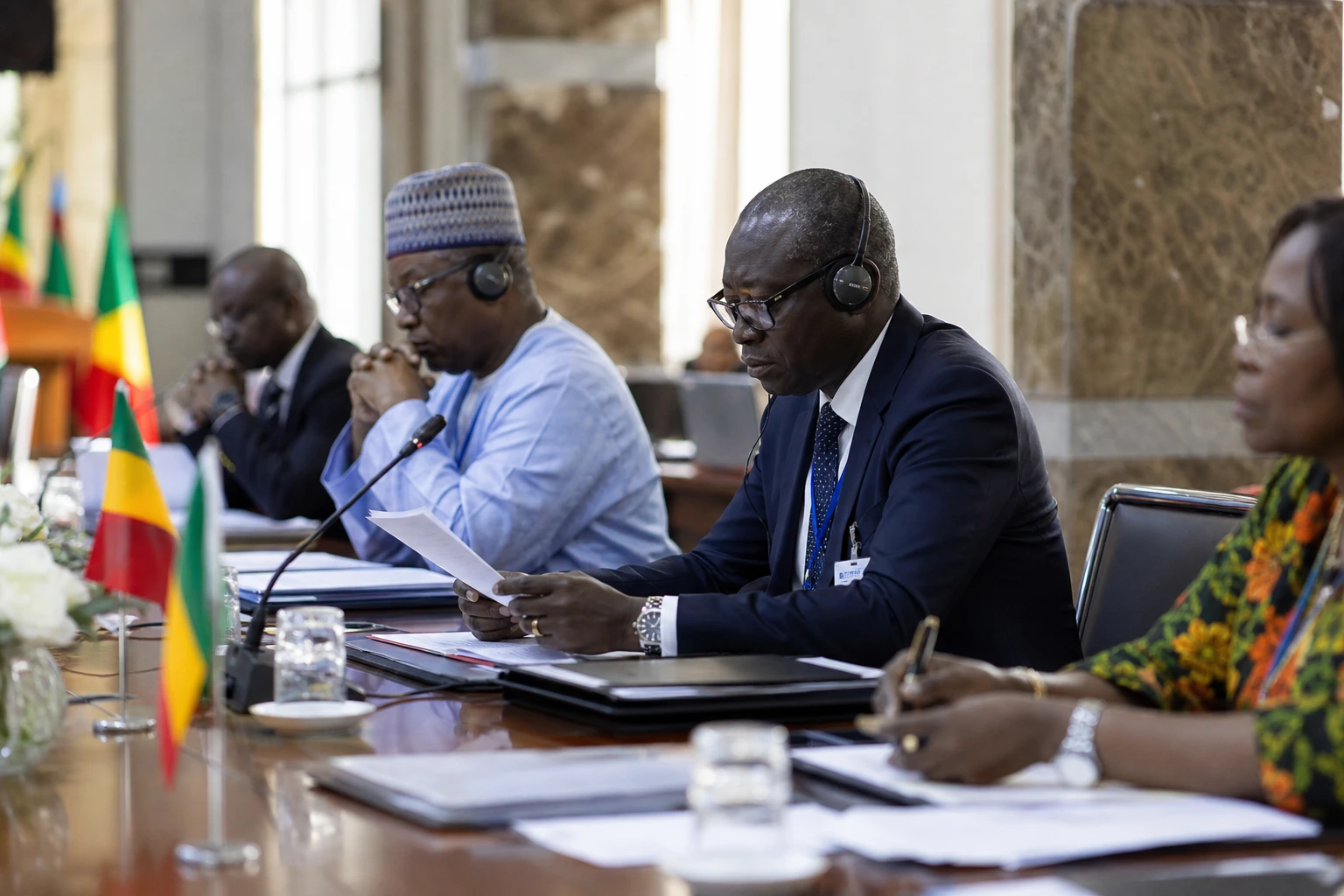
The session held on 23 July 2026 in Cotonou covered 145 community texts. According to the UEMOA Commission, Benin achieved an implementation rate of 73%, above the 70% threshold the Union uses to judge performance satisfactory. The country is therefore among the states considered consistent in carrying out their community commitments.
This result is not a trivial one. In the UEMOA area, harmonised rules determine the movement of goods, services and capital. They also influence governments’ budgetary credibility, their access to regional financial markets and their ability to attract investment. The BCEAO also notes that the Union’s economic and financial governance remains an area of close monitoring, in a context still marked by economic, climate and security pressures.
This is not Benin’s first strong performance. In 2023, the country already recorded an average implementation rate of 72.84%, up from 69.83% in 2022, according to the Beninese Ministry of Economy and Finance. In 2024, the UEMOA Commission recorded a further 75.47%. The 73% score in 2026 therefore confirms a sustained pattern of compliance, although it is slightly below the previous year’s peak.
Solid fundamentals, but under scrutiny
The strong community rating comes amid generally favourable economic conditions in Benin. The International Monetary Fund projects real growth of 7% in 2026, following 7.5% in 2025, driven by the expansion of the Port of Cotonou, industry, agriculture and major projects under the Government Action Programme 2021-2026. The World Bank also ranks Benin among the engines of West African growth, with the economy expanding by 7.5% in 2024, its fastest pace since 1990.
This economic strength partly explains the confidence of partners and investors. But it is no reason for complacency. The IMF notes that central government debt was revised to 60.5% of GDP at the end of 2024, while Benin remains at moderate risk of debt distress thanks to an improved capacity to absorb debt. The same document says the 2026 budget aims to keep the deficit below the 3% of GDP ceiling set by UEMOA.
In other words, the community performance is not just a good report card. It also signals that the Beninese government is maintaining discipline deemed compatible with regional rules. In a monetary union where budgetary credibility matters as much as political announcements, that is a real asset. But it is also a lasting obligation: to meet the targets year after year without easing up.
What this means for Beninese stakeholders
For the Beninese executive, the message is twofold. On the one hand, the 73% score validates the image of a state capable of aligning its reforms with community standards. On the other, it is a reminder that a third of the texts reviewed are not yet fully implemented. This is where the difference between formal compliance and real transformation lies. The authorities must therefore continue work on the texts, but also ensure their effective implementation in government departments, customs, tax services, public procurement and regulated sectors.
For businesses, the impact is more immediate. Better transposition of UEMOA rules simplifies regional trade, reduces administrative friction and can improve the clarity of tax and regulatory frameworks. Businesses trading with other member states benefit from a more predictable environment. According to data cited in the dossier examined in Cotonou, trade between Benin and other Union countries accounted for 13.9% of its total trade in 2024, up from 11.1% a year earlier. This increase suggests a stronger regional foothold.
For households, the effect is less visible, but it exists. When budgetary rules are better observed and regional coordination advances, states in principle have a more stable framework for funding public services, cushioning shocks and keeping inflation under control. In early July 2026, the BCEAO reported that inflation remained under control at -0.2% in the Union in the first quarter, while regional growth stood at 6.1%. Benin is therefore part of a West African area where macroeconomic stability remains a central goal.
A development that goes beyond Benin
Benin’s case matters to all of UEMOA because it shows that a state can combine domestic reforms, budgetary discipline and regional integration without any apparent disruption. As the Union seeks to strengthen its economic governance tools, Cotonou’s performance offers a benchmark for other capitals. It is also a reminder that convergence depends not only on decisions made by the regional institution, but on the ability of national administrations to put them into practice.
This perspective also applies at continental level. As the African Union uses Agenda 2063 and the AfCFTA to push for greater integration of African economies, the results of regional unions serve as practical laboratories. UEMOA remains one of the continent’s most advanced areas in terms of monetary discipline and regulatory harmonisation. Benin’s trajectory, with its capital Porto-Novo, thus illustrates a broader question: how to turn common rules into visible gains for citizens without mistaking integration for mere administrative compliance.
The next steps will come at upcoming regional meetings, including the Union’s Council of Ministers and sectoral reviews tracking implementation of decisions. Benin has scored a point. It still needs to turn this consistency into more tangible gains, both in the real economy and in the quality of public services.