Algeria
 Egypt
 Libya
 Morocco
 Sudan
 Tunisia
 Benin
 Burkina Faso
 Cabo Verde
 Côte d'Ivoire
 Ghana
 Guinea
 Guinea-Bissau
 Liberia
 Mali
 Mauritania
 Niger
 Nigeria
 Senegal
 Sierra Leone
 The Gambia
 Togo
 Cameroon
 Central African Republic
 Chad
 DR Congo
 Equatorial Guinea
 Gabon
 São Tomé and Príncipe
 Burundi
 Comoros
 Djibouti
 Eritrea
 Ethiopia
 Kenya
 Madagascar
 Malawi
 Mauritius
 Mozambique
 Rwanda
 Seychelles
 Somalia
 South Sudan
 Tanzania
 Uganda
 Angola
 Botswana
 Eswatini
 Lesotho
 Namibia
 South Africa
 Zambia
 Zimbabwe
Rebuilding governance in a strained sector
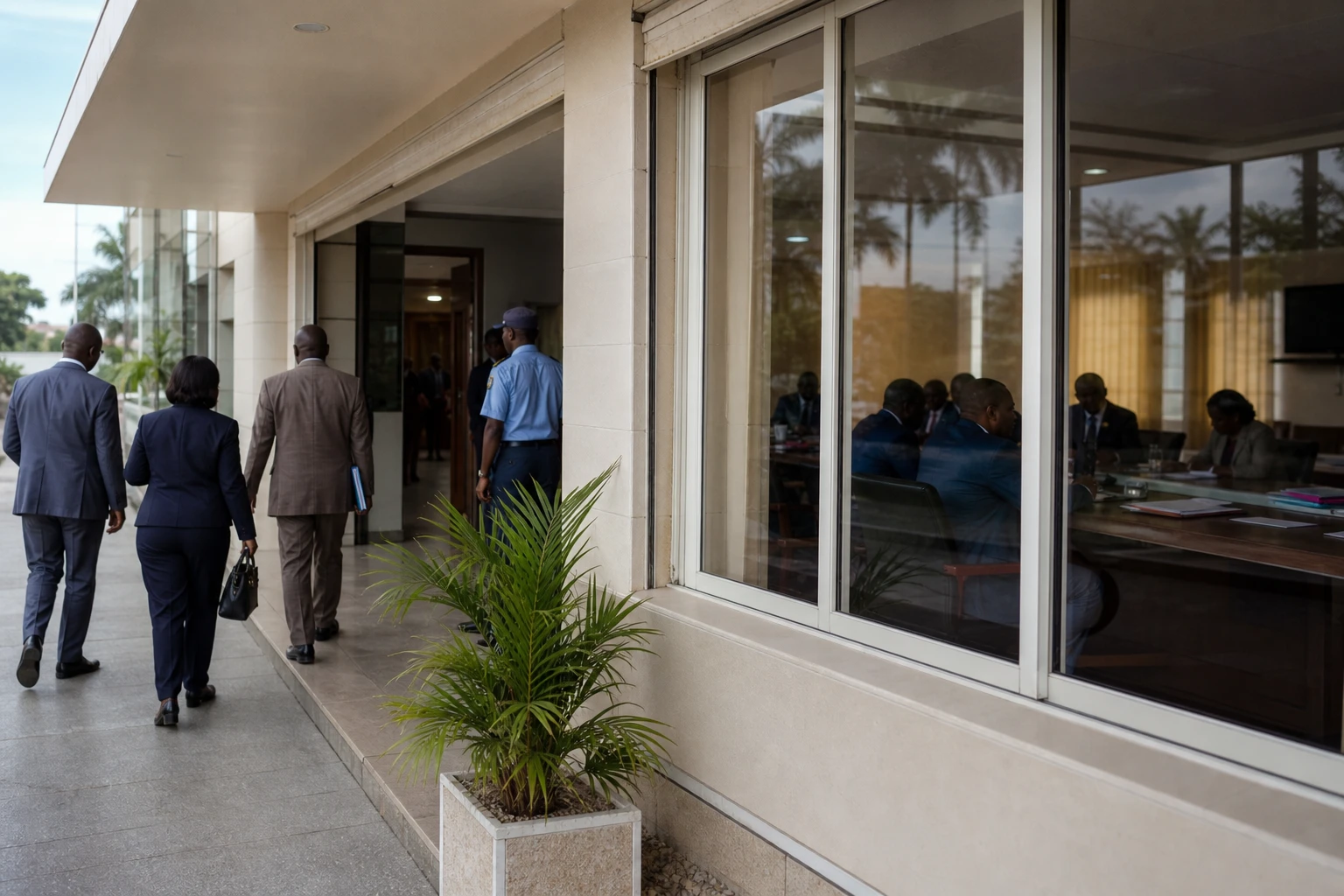
In Brazzaville, health is not shaped only in hospitals. It is also decided through the mechanisms that arbitrate, coordinate and assess public policies. When a system designed in 1984 no longer reflects today’s realities, the entire decision-making chain becomes less clear. The Congolese government wants to address this gap by setting up a new health governance body.
The Republic of the Congo, whose capital is Brazzaville, is in Central Africa and belongs to CEMAC, the sub-regional economic and monetary organisation comprising six countries. The country is also a member of ECCAS, the political and security community of Central Africa. In this environment, national health policy choices are never entirely domestic. Epidemics, population movements and budget pressures cross borders far faster than administrative reforms.
On 22 July, the Council of Ministers adopted a draft decree establishing the National Health Council. The new body replaces the former National Health and Social Development Council, established in 1984. Its stated aim is clear: to give the sector a more appropriate forum for consultation, able to provide opinions, recommendations and proposals on the main directions of health policy.
The future council is to bring together representatives of the state, public- and private-sector health professionals, technical and financial partners, and members of civil society. The government highlights four commitments in terms of approach: greater participation, transparency and accountability, and better coordination between decision-making levels. In other words, the point is not simply to add another body, but to address a familiar weakness of centralised health systems: decisions that may look strong on paper but are poorly communicated to departments and inadequately followed up by services.
What the reform could change in practice
The reform comes as the Republic of the Congo seeks to consolidate universal health coverage. In December 2025, the WHO launched its 2025-2028 cooperation strategy with the Congolese government. The framework sets out five priorities: health system governance, human resources, infrastructure, expanding universal health coverage, and reducing social and territorial inequalities in access to care. The new national council is therefore part of an existing structure intended to link planning, financing and evaluation.
On the ground, the issue is straightforward: an effective consultative body can help address blind spots. In a country where distances are a major constraint, some rural areas remain far from well-equipped facilities, and qualified staff are still in short supply in several departments, better coordination could help prioritise investment. It could also prevent reforms from remaining concentrated in Brazzaville and Pointe-Noire, where healthcare provision and administrative access are most visible. The presidency had already made health, universal health insurance and the modernisation of public healthcare a set of national priorities.
The budgetary dimension matters just as much. An advisory council does not fund a hospital, recruit nurses or renovate ageing facilities on its own. It can, however, help rank spending priorities and bring policy choices closer to actual needs. That is where the reform takes on meaning: it aims to create a stable forum where the administration, healthcare workers, partners and civil society can compare priorities before they are translated into programmes. In a system under pressure, this clarification could prevent efforts from being scattered.
The regional health context reinforces this logic. In May 2026, Brazzaville hosted a high-level WHO consultation on cross-border collaboration in health security. The organisation reiterated that health threats cross borders and that recent outbreaks of mpox, cholera, Ebola and Marburg have demonstrated the need for closer coordination. For the Republic of the Congo, reforming health governance is therefore not an isolated step. It is also a way to speak the same institutional language as its Central African neighbours.
Implications beyond Brazzaville
The timing is no accident. Since the end of 2025, the Republic of the Congo has already embarked on several health initiatives: approval of a national human resources plan, the launch of WHO cooperation for 2025-2028, a review of sector performance and targeted partnerships on primary healthcare. The new national council could serve as a link between these instruments. If it works, it could help ensure continuity in policy beyond shifts in domestic priorities and bring greater coherence to public action.
For the population, the issue is less institutional than immediate: access to care, waiting times, the quality of medical facilities, staff availability and smaller inequalities between urban centres and outlying areas. For the state, the issue is credibility. An effective advisory body could strengthen trust, provided its opinions are genuinely taken into account and its work does not become a mere administrative formality. Technical partners, meanwhile, will see it as a sign of clarity and therefore a more clearly defined framework for supporting national priorities.
Across Africa, this reform reflects a broader trend: several countries are seeking to bring health governance, universal coverage and health security closer together, at a time when crises often compound financial constraints. With Brazzaville, historic home of the WHO Regional Office for Africa, the Republic of the Congo has a symbolic and practical advantage in public health exchanges across the continent. What happens next will depend on implementation: the council’s actual membership, how often it meets, the real weight of its recommendations and how it aligns with reforms already under way through 2028.