
 Algeria
 Egypt
 Libya
 Morocco
 Sudan
 Tunisia
 Benin
 Burkina Faso
 Cabo Verde
 Côte d'Ivoire
 Ghana
 Guinea
 Guinea-Bissau
 Liberia
 Mali
 Mauritania
 Niger
 Senegal
 Sierra Leone
 The Gambia
 Togo
 Cameroon
 Central African Republic
 Chad
 DR Congo
 Equatorial Guinea
 Gabon
 Republic of the Congo
 São Tomé and Príncipe
 Burundi
 Comoros
 Djibouti
 Eritrea
 Ethiopia
 Kenya
 Madagascar
 Malawi
 Mauritius
 Mozambique
 Rwanda
 Seychelles
 Somalia
 South Sudan
 Tanzania
 Uganda
 Angola
 Botswana
 Eswatini
 Lesotho
 Namibia
 South Africa
 Zambia
 Zimbabwe
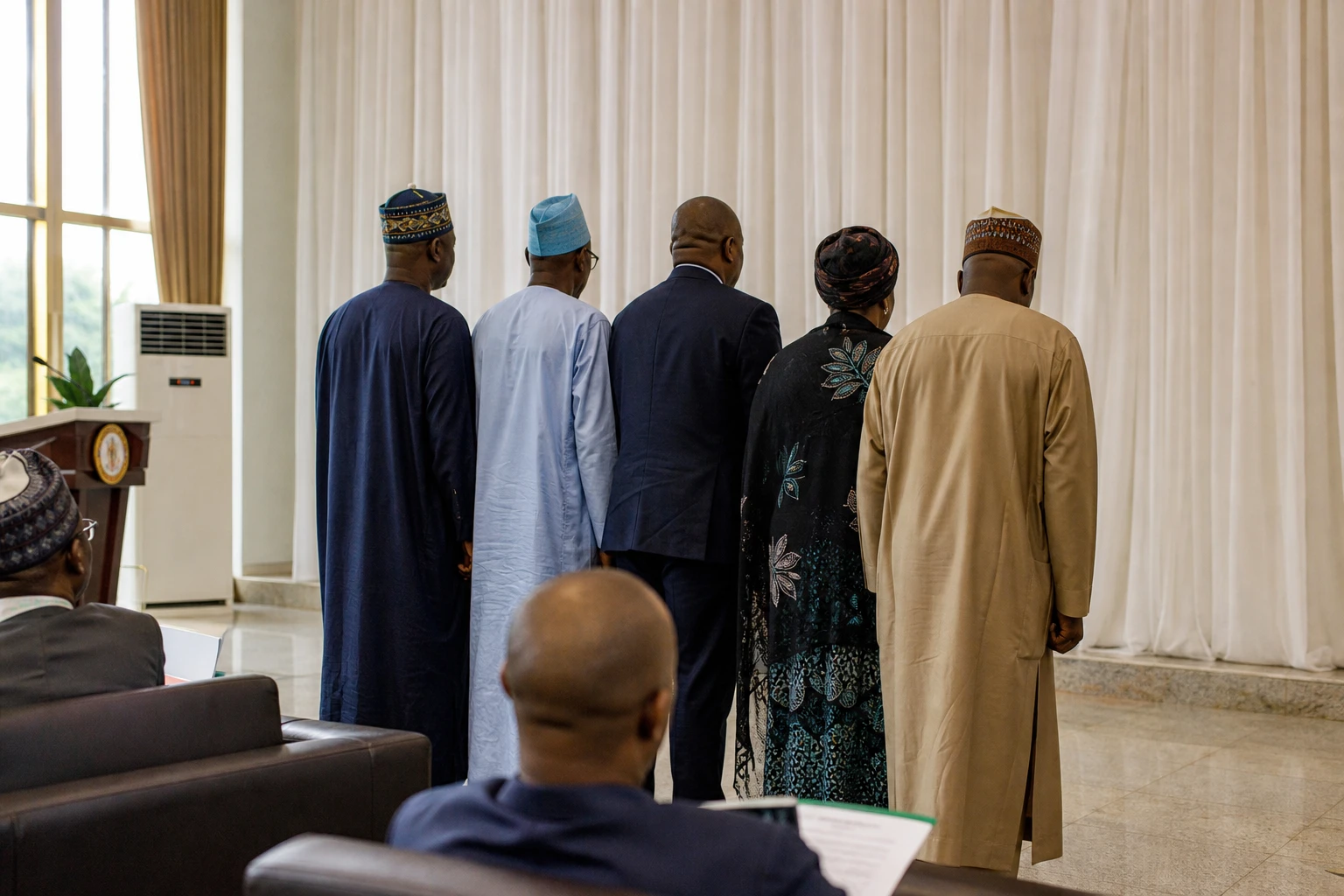
In Abuja, the electricity bill becomes a test of credibility
In Nigeria, paying a debt is not merely an accounting exercise. It is also a way of convincing investors that a market can deliver on its promises. In a power sector long blighted by arrears, liquidity has become the central issue, even ahead of generation or distribution.
Bola Tinubu’s government is trying precisely to close this gap. From Abuja, the presidency is presenting the settlement of the sector’s debts as a lever to revive private investment, stabilise power plants and ease the financial pressures running through the entire electricity value chain. The issue goes beyond technicalities: it affects households, small businesses and industry, which have for years paid the price of an unreliable power supply.
An old issue revisited as part of a broader reform drive
The electricity sector’s debt problem is not new. In July 2025, the Nigerian government acknowledged that private producers, known as GenCos, were claiming about 4,000 billion naira in receivables accumulated between 2015 and 2023, some of which had already been validated by the Nigerian Bulk Electricity Trading Company. The presidency then announced, in April 2026, a 3.3 trillion naira payment plan as a “full and final” settlement following verification of historical claims.
This sequence is part of a broader institutional framework. The Electricity Act 2023 decentralised Nigeria’s electricity market, while the Nigerian Electricity Regulatory Commission, NERC, says that 16 states have already moved to local regulation of the sector. The debate is therefore no longer solely a federal one. It also concerns new state regulators, distributors, gas producers and banks exposed to the sector.
What the government announced in Abuja
On Tuesday 22 July 2026, in Abuja, the president’s special adviser on energy, Olu Arowolo Verheijen, said the government had paid 333.12 billion naira to eight power generation companies, covering 17 plants. According to her, the payment is part of the first phase of the Presidential Power Sector Financial Reforms Programme, or PPSFRP.
The official also said that an initial bond issuance had raised about 501 billion naira, of which 300 billion was in cash and 201 billion in financial instruments. She added that the first coupon on Series I, worth about 63.5 billion naira, had been paid in full on 14 July 2026. These details were reported by the presidency and several Nigerian media outlets.
The government is presenting this mechanism as a way to clear verified debts without putting further strain on public finances all at once. The idea is to spread repayments through bond issuance and other financial instruments, restoring creditors’ confidence while preserving fiscal headroom. The presidency says the next phase, Series II, is intended to expand the programme.
Why this debt weighs on the entire system
The problem is structural. NERC says the Nigerian market’s cash-flow weakness stems from the persistent gap between the real cost of generating and distributing electricity, the revenue actually collected and unfunded subsidies. In its 2024 annual report, the regulator also notes that power plants are ageing, inadequate payments prevent maintenance, and difficulties securing gas supplies further exacerbate generation outages.
For private producers, payment of arrears is more than an accounting relief. It is the minimum requirement for paying gas suppliers, banks and subcontractors. Without it, generation weakens, outages last longer and the system becomes less reliable. The government says it wants to break this cycle of fragility and prevent a liquidity crisis from turning into a supply crisis.
For users, the stakes are even more tangible. The World Bank estimates that economic losses caused by unreliable electricity in Nigeria amount to around 7 to 10 trillion naira a year, or about 5 to 7% of GDP. It also notes that the country has the world’s largest absolute electricity access deficit. In other words, the cost of inaction is felt in factories, workshops, local shops and private spending on generators.
What this settlement means for Nigeria and the region
This operation says something about Bola Tinubu’s economic strategy. The government is seeking to show that it can both reform and pay. In a country where investors scrutinise regulatory predictability as closely as returns, settling a verified public debt becomes a signal. The message is simple: the state wants to become a credible debtor again in order to become an attractive partner.
The implications extend beyond Nigeria. Across West Africa, electricity reliability remains a major obstacle to economic integration, industrial transformation and the movement of capital. For ECOWAS, whose regional electricity market is making slow progress, Nigeria’s case is being closely watched because it concerns the sub-region’s largest economy, its major industrial consumers and its ability to become a more stable supplier in the long term.
But caution is still warranted. The payment of 333.12 billion naira eases part of the liability; it does not yet resolve the underlying problems: technical losses, tariffs that do not adequately cover costs, a fragile grid, downstream debt and dependence on gas. The real question, then, is not simply whether Abuja pays. It is whether this payment marks the start of a sustainable electricity market at last, or another stage in the repeated bailout of the status quo.



