Algeria
 Egypt
 Libya
 Morocco
 Sudan
 Tunisia
 Benin
 Burkina Faso
 Cabo Verde
 Côte d'Ivoire
 Ghana
 Guinea
 Guinea-Bissau
 Liberia
 Mali
 Mauritania
 Niger
 Nigeria
 Senegal
 Sierra Leone
 The Gambia
 Togo
 Cameroon
 Central African Republic
 Chad
 DR Congo
 Equatorial Guinea
 Gabon
 Republic of the Congo
 São Tomé and Príncipe
 Burundi
 Comoros
 Djibouti
 Eritrea
 Ethiopia
 Kenya
 Madagascar
 Malawi
 Mauritius
 Mozambique
 Rwanda
 Seychelles
 Somalia
 South Sudan
 Tanzania
 Uganda
 Angola
 Botswana
 Eswatini
 Lesotho
 Namibia
 Zambia
 Zimbabwe
In Johannesburg, a criminal case becomes a test of judicial cooperation
In a metropolis such as Johannesburg, major criminal cases no longer stop at the borders of Gauteng. They involve the police, immigration services, courts and, sometimes, several judicial systems at once. That is exactly what the Ndodana Tshuma case illustrates, as South Africa must still weigh local detention, a ballistics inquiry and an extradition request from the United Kingdom.
The case is being closely monitored because it touches on two sensitive issues in South Africa: the movement of people wanted abroad and the state’s ability to get the police, justice system and immigration authorities working together. In a country that belongs to SADC, the Southern African Development Community, the credibility of regional judicial mechanisms also depends on this kind of practical response.
What the 22 July hearing revealed
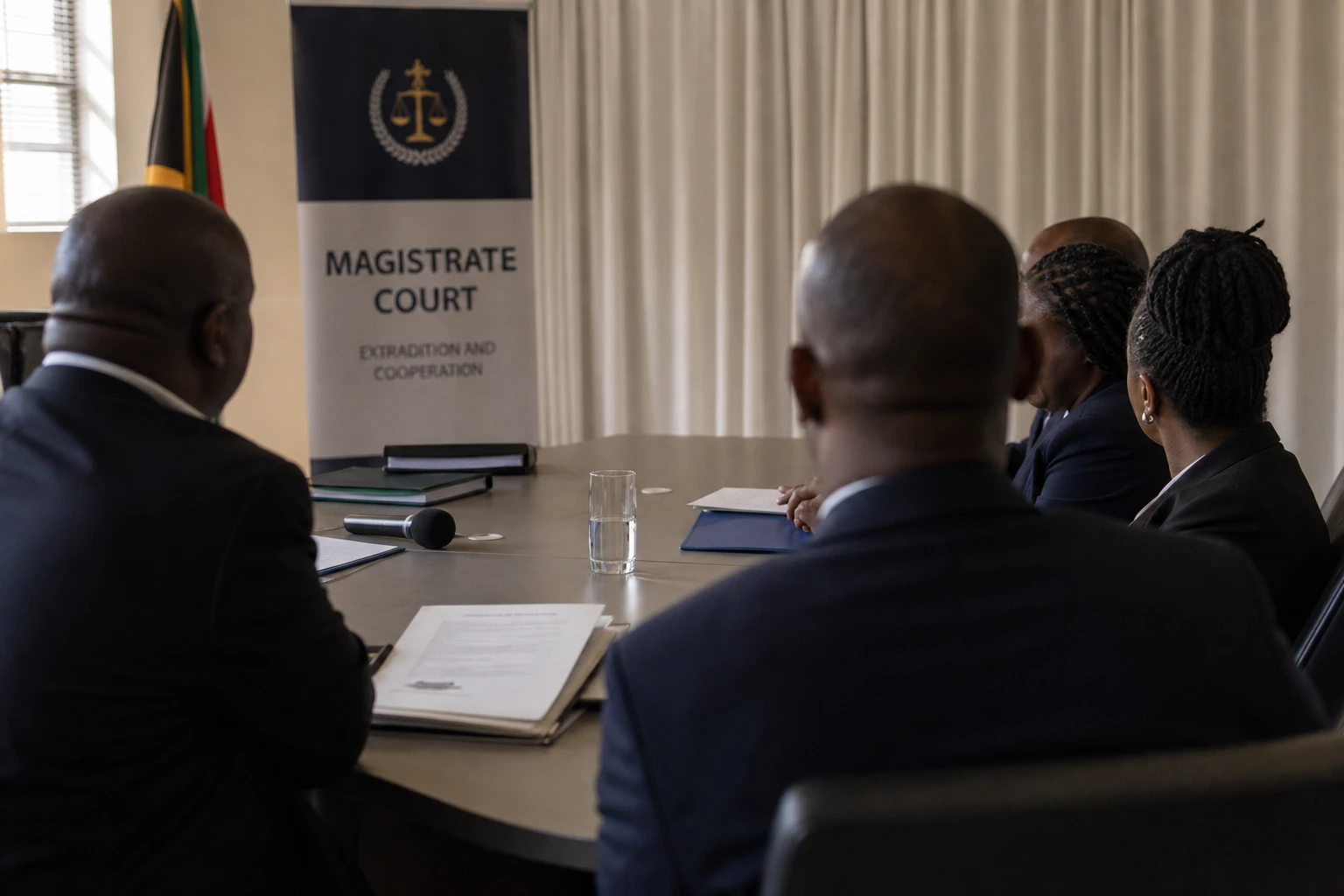
On Wednesday 22 July 2026, the Johannesburg Magistrates’ Court postponed the case until 27 August 2026. According to court reports, Ndodana Tshuma confirmed that he was waiving an application for release on bail. He therefore remains in custody pending further checks, particularly into the chain of witness statements and the ballistics results relating to the firearm seized when he was arrested.
The South African case involves more than one proceeding. On the one hand, Tshuma faces charges of illegal possession of a firearm and ammunition. On the other, the British authorities want to initiate extradition proceedings. Under South African law, extradition is governed by the Extradition Act of 1962, and the United Kingdom is among the states designated by Pretoria for such requests.
The judicial authorities also need to secure the immigration case. The issue concerns his legal status when he entered the country, and then his situation after his arrest. This check is central, because South African law allows a foreign national considered a fugitive from justice to be treated as “undesirable”.
An arrest in Kensington, coordinated by police and international agencies
Ndodana Tshuma was arrested in early July in the Johannesburg suburb of Kensington, following an intelligence operation conducted with Interpol and the South African police services. South African and international media reports say he is a 45-year-old British citizen of Zimbabwean origin, wanted in the United Kingdom over the alleged murder of his wife and two daughters. Their bodies were discovered near Bedford, north of London, after he had left British territory.
The timeline remains important. South African media sources say he travelled from London via Dubai and arrived at OR Tambo on 5 July 2026. The South African police later stated that he had not been flagged as a wanted person when he entered the country. This clarification explains why the case now involves both a local criminal investigation and extradition cooperation.
At the time of the arrest, South African forces also reported the presence of an unauthorised firearm. This piece of evidence has become pivotal, as it keeps the individual under local jurisdiction, independently of the request from the United Kingdom. In this kind of case, domestic proceedings do not disappear in favour of extradition; they often come first.
Why this case matters beyond a single crime story
In South Africa, the fight against fugitives is not played out only in police stations. It also depends on reliable checks at the country’s borders, the police’s ability to work with Interpol, and how quickly courts can handle a sensitive case. The Department of Justice has recently stressed the modernisation of immigration-related mechanisms, with dedicated judicial arrangements and faster checks across justice, police and home affairs databases.
This has very practical implications for South Africans. In major cities, investigative services are called upon to handle cross-border cases, illegal firearms, fraud and serious violence. In peripheral areas, migration pressures, the movement of firearms and distrust of the state often fuel simplistic political narratives. This case, however, is a reminder that a fugitive can pass through an international airport, settle in an ordinary Johannesburg neighbourhood and then be located through conventional investigative work backed by intelligence.
The role of Southern Africa also deserves attention. SADC has already adopted an extradition protocol, providing a regional framework for judicial cooperation. Although the current case involves the United Kingdom, the precedent matters across the region: Zimbabwe, Mozambique, Lesotho, Namibia and Botswana are watching the same issue—the movement of wanted people and the strength of South African judicial links.
What to watch before 27 August
The next step is clear: on 27 August 2026, the court will have to revisit the checks under way and the next stages of both parts of the case, the criminal proceedings and extradition. In the meantime, the South African authorities will have to complete their checks on Tshuma’s immigration status and the ballistics evidence relating to the firearm seized.
Ultimately, this case says something broader about South Africa today. Pretoria wants to be seen as a state capable of cooperating with international partners without abandoning its own procedures. This is a matter of justice, but also of administrative sovereignty. And in a region where mobility is high, this balancing act will remain central long after 27 August.