Algeria
 Egypt
 Libya
 Morocco
 Sudan
 Tunisia
 Burkina Faso
 Cabo Verde
 Côte d'Ivoire
 Ghana
 Guinea
 Guinea-Bissau
 Liberia
 Mali
 Mauritania
 Niger
 Nigeria
 Senegal
 Sierra Leone
 The Gambia
 Togo
 Cameroon
 Central African Republic
 Chad
 DR Congo
 Equatorial Guinea
 Gabon
 Republic of the Congo
 São Tomé and Príncipe
 Burundi
 Comoros
 Djibouti
 Eritrea
 Ethiopia
 Kenya
 Madagascar
 Malawi
 Mauritius
 Mozambique
 Rwanda
 Seychelles
 Somalia
 South Sudan
 Tanzania
 Uganda
 Angola
 Botswana
 Eswatini
 Lesotho
 Namibia
 South Africa
 Zambia
 Zimbabwe
In N’Djamena, water moved beyond promises
In Chad, water is no longer just a matter of wells, pumps or the rainy season. It is now part of the same equation as jobs, health and the stability of communities. When a country puts water at the heart of an African forum, it is also talking about rural roads, livestock, irrigated agriculture and cities growing faster than their networks. The message is clear: without water security, growth remains fragile.
This comes at a time of broader regional change. Chad is part of CEMAC, a Central African bloc in which states are seeking to reconcile economic diversification, climate resilience and tight public finances. Across the continent, water has also become an issue of integration: transboundary basins, trade corridors, food security and climate adaptation are now advancing together. The N’Djamena Declaration also links water to the African Union’s Agenda 2063 and the Sustainable Development Goals.
What the forum agreed, beyond the words
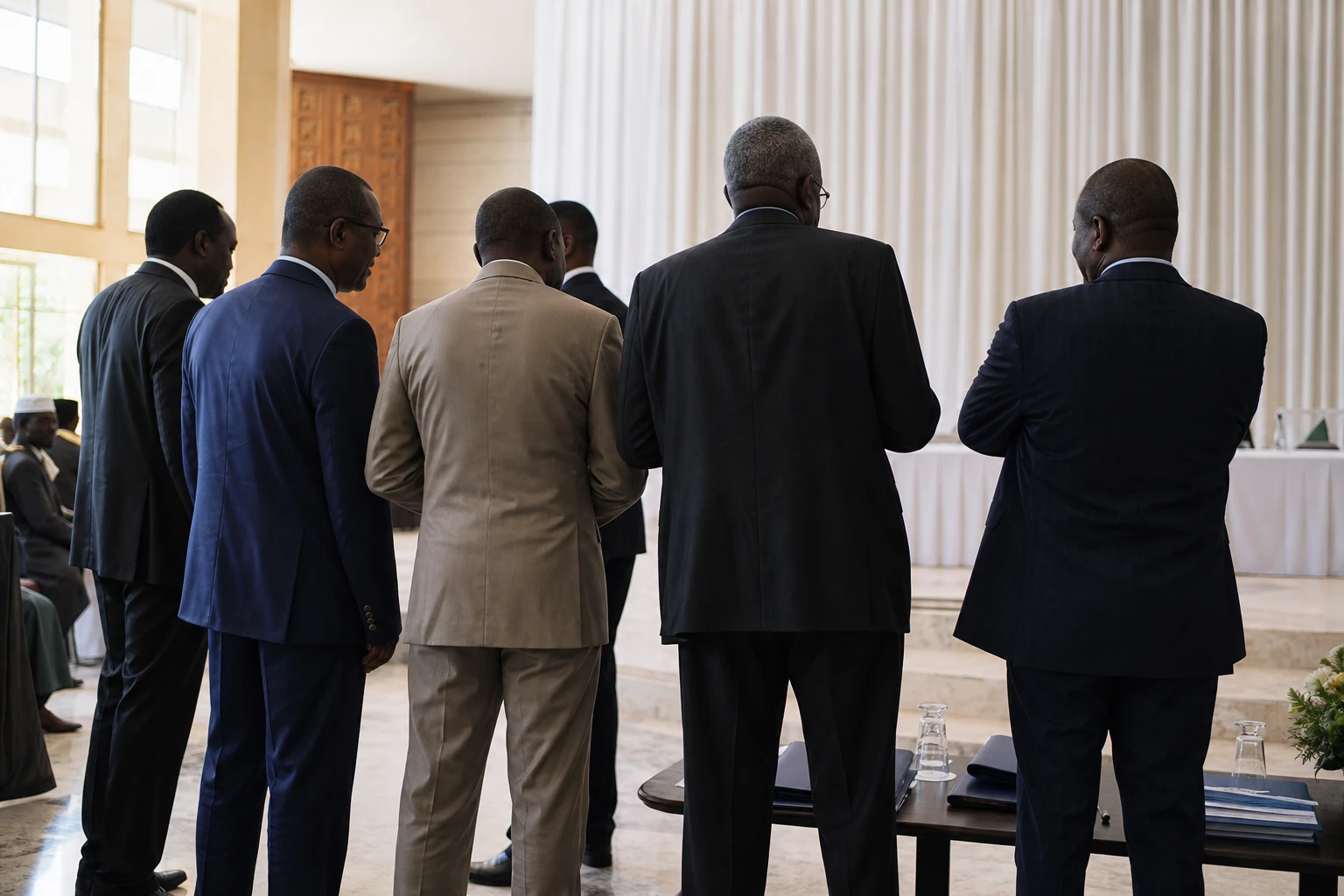
On 15 and 16 July 2026, N’Djamena hosted the first African Water Forum. At its conclusion, African states and regional organisations signed the N’Djamena Declaration. According to the sources consulted, the text brought together 16 countries and five regional organisations, while a version published by the World Bank refers to 14 countries and six regional organisations. In any case, the political signal is the same: water is now being treated as major economic infrastructure, not as an isolated sectoral issue.
Chad also presented its own national water compact. This planning framework sets the sector’s needs at $3.8 billion over five years. It reflects a new approach: bringing public priorities, donors and regional organisations together around shared goals, then tracking results. The World Bank says it has committed $160 million to support this path in Chad, through a water security and climate resilience project approved on 18 June 2026.
This approach changes the method. Funding is no longer limited to a succession of small, scattered projects. It is aligned with national compacts—that is, roadmaps linking investment to budgets and public systems. For governments, this is a way to take charge of the funding sequence. For donors, it is also a way to reduce fragmentation. The World Bank says the Water Forward initiative aims to reach more than one billion people by 2030.
Jobs as the thread running from Chad to the Gulf of Guinea
The core argument can be summed up in one sentence: infrastructure is only valuable if it leads to jobs. This is what the World Bank’s leader repeated in N’Djamena, then in Lomé and Cotonou. Water, electricity, transport, health and education are presented as “enabling” investments—that is, spending that makes private-sector activity and hiring possible. The argument is clear for Chad: in a young, vast country with uneven access to services, job creation depends as much on service quality as on the business climate.
In Togo, the same logic was reflected in five agreements signed on 16 July 2026, totalling $429 million. The package includes, among other things, $200 million for transport and logistics, as well as components on energy, social cohesion, digital identification and public services. The Togolese authorities see this as support for their ambition to make Lomé a regional trading hub. The World Bank links the choice to the country’s role in corridors connecting the Sahel to the Gulf of Guinea and along the Abidjan–Lagos axis.
Benin received a ten-year country partnership framework on the same day, with initial commitments of $320 million. The programme covers nutrition, human development and the Dogo-Bis multipurpose dam. Here, too, the idea is to link human capital, energy and agricultural productivity. The Beninese government speaks of economic transformation; the World Bank emphasises the growth of the private sector and employment. The two perspectives converge on one point: without businesses capable of investing, reforms remain incomplete.
What this means for Chad and Central Africa
For Chad, the stakes are tangible. The announced investments could improve access to water in provinces most exposed to climate pressures and population displacement. They could also support agriculture, livestock and small urban businesses that depend on reliable services. But the real impact will depend on implementation: land tenure, maintenance, the governance of service providers and the state’s ability to track results. The World Bank’s 2026–2031 Country Partnership Framework for Chad specifically focuses on human capital, private-sector jobs and reducing fragility.
For Central Africa, the N’Djamena forum has wider significance. It puts transboundary basins back at the centre of the debate, as states in the region contend with shared water risks. It also shows that a Sahelian capital can become a place where a continental agenda is shaped, not merely a recipient of funding. In this reading, Chad is not simply a backdrop: it is raising an issue that concerns all of CEMAC, from infrastructure financing to the management of shared resources.
What happens next will depend on the commitments that emerge from the compacts and how they are reflected in budgets. The next steps will be mainly technical: disbursements, implementation timetables, private-sector mobilisation and results monitoring. That is where the credibility of the message from N’Djamena will be tested: making water a foundation for growth, rather than an issue dealt with piecemeal.