Algeria
 Egypt
 Libya
 Morocco
 Sudan
 Tunisia
 Benin
 Burkina Faso
 Cabo Verde
 Côte d'Ivoire
 Ghana
 Guinea
 Guinea-Bissau
 Liberia
 Mali
 Mauritania
 Niger
 Nigeria
 Senegal
 Sierra Leone
 The Gambia
 Togo
 Central African Republic
 Chad
 DR Congo
 Equatorial Guinea
 Gabon
 Republic of the Congo
 São Tomé and Príncipe
 Burundi
 Comoros
 Djibouti
 Eritrea
 Ethiopia
 Kenya
 Madagascar
 Malawi
 Mauritius
 Mozambique
 Rwanda
 Seychelles
 Somalia
 South Sudan
 Tanzania
 Uganda
 Angola
 Botswana
 Eswatini
 Lesotho
 Namibia
 South Africa
 Zambia
 Zimbabwe
A personal case with implications for the state’s image
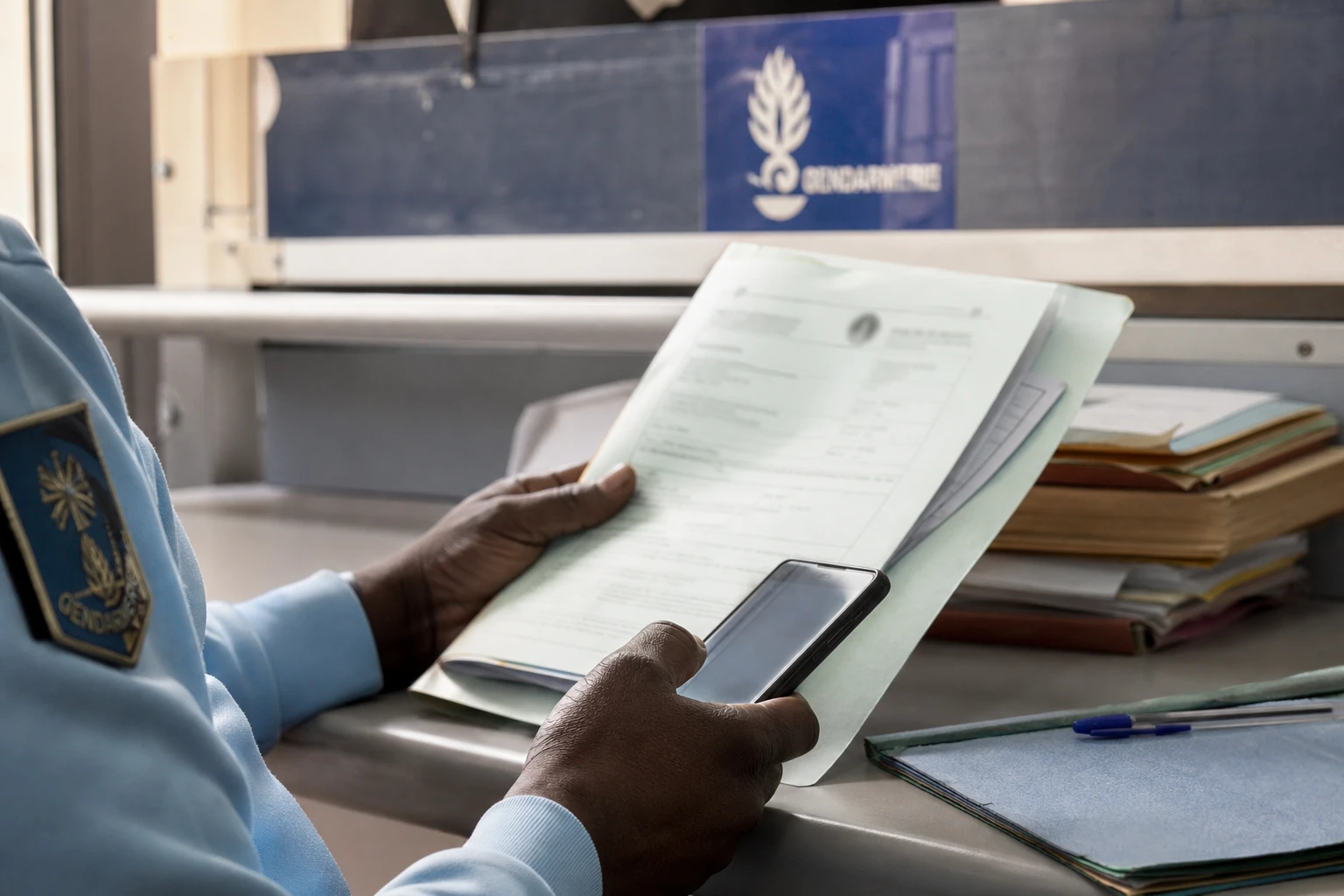
In Yaoundé, an arrest can become a test of credibility for an entire institution. When a man who has presented himself for years as the head of state’s son ends up in the hands of the gendarmerie, the case goes beyond a simple news story. It touches on how Cameroon deals with identity fraud, defamation and online content targeting public figures.
The context matters. Cameroon’s gendarmerie comes under the State Secretariat for Defence in charge of the National Gendarmerie, a security network under the authority of the Ministry of Defence. Its remit covers judicial, administrative and military policing, with units deployed across the country. In this context, a sensitive case that began in Edéa and is being handled in Yaoundé is not merely an isolated arrest, but also a signal to the public and political actors.
What happened between Edéa and Yaoundé
According to several corroborating sources, Georges Gilbert Baongla was detained on the night of Monday 20 to Tuesday 21 July 2026 in Edéa, on national highway N3 linking Yaoundé and Douala. Witness accounts and notes attributed to law enforcement indicate that he had just been involved in a road accident when gendarmes intervened. He was then taken to Yaoundé, to the cells of the State Secretariat for Defence.
The first details reported by the Cameroonian press point to a forceful arrest. An operational note attributed to the gendarmerie also mentions resistance by Baongla at the time of his arrest. Other local media report that he again claimed to be related to Paul Biya during the intervention. At this stage, these details remain reports from the sources consulted, rather than definitive judicial findings.
The arrest did not come out of nowhere. In April 2026, a gendarmerie summons had already targeted Baongla over impersonation, defamation and cybercrime. A confidential radio message cited by the local press even referred to a ban on leaving the country. In May, he publicly called for DNA tests involving Paul Biya and Franck Biya to settle the question of his alleged parentage.
A case that has been running for several years
Georges Gilbert Baongla is no stranger to Cameroon’s public scene. Press archives recall that he was convicted in 2020 and has repeatedly attracted attention with provocative statements, public accusations and remarks targeting prominent figures. This long-running history explains why his case draws so much attention, even though no proceedings have yet reached a final ruling on the merits.
The case also touches on a sensitive issue in Cameroonian political life: the management of the digital public sphere. Cybercrime, unverified allegations and the rapid spread of documents or messages on social media often blur the line between debate, rumour and crime. In a country where public discourse about the elite remains closely monitored, the authorities have an interest in handling such cases methodically, but also transparently, to avoid fuelling further distrust.
Cameroon, particularly Yaoundé and Douala, is meanwhile facing a busy institutional agenda. In July 2026, the capital hosted the 51st plenary session of the Parliamentary Assembly of La Francophonie, while the economic capital saw the inauguration of a new operational base for the BIR, the Rapid Intervention Battalion. These events are a reminder that, as the state showcases its institutional control, it is also seeking to project a firm grip on internal security.
What the case says about power, judicial policing and public opinion
For the authorities, the stakes are twofold. First, they must show that no one is above the law, especially when allegations involve impersonation and defamation. They must also ensure the case is not seen as merely a matter of reputation within the presidential orbit. In Cameroon, the line between ordinary justice and political interpretation is often thin, particularly when the head of state is named.
For citizens, the case raises a broader question: how can the flow of information be protected without allowing manipulation to flourish? In major cities, where social media shape part of public debate, viral accusations can have immediate effects. In more remote areas, they sometimes circulate as partial accounts that are difficult to verify. The institutional response must therefore be clear, documented and measured.
The African perspective on this kind of case is not limited to Cameroon. Several countries across the continent are now facing the same tension between political reputation, criminal justice and the digital sphere. It is a matter of governance, but also of stability. The clearer the procedures, the more room the state leaves for rumour to shrink. The more opaque they are, the more suspicion they fuel.
A case to watch as judicial proceedings unfold
What happens next will depend on investigative steps, the charges brought and the judicial timetable. If the offences mentioned by the first sources are confirmed, the case could move from controversy into the realm of ordinary law. Otherwise, it will remain another episode in a long-running dispute involving a figure who has long cultivated public confrontation.
In the short term, the key points are these: an arrest in Edéa, a transfer to Yaoundé, substantive allegations still to be clarified, and a state under pressure to show that it applies its rules consistently. Across Cameroon and Central Africa, the case is a reminder that a personal matter can quickly become a test of governance.