Algeria
 Egypt
 Libya
 Morocco
 Sudan
 Tunisia
 Benin
 Burkina Faso
 Cabo Verde
 Côte d'Ivoire
 Ghana
 Guinea
 Guinea-Bissau
 Liberia
 Mali
 Mauritania
 Niger
 Senegal
 Sierra Leone
 The Gambia
 Togo
 Cameroon
 Central African Republic
 Chad
 DR Congo
 Equatorial Guinea
 Gabon
 Republic of the Congo
 São Tomé and Príncipe
 Burundi
 Comoros
 Djibouti
 Eritrea
 Ethiopia
 Kenya
 Madagascar
 Malawi
 Mauritius
 Mozambique
 Rwanda
 Seychelles
 Somalia
 South Sudan
 Tanzania
 Uganda
 Angola
 Botswana
 Eswatini
 Lesotho
 Namibia
 South Africa
 Zambia
 Zimbabwe
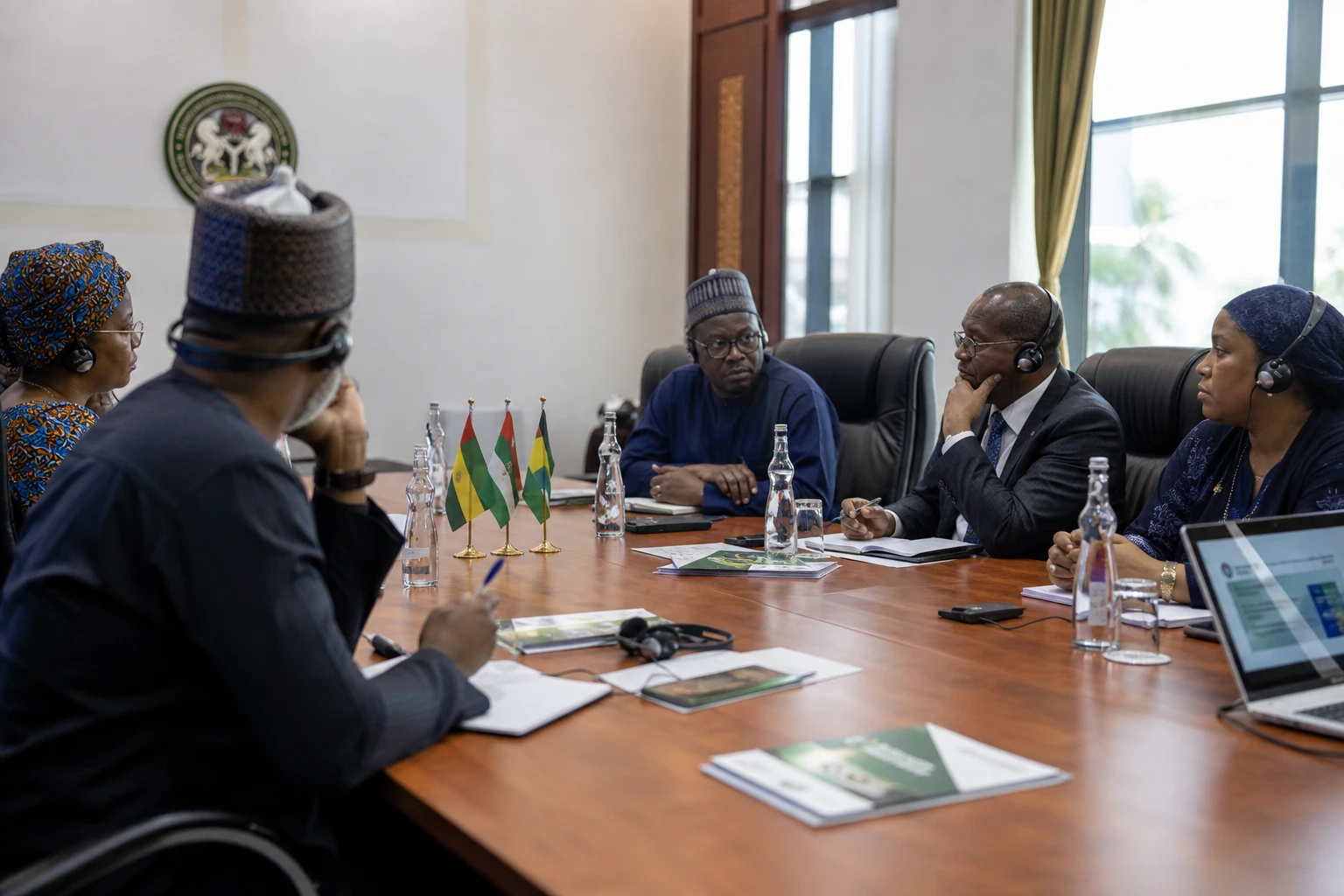
In Nigeria, access to electricity remains a daily challenge, not just a matter of public policy
For many Nigerian households, the question is not whether to switch to solar, but how to pay for it. In Abuja, as in many smaller cities and rural areas, the upfront cost of panels, batteries and inverters remains a major obstacle, even as the country seeks solutions to power homes, workshops and small businesses off-grid. Across Africa, Nigeria remains one of the most pivotal markets for testing low-cost models of energy access.
This initiative forms part of a broader strategy by the Rural Electrification Agency, the federal body responsible for bringing electricity to unserved and underserved areas. The agency leads several major programmes, including the Nigeria Electrification Programme and DARES, the Distributed Access through Renewable Energy Scale-up initiative. In a country where weak electricity distribution remains a chronic problem, off-grid power is no longer a marginal supplement: it is becoming a pillar of electricity policy.
MOPO and the REA partnership opens up a market beyond battery rental
On 20 July 2026, MOPO and the Rural Electrification Agency announced an agreement to accelerate the rollout of pay-as-you-go solar battery rentals in Nigeria. The national initiative is called the Nigeria Smart Battery Rental Programme. Its pilot phase is due to begin in December 2026, with expansion planned after an evaluation. MOPO says it intends to invest up to $75 million in the country by 2030. The REA, for its part, is to facilitate the regulatory environment, engagement with authorities and the mobilisation of funders.
The model is simple on paper. The company installs solar hubs, supplies ready-to-use batteries and distributes them through local agents. Users pay a daily rental fee, with no upfront equipment purchase. The service can provide lighting and phone charging, as well as power for some household or business appliances. MOPO says it already operates more than 320 hubs in Nigeria and opens a new station each day. The company also says it has reached 1.6 million rentals a month, up from 150,000 in 2023.
This “energy-as-a-service” approach addresses a very practical constraint: for many households, the problem is not a complete lack of demand, but an inability to finance the initial equipment. In practice, renting can open up the market to households with irregular incomes, small shops, kiosks, repair workshops and informal businesses that cannot tie up significant capital. The partnership is therefore focused as much on access to energy as on a cash-flow model suited to the realities of Nigeria. This is consistent with the REA’s public policy priorities, which already promote mini-grids, stand-alone solar systems and “energy-as-a-service” arrangements.
The British group also sees Nigeria as a base for growth. MOPO already operates in several African countries, including the Democratic Republic of the Congo, Liberia, Sierra Leone, Chad and Uganda, and says it has surpassed 42 million rentals in total. The company says it employs 300 people and relies on 2,000 agents, mostly in Africa. It had already signed a battery recycling partnership in Nigeria, an important issue in a sector where equipment end-of-life is becoming an industrial as well as an environmental concern.
What the agreement changes for Nigeria, and why it matters across the continent
Nigeria is not simply buying a recharging service here. It is testing a more flexible way to close its energy gap. World Bank estimates have for several years put the number of Nigerians without access to electricity at about 85 million, although exact figures vary with updates and calculation methods. This remains one of the largest shortfalls in the world. In this context, battery rental could complement mini-grids and individual solar kits, especially in areas where extending the main grid will take time.
Financing will remain the sensitive issue. MOPO has not specified the amount earmarked for the pilot or the precise source of the funds. This matters because the viability of a low-cost model depends on the cost of capital, logistics, battery replacement and maintenance. The REA is therefore chiefly presenting itself as an architect of the scheme: setting the regulatory framework, coordinating with the public sector and connecting the project with funders. In other words, the state is not shouldering the investment alone, but is creating the conditions for private companies to roll out solutions faster. This kind of arrangement has become central to Africa’s off-grid sector. It can go further than stand-alone public financing while limiting reliance on permanent subsidies.
The initiative also extends beyond Nigeria. In West Africa, the REA is already expanding cooperation, notably with ECOWAS through off-grid electrification initiatives. Nigeria often serves as a large-scale testing ground for solutions that can then be replicated elsewhere, from the Sahel to coastal countries. At the continental level, the issue is linked to Mission 300, the initiative led by the World Bank and the African Development Bank to connect 300 million people in sub-Saharan Africa by 2030. Battery rental is no miracle solution. But it could become a useful part of the wider mix of energy-access options, provided it proves sustainable in the long term financially, technically and in terms of recycling.