Algeria
 Egypt
 Libya
 Morocco
 Sudan
 Tunisia
 Benin
 Burkina Faso
 Cabo Verde
 Côte d'Ivoire
 Ghana
 Guinea
 Guinea-Bissau
 Liberia
 Mali
 Mauritania
 Niger
 Nigeria
 Senegal
 Sierra Leone
 The Gambia
 Togo
 Cameroon
 Central African Republic
 Chad
 DR Congo
 Equatorial Guinea
 Republic of the Congo
 São Tomé and Príncipe
 Burundi
 Comoros
 Djibouti
 Eritrea
 Ethiopia
 Kenya
 Madagascar
 Malawi
 Mauritius
 Mozambique
 Rwanda
 Seychelles
 Somalia
 South Sudan
 Tanzania
 Uganda
 Angola
 Botswana
 Eswatini
 Lesotho
 Namibia
 South Africa
 Zambia
 Zimbabwe
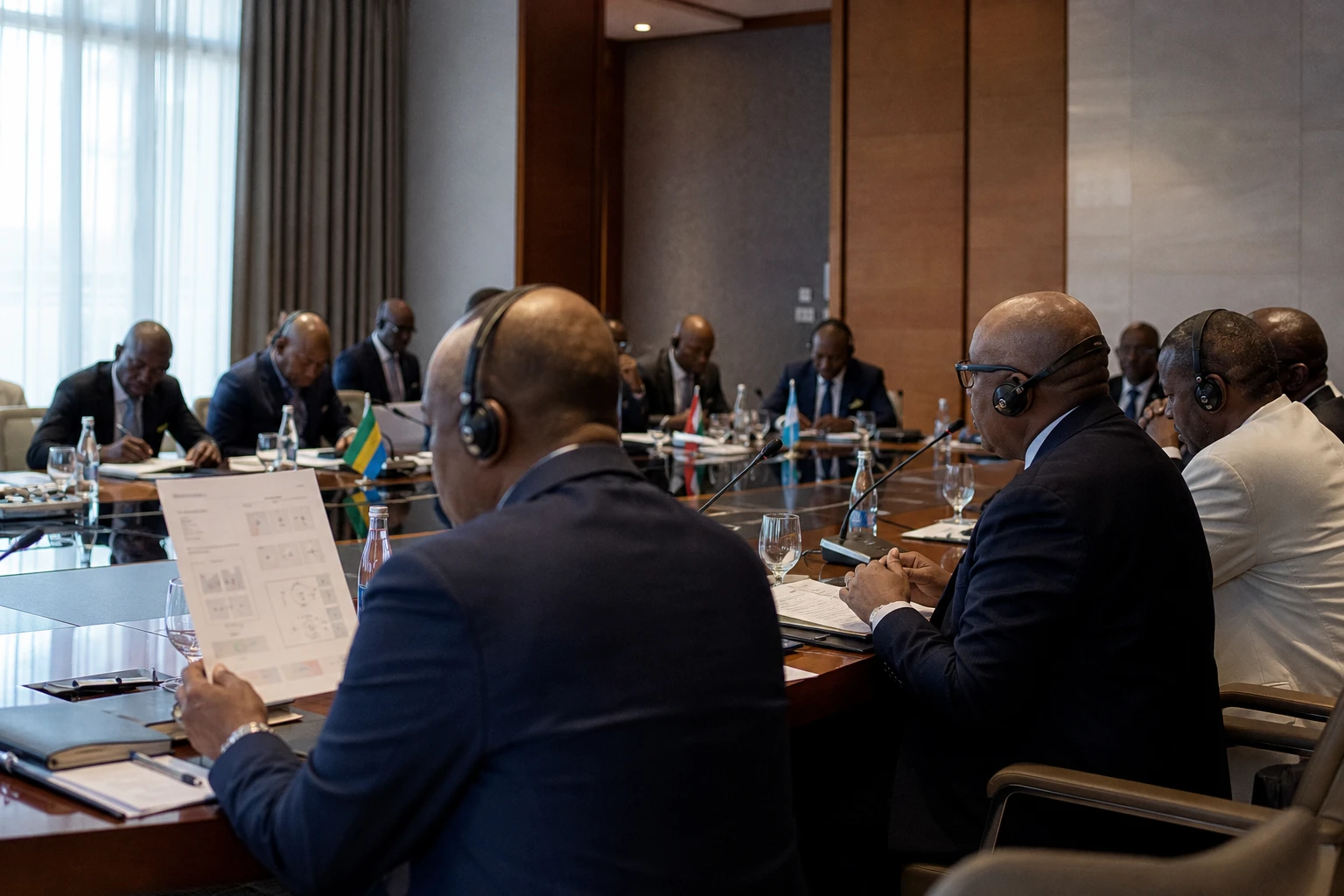
In Gabon, value is now created beyond the mine
In Moanda, in Haut-Ogooué, manganese is no longer just a matter of tonnes extracted and shipped. It has become a test of industrial sovereignty, skilled jobs and the country’s ability to retain more value at home. The choice is clear: continue selling raw ore, or build an industry in which Gabonese people see more than trucks and wagons passing on their way to the port.
This debate extends far beyond the Eramet group and its subsidiary Comilog. It touches on how Libreville wants to reposition the national economy, in a country that relies on manganese as one of its mining pillars, but also on CEMAC, the Central African economic zone, to strengthen regional value chains that remain too fragmented. The question is not theoretical: it concerns public revenues, rail transport, local subcontractors and technical training.
A political decision already taken, with a timetable set
The heart of the issue dates back to the Council of Ministers meeting on 30 May 2025. The Gabonese Presidency confirmed there that the export of raw manganese would be formally banned from 1 January 2029. The government presents the measure as a lever to speed up local processing and create more direct and indirect jobs in the country.
Eramet responded soon afterwards, acknowledging the policy direction while saying it wanted to continue dialogue with the Gabonese state. The French group, which has been present in Gabon for more than 30 years, recalled its role in manganese extraction and processing, and said it intended to work with the authorities in a spirit of partnership.
Since then, the issue has moved from the political to the industrial arena. A follow-up meeting was held on 26 January 2026 between the relevant Gabonese ministries, Eramet-Comilog and the French embassy, showing that the timetable is no longer merely declarative. The Ministry of Mines also said in January 2026 that dialogue remained open on implementing the industrial shift.
What Eramet is planning, and why it matters
Eramet’s roadmap is shaped by this new constraint. The company has announced plans to expand its processing capacity in Gabon, with three plants intended to produce manganese alloys and manganese oxide. Its stated goal is to process up to 700,000 tonnes of ore a year by the end of 2031, subject to investment decisions, technical approvals and the fulfilment of environmental conditions.
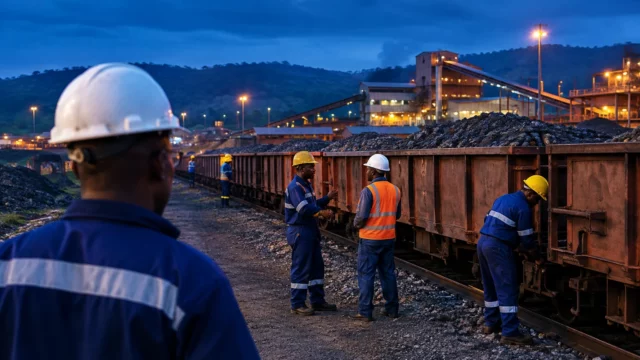
This programme is not starting from scratch. Comilog already operates processing infrastructure in Moanda, including the Moanda Metallurgical Complex. The group says it has increased its production and washing capacity on the Okouma plateau, and explains that local processing has been part of its strategy for several years. In practice, that means Gabon is not starting from zero, but must now move to a different scale.
The main market remains steelmaking, which still accounts for most global manganese demand. The International Energy Agency notes, however, that as the energy transition advances, battery-related uses are gradually gaining ground. The agency estimates that battery-related manganese demand could account for around 5% of total demand in 2035, rising to about 10% in 2040 in its reference scenarios.
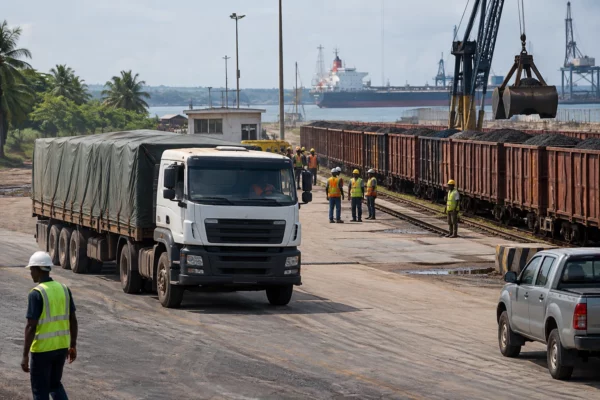
This shift changes the equation for Gabon. If the country manages to capture a greater share of processing, it can hope for higher revenues, more stable jobs and a more skilled local workforce. Conversely, if projects stall, the 2029 ban risks creating tension between industrial ambition and the realities of the timetable. The Trans-Gabon Railway, which links mining areas to the port of Owendo, is becoming a strategic asset, alongside access to energy and industrial finance.
An equation for Gabon, but also for Africa
Gabon’s case resonates across the continent. Several African states now want to move beyond the conventional model: low-cost extraction, raw exports, then buying back high-value processed products. Botswana has begun its own review of manganese battery compounds. Gabon, meanwhile, is seeking to turn a longstanding mining advantage into a more ambitious industrial policy.
The regional implications are real for CEMAC, where Gabon wants to show that a forested, mining nation can also build an industrial base around a strategic resource. In this context, the issue is not limited to Eramet. It concerns the role of the state as a shareholder, with its 29% stake in Comilog; the ability of Gabonese companies to enter the subcontracting sector; and the integration of an industry capable of employing technicians, logistics specialists and engineers locally.
The decisive question remains: can the industry keep pace until 2029? The next milestones are clear. Attention will need to focus on final investment decisions, construction of the processing plants, agreements on energy and rail, and the legal implementation of the ban on raw ore exports. This is where the credibility of the industrial shift sought by Libreville will be measured.