Algeria
 Egypt
 Libya
 Morocco
 Sudan
 Tunisia
 Benin
 Burkina Faso
 Cabo Verde
 Côte d'Ivoire
 Ghana
 Guinea
 Guinea-Bissau
 Liberia
 Mali
 Mauritania
 Niger
 Nigeria
 Senegal
 Sierra Leone
 The Gambia
 Togo
 Cameroon
 Central African Republic
 Chad
 DR Congo
 Equatorial Guinea
 Gabon
 Republic of the Congo
 Burundi
 Comoros
 Djibouti
 Eritrea
 Ethiopia
 Kenya
 Madagascar
 Malawi
 Mauritius
 Mozambique
 Rwanda
 Seychelles
 Somalia
 South Sudan
 Tanzania
 Uganda
 Angola
 Botswana
 Eswatini
 Lesotho
 Namibia
 South Africa
 Zambia
 Zimbabwe
An archipelago voting under close scrutiny
In São Tomé and Príncipe, a presidential election is never merely a matter of protocol. In this two-island archipelago off the Gulf of Guinea, the vote also serves as a test of a democracy often cited as one of Central Africa’s most stable. This time, however, the election is taking place in a more tense atmosphere, as divisions within the ruling camp have already affected the country’s institutional life.
The first round was held on Sunday 19 July 2026, with a run-off possible on 9 August if no candidate secures an absolute majority. The main contenders include incumbent president Carlos Vila Nova, ADI parliamentary leader Nito Viegas d’Abreu, and two independent candidates, Miques João Bonfim and Eugénio Tiny.
A largely symbolic presidency, but one with influence
São Tomé and Príncipe has a parliamentary system. The head of state mainly acts as an arbiter and guarantor of the institutions, while most executive power rests with the prime minister. This is why the presidential election matters less for day-to-day governance than for the overall political balance. July’s vote also opens a wider electoral cycle, with parliamentary and local elections scheduled for 27 September 2026.
In this context, Sunday’s vote will not only decide the fate of a presidential term. It will also help set the stage for the formation of the next government. In a country where alliances shift quickly, the presidential result could strengthen or weaken the balances that emerge from the parliamentary election.
The facts: five candidates, a larger electorate and a tense campaign
The Constitutional Court approved five candidacies for the 19 July 2026 election. They include Carlos Vila Nova, Nito D’Abreu, former prime minister Jorge Bom Jesus, and lawyers Miques João Bonfim and Eugénio Tiny. The candidacy of Domingos Monteiro, known as Nino, was rejected.
The electorate has also grown. The National Electoral Commission recorded 142,298 registered voters, according to provisional data published in June, while the national electoral portal reported 142,191 registered voters at the time of the election. Most voters are in the country, but more than 20,000 are registered in the diaspora, mainly in Europe and several African countries.
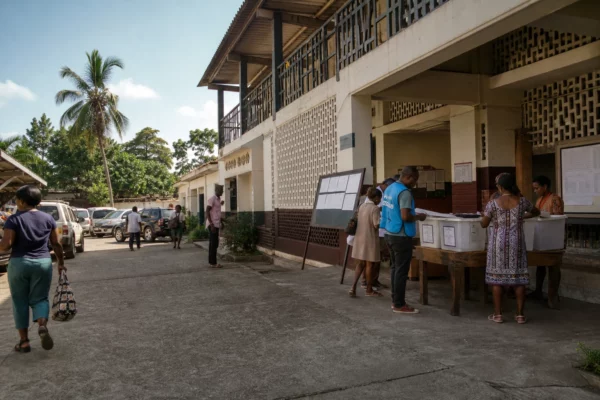
Authorities and observers stressed that the first hours had been calm. Turnout remained a concern, however. In 2021, abstention exceeded 30%, a reminder that in São Tomé and Príncipe, democratic vitality is measured not only by the regularity of elections but also by citizens’ actual participation.
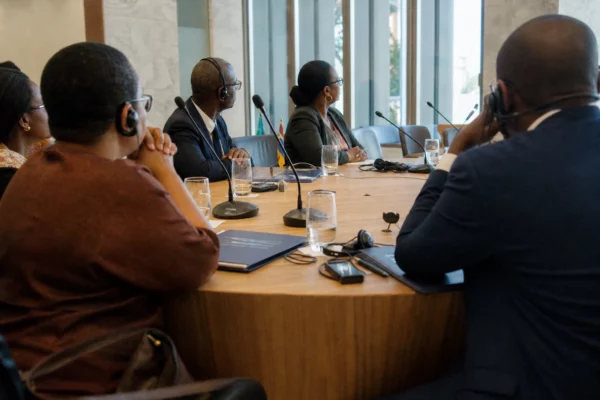
Several observer missions were deployed. The CPLP, the Community of Portuguese Language Countries, set up a 15-person mission at the request of the São Toméan authorities. The European Union also announced that it would send a mission to observe the 19 July presidential election and the 27 September parliamentary election.
The Vila Nova–Trovoada rift has reshaped the campaign
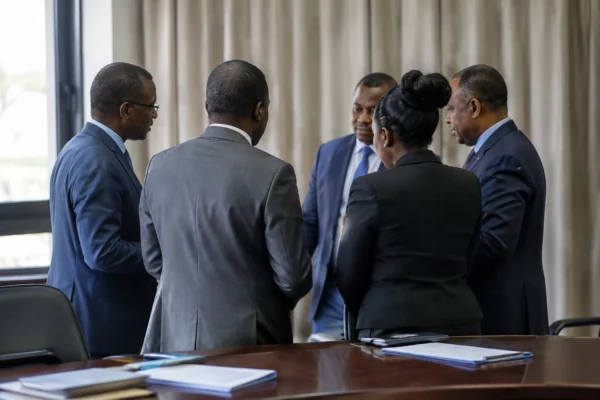
The contest took on particular significance after the break between Carlos Vila Nova and Patrice Trovoada, the former prime minister and dominant figure in the ADI, the centre-right party holding a majority in the National Assembly. The head of state dismissed Trovoada on 6 January 2025, citing his lengthy absences and governance difficulties. In January 2026, the Constitutional Court subsequently ruled that the decision was unconstitutional.
The episode erupted at the heart of the same political camp. It turned an ordinary presidential election into an internal arbitration over the direction of power. Vila Nova is now running as an independent, while Nito D’Abreu, backed by Patrice Trovoada, represents the other side of the battle. The election is therefore also a measure of strength between two factions stemming from the ADI.
For the people of São Tomé and Príncipe, the stakes are tangible. A more conciliatory presidency could reduce institutional friction and stabilise the conduct of affairs in the coming months, in a country of fewer than 240,000 people that depends heavily on the smooth functioning of the state. Conversely, a new period of rivalry between the presidency, government and parliament could slow economic decisions and complicate the management of social expectations.
Significance beyond the archipelago
São Tomé and Príncipe is not a member of a major regional bloc such as ECOWAS or CEMAC. But the country matters in African and Portuguese-speaking diplomatic circles. Its stability is of interest to the Community of Portuguese Language Countries, the African Union and Gulf of Guinea partners, where maritime security, the movement of people and the credibility of institutions remain sensitive issues.
The country also has symbolic significance. The 2026 elections have been described by the Africa Center for Strategic Studies as a test of the country’s democratic credentials. At a time when several political transitions across the continent remain fragile, São Tomé and Príncipe is a reminder that small size does not preclude political competition or institutional debate.
What happens next will depend on the count, followed by a possible run-off on 9 August. But the real issue is already taking shape: whether the country will emerge from the election with a presidency able to ease relations between institutions, or with an even more fragmented political landscape ahead of September’s parliamentary election.