Algeria
 Egypt
 Libya
 Morocco
 Sudan
 Tunisia
 Benin
 Burkina Faso
 Cabo Verde
 Côte d'Ivoire
 Ghana
 Guinea
 Guinea-Bissau
 Liberia
 Mali
 Mauritania
 Niger
 Nigeria
 Senegal
 Sierra Leone
 The Gambia
 Togo
 Cameroon
 Central African Republic
 Chad
 DR Congo
 Equatorial Guinea
 Gabon
 Republic of the Congo
 São Tomé and Príncipe
 Burundi
 Comoros
 Djibouti
 Eritrea
 Ethiopia
 Madagascar
 Malawi
 Mauritius
 Mozambique
 Rwanda
 Seychelles
 Somalia
 South Sudan
 Tanzania
 Uganda
 Angola
 Botswana
 Eswatini
 Lesotho
 Namibia
 South Africa
 Zambia
 Zimbabwe
A dance celebration that also speaks of Kenya
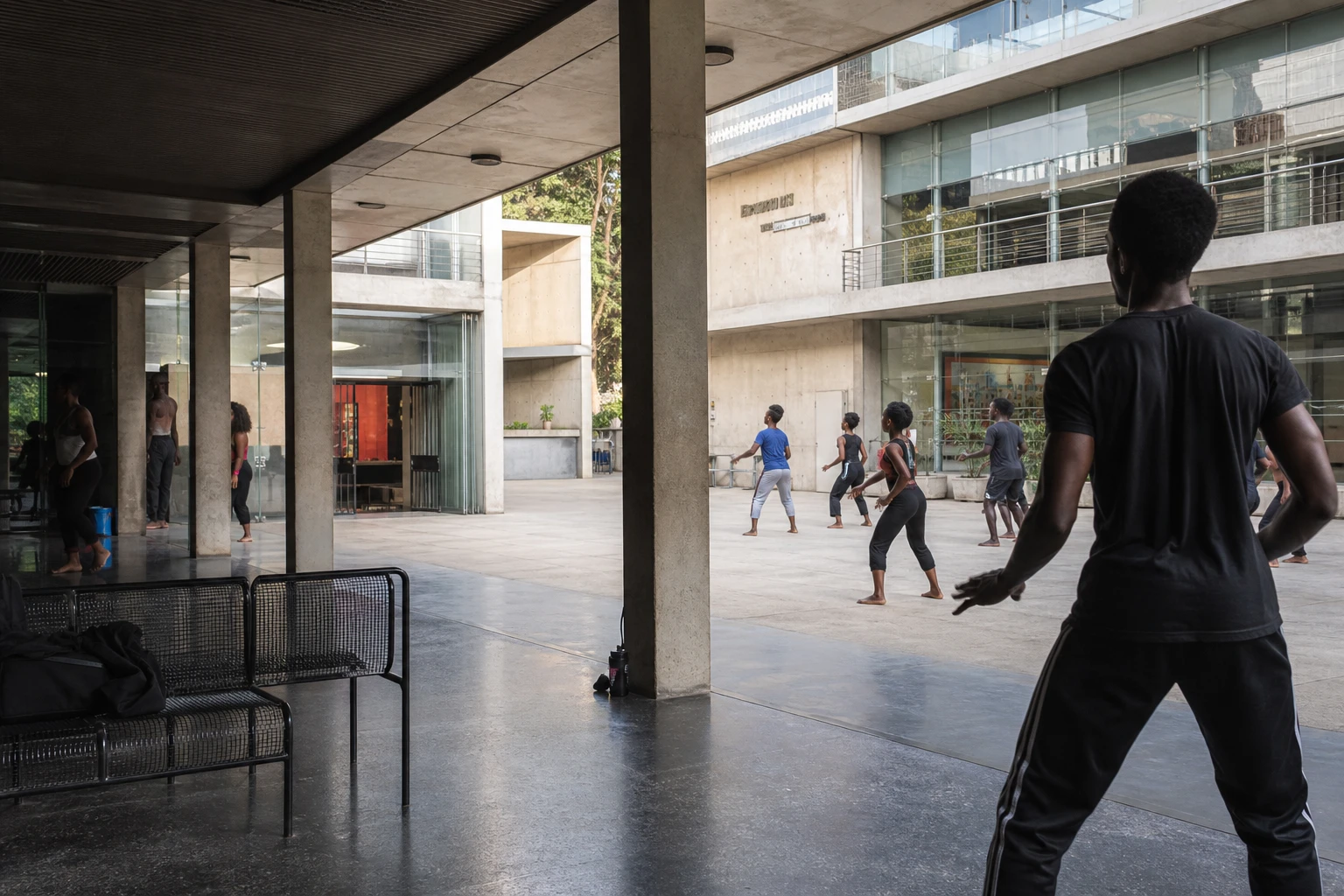
In Lyon, a dance production can tell a story that goes well beyond a simple stage event. It also shows how an artist born in Nairobi, Kenya, brings the movements, languages and memories of East Africa into circulation in a very tangible European setting. That is the aim of Shangwe, le bal, a participatory project led by Kenyan choreographer Wanjiru Kamuyu, presented as part of the Nuits de Fourvière festival, with around 60 amateur dancers taking part in a dance celebration conceived as a space for sharing.
The title itself provides a key to understanding the work. Shangwe means “joy” in Kiswahili, a major lingua franca of East Africa. The language has an important regional role: it is promoted by the East African Community, of which Kenya is a member, and is also recognised at continental level by the African Union.
In Lyon’s cultural landscape, the project therefore operates on two levels. It invites audiences to dance, while also reminding them that African artistic practice is not frozen in folklore. It can be contemporary, mobile and transnational. That is precisely what Wanjiru Kamuyu, born in Nairobi and based in France for nearly 20 years, argues for, after a career that has taken her between Kenya, the United States and Europe.
From the Lyon stage to East Africa’s networks
The institutional setting matters. The Nuits de Fourvière has included Shangwe, le bal in its programme for 14 July 2026 in Lyon, with the event billed as open to a wide audience and involving around 60 “accomplices”. The project takes place at Les Subsistances, on the banks of the Saône, a venue that regularly hosts hybrid forms combining artistic creation, learning and live performance.
The choice of choreography rooted in East Africa is no coincidence. Kamuyu is working with artists from Kenya, Tanzania and Burundi. The production brings several of the region’s dance traditions to the stage, while also making room for contemporary performance. Rehearsals also serve as a language laboratory: the choreographer switches from French to English, then introduces a few Kiswahili words so that audiences understand the meaning of the gestures as well as their energy.
This choice resonates with a wider regional reality. Across the East African Community, Kiswahili is promoted as a language that brings partner states closer together. The regional organisation now comprises eight countries: Kenya, Uganda, Tanzania, Burundi, Rwanda, South Sudan, Somalia and the Democratic Republic of the Congo.
In other words, dance does not merely illustrate an identity. It becomes a regional medium. In this space, steps, calls, rhythms and words move from one country to another, as trade, family and cultural exchanges already do within the EAC. The Lyon stage does not replace this circulation; it makes it visible to a different audience.
What this dance celebration says about Kenyan creativity
For Kenya, the significance is symbolic, but not abstract. Nairobi has for several years been establishing itself as a creative hub where movement arts engage with the international stage. Wanjiru Kamuyu is part of a generation of Kenyan artists who work abroad without severing their ties to their roots. Her career reflects a dual dynamic: the global circulation of artists and the reinvestment of East African references in new contexts.
The choreographer does not use East Africa as a backdrop. She treats it as a living source. This matters because it avoids two common pitfalls: exoticisation and reduction to heritage. Here, Kenya is not presented as a fixed image, but as an aesthetic and intellectual starting point. Tanzania and Burundi, too, are more than decorative references. Their practices, styles and choreographic memories are woven into the work.
The show also says something about audiences. The amateur dancers brought together in Lyon are not simply given a technical demonstration. They learn a story, a meaning and a way of moving. This gentle form of teaching matters because it changes the audience’s relationship with East Africa: instead of looking in from the outside, they enter a movement vocabulary.
At the same time, the presence of a Kenyan artist in France is a reminder of a simple fact: African and European stages are already intertwined. Artists from the continent do not travel only to be seen abroad. They build methods, collaborations and audiences there. That, too, is evident in Kamuyu’s international career, with her works presented in Europe, Africa and North America.
A significance beyond the evening in Lyon
At continental level, Shangwe, le bal is a reminder that culture is also a tool for integration. The African Union recognises Kiswahili as a working and connecting language, while the East African Community treats it as a vehicle for regional unity. Dance plays a similar role: it conveys meaning without heavy-handed words and connects people without making them uniform.
For Kenya, this international visibility could have a ripple effect. It celebrates artists, but also the diversity of East African imaginaries. It shows that a work created in Nairobi can engage with Lyon without relying on old narratives of one-way cultural export. Movement goes in both directions.
One question remains: whether these participatory forms can endure beyond a festival date. If they become part of seasons, residencies and lasting exchanges, they can strengthen ties between African and European stages. If they remain temporary interludes, they retain their beauty but lose some of their impact. In this case, the presence of a network of venues, co-producers and circuits linking Lyon, Paris and other stages suggests that the project’s ambitions extend beyond a single closing-night event.