Algeria
 Egypt
 Libya
 Morocco
 Sudan
 Tunisia
 Benin
 Burkina Faso
 Cabo Verde
 Côte d'Ivoire
 Ghana
 Guinea
 Guinea-Bissau
 Liberia
 Mali
 Mauritania
 Niger
 Senegal
 Sierra Leone
 The Gambia
 Togo
 Cameroon
 Central African Republic
 Chad
 DR Congo
 Equatorial Guinea
 Gabon
 Republic of the Congo
 São Tomé and Príncipe
 Burundi
 Comoros
 Djibouti
 Eritrea
 Ethiopia
 Kenya
 Madagascar
 Malawi
 Mauritius
 Mozambique
 Rwanda
 Seychelles
 Somalia
 South Sudan
 Tanzania
 Uganda
 Angola
 Botswana
 Eswatini
 Lesotho
 Namibia
 South Africa
 Zambia
 Zimbabwe
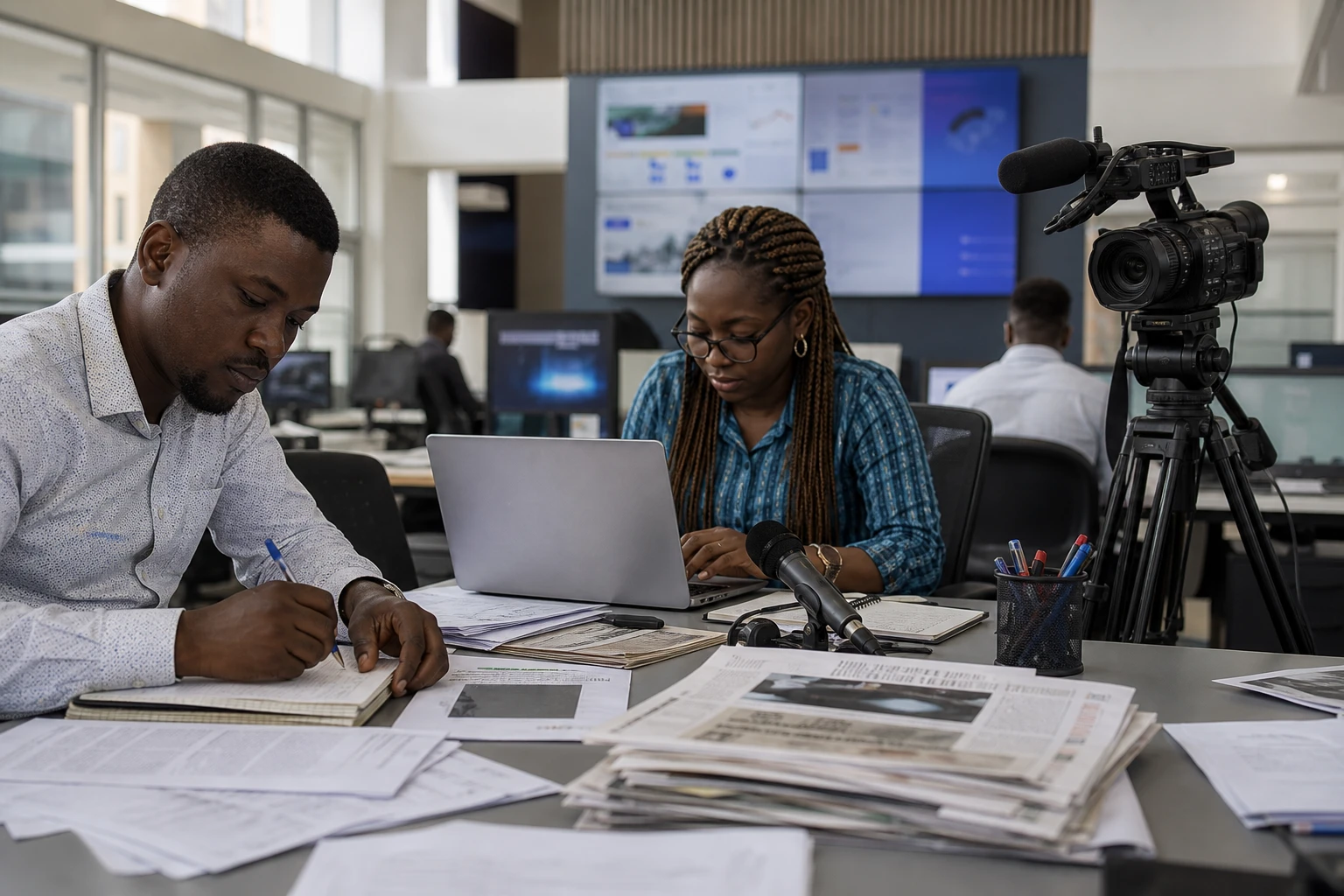
A reform that goes beyond the classroom
In Abuja, the Nigerian government has put basic education back at the centre of its economic policy. The signal is strong. In a country where millions of children remain out of school, every reform of the education sector is also a reform of employment, social security and social mobility.
Nigeria is not acting in a vacuum. Across West Africa, education systems still bear the weight of rapid population growth, marked regional inequalities and strained public finances. The regional context also matters: a large youth population, tight budgets and governments seeking to turn the demographic promise into human capital.
HOPE-EDU, $552.18m in funding
The HOPE-EDU programme was launched on Thursday 16 July 2026 at State House in Abuja, as part of a broader package of federal reforms. The initiative is presented as a $552.18m scheme, co-financed by the World Bank and the Global Partnership for Education.
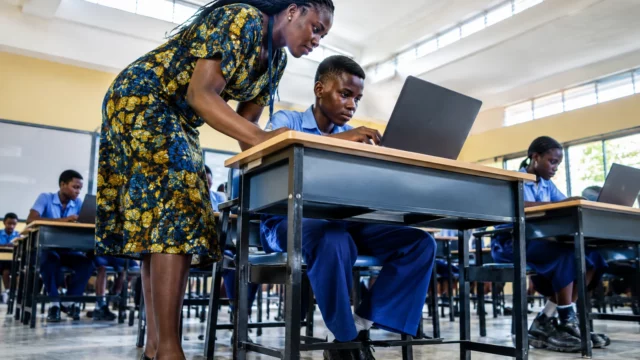
According to the World Bank’s project documents, HOPE-EDU has three simple but decisive aims: improve foundational learning, widen access to school and strengthen education systems in participating states. The programme is expected to directly reach about 29 million children and 500,000 teachers in more than 65,000 public primary schools. The authorities also cite 10,000 non-formal learning centres, an important point in a country where conventional schools do not reach every child.
The official framework emphasises structured pedagogy, the opening of new classrooms, infrastructure rehabilitation and stronger management of funds earmarked for basic education. In short, this is less a simple transfer of money than an attempt to bring order to the chain running from the budget to the classroom.
A country with the world’s largest out-of-school population
The focus on education is not symbolic. It responds to a problem documented for years. UNICEF says about 10.5 million primary-school-age children are out of school in Nigeria. It also notes that girls account for 60% of these children, with the situation particularly difficult in the north of the country.
The obstacles are well known. There is a shortage of classrooms, trained teachers and equipment, as well as monitoring mechanisms capable of conveying schools’ real needs to the authorities. In several states, security constraints further hinder school attendance. Elsewhere, household poverty, distance or the indirect costs of schooling cause children to drop out.
The government is now promoting a broader approach to human capital. In 2026, Nigeria’s federal budget allocated 3.52 trillion naira to education, according to the president’s budget speech. The executive presents this as a significant effort, although international organisations note that sustainable education funding also requires better-targeted and more regular public spending.
What the increase in funding could change
HOPE-EDU will not operate alone. The programme is part of a wider sequence of reforms and partnerships. Nigeria has already seen a proliferation of parallel initiatives, from the federal government, state governments, the World Bank and private actors. The Aliko Dangote Foundation, for example, has announced a commitment of about 1 trillion naira over ten years for education, with an initial target of 45,000 pupils from 2026.
This multiplication of funding channels can help, but it also raises a central question: who coordinates, who oversees and who measures the results? In such a vast system, the risk is not only a lack of money. It is also fragmentation, duplicated programmes and weak monitoring. State governments, which manage a large part of implementation, remain the decisive links.
For families, the stakes are immediate. More functioning schools, less overcrowding in classrooms, more trained teachers and more options for children outside the conventional system could change the course of millions of young Nigerians’ lives. For the authorities, this is also a political test: education reform will be judged by visible results, not announcements.
A test for Nigeria and for West Africa
The launch of HOPE-EDU resonates beyond Nigeria. Across the sub-region, basic schooling is a concern spanning ECOWAS, the digital transformation of learning and debates about youth productivity. Nigeria, Africa’s most populous country, often sets the tone for large-scale policies. When Abuja invests in schools, it also signals the direction the West African agenda could take.
The continental significance is clear. The African Union and regional institutions regularly stress that no sustainable industrialisation is possible without strong literacy, foundational skills and well-prepared teachers. Basic education is therefore not a secondary social issue. It is a lever of economic sovereignty.
The next thing to watch will be implementation. In the months ahead, attention will focus on the ability of the federal government, states and partners to turn this financial framework into measurable results: enrolment, classroom attendance, learning, girls’ retention and improvements to schools in the most vulnerable areas. That is where the credibility of the promise made in Abuja will be tested in very concrete terms.