
 Algeria
 Egypt
 Libya
 Morocco
 Sudan
 Tunisia
 Benin
 Burkina Faso
 Cabo Verde
 Côte d'Ivoire
 Ghana
 Guinea
 Guinea-Bissau
 Liberia
 Mali
 Mauritania
 Niger
 Nigeria
 Sierra Leone
 The Gambia
 Togo
 Cameroon
 Central African Republic
 Chad
 DR Congo
 Equatorial Guinea
 Gabon
 Republic of the Congo
 São Tomé and Príncipe
 Burundi
 Comoros
 Djibouti
 Eritrea
 Ethiopia
 Kenya
 Madagascar
 Malawi
 Mauritius
 Mozambique
 Rwanda
 Seychelles
 Somalia
 South Sudan
 Tanzania
 Uganda
 Angola
 Botswana
 Eswatini
 Lesotho
 Namibia
 South Africa
 Zambia
 Zimbabwe
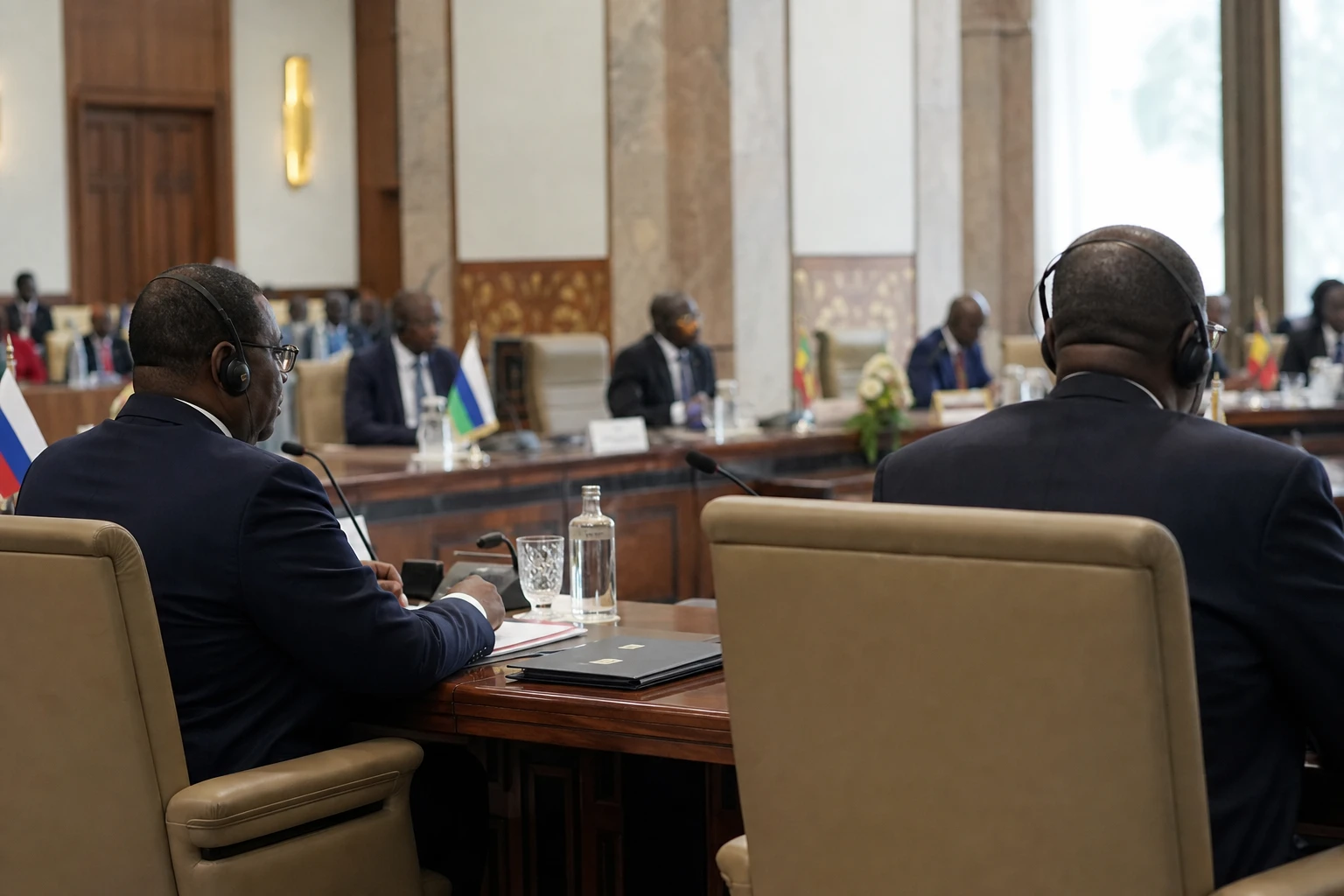
More than a visit, a test of the balance of power in Dakar
In Senegal, a simple audience can quickly become a political signal. When it brings Bassirou Diomaye Faye and Macky Sall face to face, it says far more than a diplomatic agenda: it tells the story of the balance of power in Dakar, between the legacy of the former government, party realignments and the battle for influence over the national narrative.
The former head of state is due to be received in Dakar on Friday 17 July 2026 for a brief visit, announced as linked to his campaign for the post of UN secretary-general. The initiative comes as the country remains shaped by a majority born of the wave of change championed by Pastef, the party of Bassirou Diomaye Faye, and by persistent tensions between the president and Ousmane Sonko, who was recently removed as prime minister.
A UN candidacy without domestic backing
The Macky Sall bid is not new. The UN included his candidacy in the 2026 selection process after his nomination was submitted on 2 March 2026 by Burundi, then chair of the African Union. The organisation also confirmed that four candidates were in the running: Macky Sall, Michelle Bachelet, Rafael Grossi and Rebeca Grynspan.
But the candidacy is moving forward without clear support from Senegal. In March 2026, Senegalese diplomats told the African Union that the country had neither supported nor initiated the move. A few weeks later, the AU failed to reach a consensus, with several states asking for more time or raising objections, weakening the prospect of an African bloc behind the former president.
This lack of alignment matters. Under UN practice, the Security Council first selects a name, with no veto from the permanent members, before formal approval by the General Assembly. In other words, a candidate can feature in the international debate while remaining politically contested at home.
A former president returns amid heightened tensions
Macky Sall’s return comes as Senegal is still grappling with the legacy of political violence from 2021 to 2024. Human rights organisations have documented dozens of deaths during this period; Amnesty International has cited more than 60 victims, and Human Rights Watch has reported a crackdown marked by live rounds, arrests and severe restrictions on civil liberties.
These figures matter. They fuel the protests of some victims and civil society groups, who see a possible international promotion for the former president as a reward for impunity. In Dakar, campaign groups recalled these wounds as preparations were under way for his audience with the head of state.
The current government has nevertheless adopted an institutional line. The defence minister recalled that Macky Sall was not the subject of any prosecution or conviction and retained the right to enter and leave the country. This position does not erase the political debate, but it establishes a republican framework: the courts have yet to rule, while public memory remains vivid.
Diomaye Faye, Sonko and the pull of the centre
For Bassirou Diomaye Faye, receiving Macky Sall is also a positioning move. Since the split between the president and Ousmane Sonko, who was dismissed on 22 May 2026 and then replaced as head of government, the head of state has sought to strengthen a more institutional stature. The composition of the new government, published by the presidency, confirmed this shift towards the centre.
This shift in the centre of gravity has tangible effects. For the presidency, it could help broaden support beyond Pastef’s core activists. For the opposition, it could create the impression of a government too quick to normalise relations with its former adversaries. In a country where political competition remains intense, every protocol gesture is read as a message about what comes next.
The electoral landscape is never far away. Senegal remains in a period of consolidation following the 2024 presidential election and the 2026 reshuffles. Even without a formal alliance, a tactical rapprochement with historic figures such as Macky Sall, or gestures of openness towards the Senegalese Democratic Party of the Wade era, could redraw the boundaries of power in Dakar.
A Senegalese story, with West African implications
This episode extends beyond Senegal. It says something about the place of former African heads of state in multilateral institutions, competition between capitals to influence international appointments, and the way national political transitions spill over into continental diplomacy. The African Union, already divided over the matter, has shown that African support is never automatic, even when a candidate is put forward by a former president from the continent.
It also sheds light on expectations surrounding ECOWAS, the Economic Community of West African States, even though the organisation is not directly involved in the UN race. Across the region, capitals are watching how Senegal manages the coexistence of political change, institutional continuity and diplomatic ambition. In this respect, Dakar remains a useful barometer for West Africa.
Finally, timing matters. The UN must still choose between the candidates before the end of António Guterres’s term, which ends in late 2026, while Senegal is entering a period in which domestic decisions, trials linked to past violence and foreign policy choices may converge. The 17 July meeting settles nothing. Above all, it shows that in the Senegalese capital, global diplomacy and domestic politics are now moving along the same fault line.



