Algeria
 Egypt
 Libya
 Morocco
 Sudan
 Tunisia
 Benin
 Burkina Faso
 Cabo Verde
 Côte d'Ivoire
 Ghana
 Guinea
 Guinea-Bissau
 Liberia
 Mali
 Mauritania
 Niger
 Nigeria
 Senegal
 Sierra Leone
 The Gambia
 Togo
 Central African Republic
 Chad
 DR Congo
 Equatorial Guinea
 Gabon
 Republic of the Congo
 São Tomé and Príncipe
 Burundi
 Comoros
 Djibouti
 Eritrea
 Ethiopia
 Kenya
 Madagascar
 Malawi
 Mauritius
 Mozambique
 Rwanda
 Seychelles
 Somalia
 South Sudan
 Tanzania
 Uganda
 Angola
 Botswana
 Eswatini
 Lesotho
 Namibia
 South Africa
 Zambia
 Zimbabwe
In Yaoundé, a legal case that goes beyond a single crime
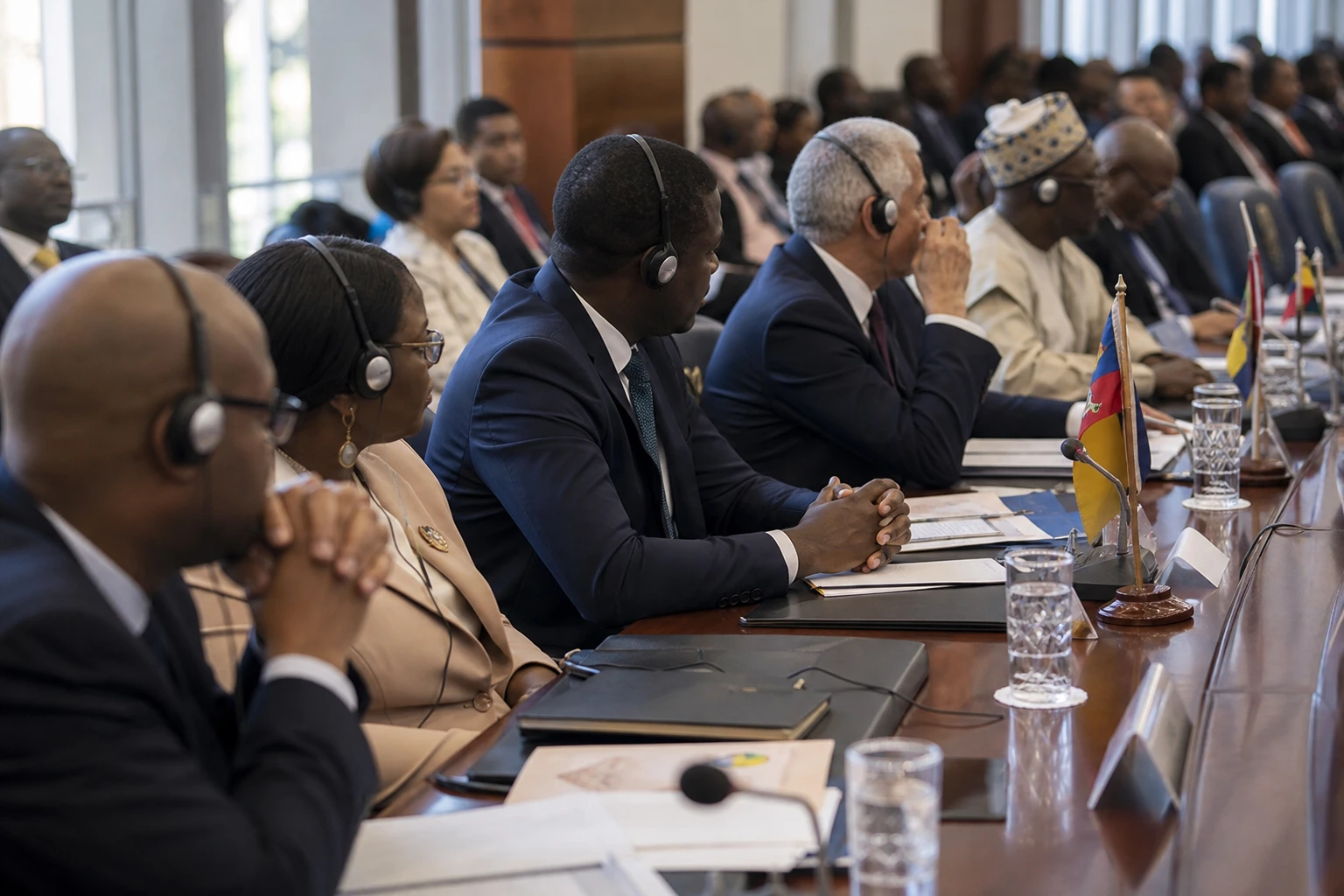
In Cameroon, some trials say far more than a crime alone. They test the state’s ability to document facts, hear witnesses and see a case through to the end, even when the names mentioned touch sensitive circles of power, security and business. The Martinez Zogo case is one of them. Since January 2023, it has been closely followed because it touches on press freedom, trust in institutions and the question of impunity in Cameroon’s capital, Yaoundé.
The case is being heard at the Yaoundé Military Court. In Cameroon, such courts exist in every region and hear, among other matters, offences under the Code of Military Justice. This explains why a trial involving alleged members of the security forces, as well as civilians prosecuted in the same proceedings, is being heard in this court.
The 34th witness takes the stand at the heart of the investigation
The hearings on 14 and 15 July 2026 marked an important moment with the testimony of Colonel Jean-Pierre Otoulou, described as the prosecution’s 34th witness. The officer recounted the first arrests linked to the case and put his own role into the chronology of the investigation. He recalled that he was then commanding the Centre Gendarmerie Legion when Martinez Zogo’s abduction was reported. He now heads the Littoral Gendarmerie Legion.
According to the hearing report, the witness described the locations, the findings made at the gendarmerie post concerned and the alleged modus operandi. He also linked his observations to the initial findings of the joint police-gendarmerie investigation launched after the crime. In this case, the names of Justin Danwe, Léopold Maxime Eko Eko and Jean-Pierre Amougou Belinga have regularly featured since the early stages of the investigation.
The legal context is already grave. Cameroon’s Ministry of Justice itself included Martinez Zogo in its 2023 human rights report, recalling that he was abducted on 17 January 2023 and found dead and mutilated on 22 January 2023 in Ebogo II, near Yaoundé. The report also mentions the opening of a judicial investigation at the Yaoundé Military Court and the implication of several suspects.
What the trial reveals about the state, the press and chains of command
The heart of the case is not limited to the homicide itself. It also concerns lines of authority, the flow of orders and how an investigation is built when security personnel are suspected. This is where Colonel Otoulou’s testimony carries weight. It connects the first findings on the ground with the arrests and then the legal proceedings. In a country where cases involving security agencies are closely scrutinised, each stage of the hearing becomes a test of the military justice system’s credibility.
The trial also weighs on the journalism profession. Martinez Zogo hosted a current affairs programme and publicly denounced what he considered serious wrongdoing. Even before the trial began, his murder prompted a strong reaction from the local press and press freedom organisations. CPJ documented the threats he said he had received before his abduction and outlined the main stages of the investigation, from the initial arrests to the charges.
For the families and those close to him, the aim remains simple: to obtain a clear judicial account of the truth. For the state, the stakes are broader: to show that institutions can investigate a sensitive case without closing ranks. And for citizens, in Yaoundé and across the country, the question is one of trust. When a case brings together intelligence services, the gendarmerie, military justice and public figures, any lack of clarity fuels suspicion.
A Cameroonian case with clear regional significance
The case extends beyond national borders because it touches on an issue that has become central in Central Africa and elsewhere: the protection of journalists and the accountability of security agencies. In the CEMAC region, where institutional balances are often closely watched, this kind of trial sends a signal. It shows how a state handles a domestic scandal without allowing it to turn into a lasting crisis of confidence.
The next stages also matter. The hearings will continue with witnesses, digital forensics and conflicting accounts. The technical evidence already submitted to the court, notably analyses of phones and videos presented in June 2026, shows that the search for material evidence carries as much weight as witness testimony. The Martinez Zogo trial is therefore less a one-off episode than a test case for Cameroonian justice. Its outcome will matter in Yaoundé, but also in neighbouring capitals, where the press, magistrates and regional organisations are closely following how states handle crimes targeting critical voices.