
 Aljeria
 Libya
 Misri
 Moroko
 Sudan
 Tunisia
 Benin
 Burkina Faso
 Gambia
 Ghana
 Gine
 Ginebisau
 Kepuvede
 Kodivaa
 Liberia
 Mali
 Moritania
 Niger
 Nigeria
 Senegal
 Sierra Leone
 Togo
 Chadi
 Gaboni
 Guinea ya Ikweta
 Jamhuri ya Afrika ya Kati
 Kamerun
 Kongo
 Sao Tome na Principe
 Burundi
 Eritrea
 Ethiopia
 Jibuti
 Kenya
 Komoro
 Madagaska
 Malawi
 Morisi
 Msumbiji
 Rwanda
 Shelisheli
 Somalia
 Sudan Kusini
 Tanzania
 Uganda
 Afrika Kusini
 Angola
 Botswana
 Eswatini
 Lesoto
 Namibia
 Zambia
 Zimbabwe
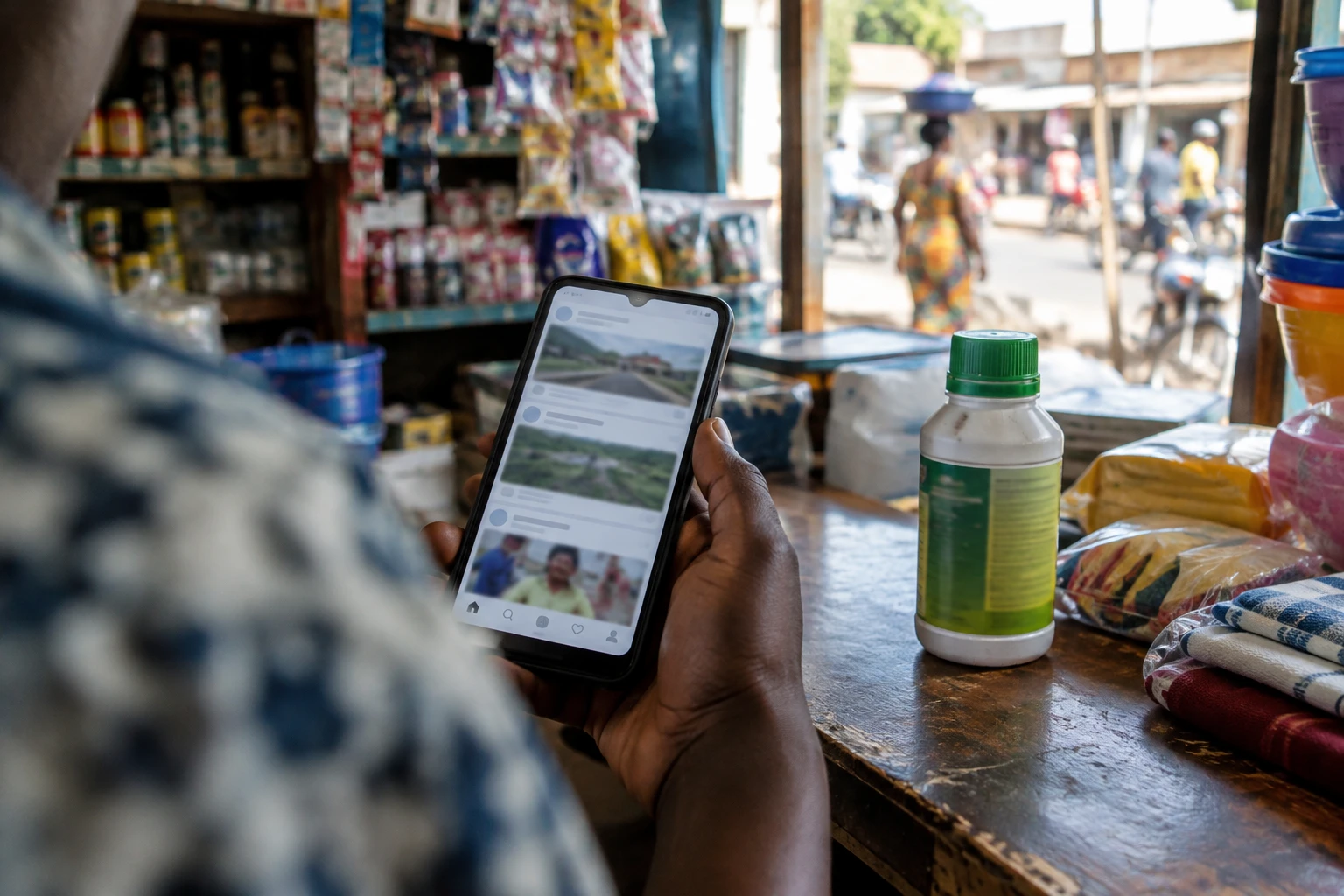
A product sold to protect crops can end up in a bedroom, poured into a bottle and sprayed before bedtime. In the Democratic Republic of the Congo (DRC), reports of poisoning are highlighting the risks of this household use of agricultural pesticides containing dichlorvos.
Cases reported in three cities
Between 7 December 2025 and 25 February 2026, health workers and a poison control centre recorded 22 suspected cases following spraying inside homes or hotels in Kinshasa, Lubumbashi and Kolwezi. Fourteen people were hospitalised. Reported symptoms included headaches, dizziness, nausea and breathing difficulties.
These figures come from a case series published in a scientific journal. They concern the household use of two products, Lava and Sniper, both described as containing dichlorvos. They therefore do not mean that all 22 poisonings were attributed to Lava alone. The authors also note that the data do not allow every exposure to be confirmed through biological testing. These are suspected cases, not a comprehensive national tally.
According to the study, the liquid products were sometimes decanted into improvised sprayers. People used them mainly in the evening, with doors and windows closed, sometimes in rooms where other family members were present. The researchers report that one patient admitted to hospital in Kinshasa had arrived in a coma and later recovered. All the hospitalised people recorded in the series survived.
An agricultural pesticide used for other purposes
Dichlorvos is an organophosphate insecticide, a family of substances that can disrupt the functioning of the nervous system in cases of exposure. Toxicity depends, among other things, on the amount, duration and route of exposure. Spraying in an enclosed space can expose occupants directly, especially if the product is inhaled.
The World Health Organization’s classification distinguishes pesticides according to their acute hazard. The WHO lists dichlorvos among highly hazardous substances in its recommended classification. This alone does not determine the precise risk posed by each product or exposure: concentration and conditions of use also matter.
The researchers describe Lava as a product intended for agricultural or professional pest control, not for spraying in living spaces. The repurposing of such products to control mosquitoes and cockroaches therefore raises a public health issue, as well as a regulatory one: availability in shops, oversight of sales channels, clear labelling and information on authorised uses.
Rules that need enforcing
The product’s presence in Congolese markets is not enough to establish that it is authorised for sale or household use. A 2024 study of pesticides in South Kivu had already noted gaps in oversight and identified Lava as a dichlorvos product not authorised in the context studied. However, this regional finding does not replace verification of the current regulatory status of each product and batch in the DRC.
Another regulatory signal came in August 2026: Congolese media reported a statement by the Congolese Pharmaceutical Regulatory Authority banning products containing dichlorvos. This decision concerns Sniper, among other products. The information reviewed does not make it possible to independently confirm all the details of its application to Lava, or the status of removals from points of sale. The distinction between a regulatory announcement and effective enforcement therefore remains essential.
In Canada, authorities state that Lava 100% EC and other dichlorvos insecticides are not registered. This measure concerns products not authorised on the Canadian market; it does not mean that all uses of dichlorvos are prohibited worldwide. In Europe, dichlorvos is no longer authorised as an active substance in plant protection products. Rules differ between jurisdictions and product categories.
An issue extending beyond the affected households
In Kinshasa, the DRC’s capital, as well as in Lubumbashi and Kolwezi, the problem lies at the intersection of pest control, access to suitable solutions and health surveillance. Families using these products are trying to protect their homes. But a lack of reliable advice, products sometimes decanted from their packaging and use in closed rooms increase the risk to people present, particularly children.
The case series also illustrates the importance of accessible toxicological surveillance. The Lubumbashi poison control centre contributed to collecting reports, while health professionals in Kinshasa and Kolwezi provided clinical data. The authors highlight the system’s limitations: passive surveillance, a short period and no cholinesterase measurements, a useful biological indicator for assessing exposure to organophosphates. The actual number of incidents may therefore be different, although the study cannot quantify it.
The issue also concerns regional trade. The DRC belongs to both the East African Community and SADC, two blocs through which goods and agricultural products move. A lasting response will depend on consistent controls at import and distribution stages, as well as accessible information for retailers and households. Monitoring the ban announced in August, product traceability and the publication of more complete health data will make it possible to assess whether the warnings lead to a real reduction in exposure.



