Algeria
 Egypt
 Libya
 Morocco
 Sudan
 Tunisia
 Benin
 Burkina Faso
 Cabo Verde
 Côte d'Ivoire
 Ghana
 Guinea
 Guinea-Bissau
 Liberia
 Mali
 Mauritania
 Niger
 Nigeria
 Senegal
 Sierra Leone
 The Gambia
 Togo
 Cameroon
 Central African Republic
 Chad
 DR Congo
 Equatorial Guinea
 Gabon
 Republic of the Congo
 São Tomé and Príncipe
 Burundi
 Comoros
 Eritrea
 Ethiopia
 Kenya
 Madagascar
 Malawi
 Mauritius
 Mozambique
 Rwanda
 Seychelles
 Somalia
 South Sudan
 Tanzania
 Uganda
 Angola
 Botswana
 Eswatini
 Lesotho
 Namibia
 South Africa
 Zambia
 Zimbabwe
The Gulf of Aden is at once a refuge route, a migration corridor and a space of strategic rivalries. Recent events in Yemen show how closely these uses intersect: population movements coincide with trafficking and security concerns, reaching as far as the Somali coast.
Two crossings, different risks
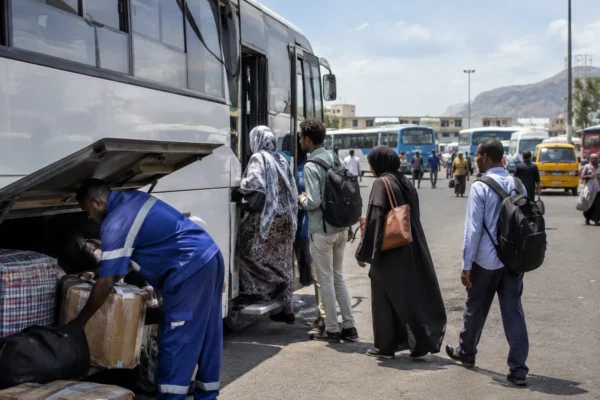
Since fighting resumed in Yemen, families have fled by sea to Djibouti. The International Organization for Migration (IOM) recorded 3,793 arrivals of Yemeni nationals between 7 June and 29 September 2026. Many are thought to have left their country amid deteriorating security. This figure describes recorded arrivals, not the total number of displaced people.
In the other direction, migrants from the Horn of Africa continue to travel to Yemen, often hoping to go on to Saudi Arabia and other Gulf countries. The so-called eastern route connects Ethiopia and Somalia, among other places, to the Arabian Peninsula. The conflict has not halted it: the route becomes more dangerous when fighting and checkpoints force people to change course.
IOM data make it possible to track movements along this route, but the figures cited in available information on departures in 2025 and deaths in the first quarter of 2026 could not be independently corroborated here. They are therefore not presented as established totals. Shipwrecks, disappearances and violence on clandestine routes remain particularly difficult to document.
Networks that cross borders
The conflict in Yemen is not confined to its front lines. The Gulf of Aden has long facilitated the movement of people and goods between the Arabian Peninsula and the Horn. Criminal networks may exploit the same boats, secondary ports and intermediaries used by migrants. This does not mean migrants are involved in trafficking: they may instead be exploited by it.
In a report published in August 2026, the research centre Century International describes the expansion of Houthi networks into Africa. Its findings form part of a dossier already flagged by United Nations experts. The 2025 report on Somalia referred to contacts between the Houthis and al-Shabaab, an armed group affiliated with al-Qaeda, as well as transfers of weapons and expertise. It also reported that Somalis had allegedly been taken to Houthi-controlled areas for training.
These findings are based in part on information provided to the experts by states and confidential sources. They document allegations and assessments, not an alliance whose full extent is known. The UN report described the relationship as transactional or opportunistic: specific interests can bring together two groups with different trajectories and affiliations.
Somalia at the centre of coastal balances
For Somalia’s federal authorities, these suspected links highlight the importance of controlling the coast and ensuring maritime security. But Mogadishu must also contend with national priorities: the fight against al-Shabaab, coordination between the federal government and member states, and the protection of territorial integrity. In coastal regions, residents and port activities are directly affected by insecurity, checkpoints and disruptions to trade.
Somaliland, a self-declared independent territory that Somalia considers part of its territory, occupies a strategic position facing Yemen. Its port of Berbera opens onto the Gulf of Aden. On 26 December 2025, Israel recognised Somaliland as an independent state. Mogadishu rejected the decision, and the Intergovernmental Authority on Development (IGAD), an East African regional organisation, reaffirmed its support for Somalia’s unity and sovereignty.
The recognition has put the question of Somaliland back at the centre of regional diplomatic rivalries. It does not, however, in itself establish the existence of a military agreement or a foreign base. Such claims must be distinguished from confirmed facts. For Somalis, the issue concerns sovereignty and domestic political balances as much as the security of shipping.
A local strait, regional consequences
The Bab el-Mandeb Strait links the Red Sea to the Gulf of Aden and is a major passage for maritime trade between Asia, Europe and the Suez Canal. Attacks or threats against ships can lead to diversions, additional costs and increased pressure on ports and coastal states. The consequences are not evenly distributed: shipping companies can change their routes, while port workers, traders and local consumers experience the disruptions in different ways.
The interests of Saudi Arabia, the United Arab Emirates, Israel, Turkey and other actors intersect in this region. The countries of the Horn are not merely arenas for competition: their governments are also seeking partnerships, investment and security guarantees. Decisions on ports and alliances can nevertheless heighten tensions between Mogadishu and the authorities in Somaliland, or complicate regional cooperation.
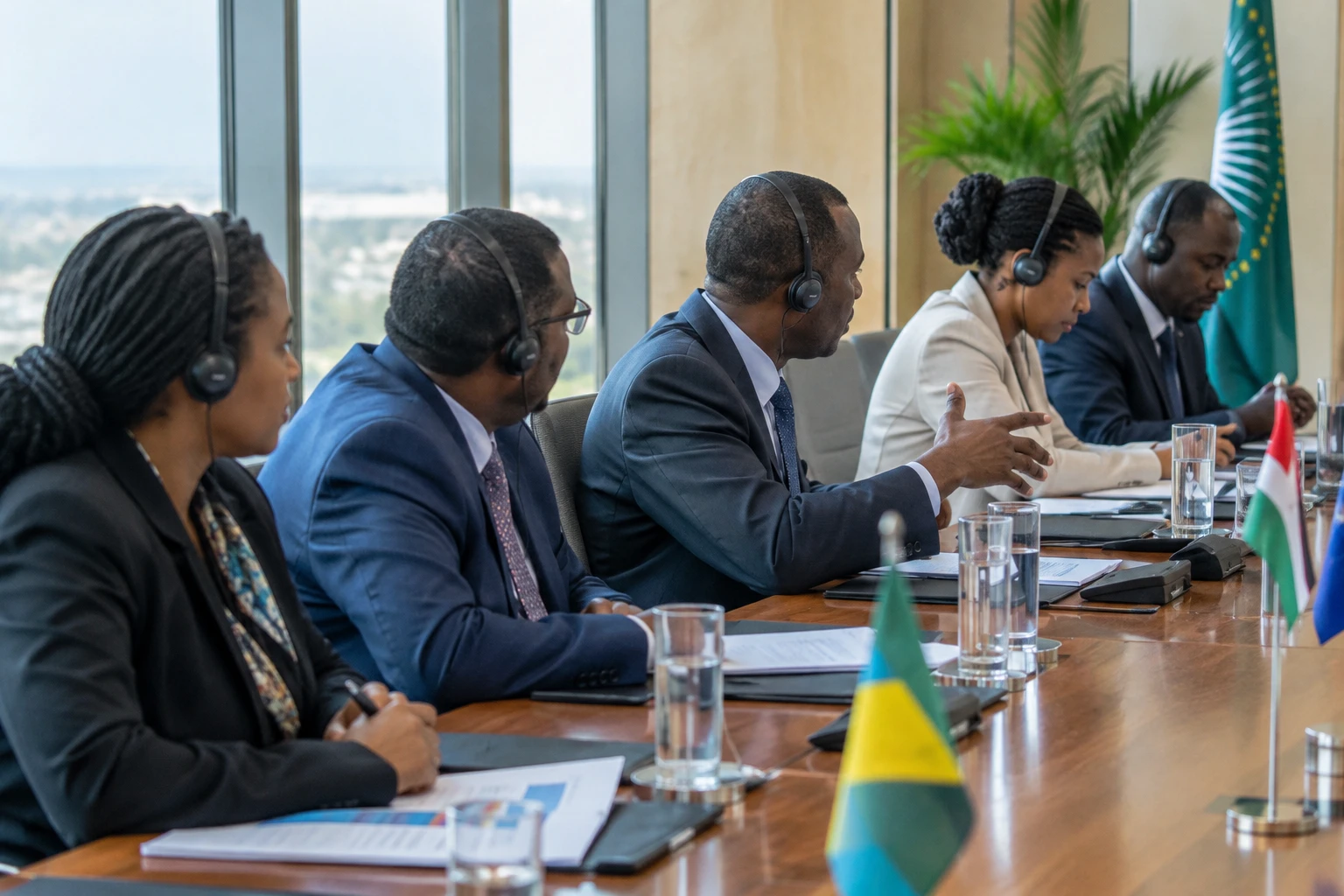
For IGAD and the African Union, the priority is to defend the sovereignty of states while supporting practical cooperation against trafficking and maritime threats. The next IOM data on movements between the Horn and Yemen, along with UN expert reports on links between armed groups, will help distinguish confirmed trends from claims that remain uncertain. In this region, the security of routes and the protection of people on the move are now closely linked.