Algeria
 Egypt
 Libya
 Morocco
 Sudan
 Tunisia
 Benin
 Burkina Faso
 Cabo Verde
 Côte d'Ivoire
 Ghana
 Guinea
 Guinea-Bissau
 Liberia
 Mali
 Mauritania
 Niger
 Senegal
 Sierra Leone
 The Gambia
 Togo
 Cameroon
 Central African Republic
 Chad
 DR Congo
 Equatorial Guinea
 Gabon
 Republic of the Congo
 São Tomé and Príncipe
 Burundi
 Comoros
 Djibouti
 Eritrea
 Ethiopia
 Kenya
 Madagascar
 Malawi
 Mauritius
 Mozambique
 Rwanda
 Seychelles
 Somalia
 South Sudan
 Tanzania
 Uganda
 Angola
 Botswana
 Eswatini
 Lesotho
 Namibia
 South Africa
 Zambia
 Zimbabwe

For Nigeria’s small traders and individuals, mobile payments have become much more than a way to send money. They also open up access to credit. This is now the riskier but more lucrative business that accounts for a growing share of OPay’s growth.
The fintech, which has a strong presence in Nigeria, filed for an initial public offering with the US Securities and Exchange Commission on 9 October 2026. It has applied to list its shares on the New York Stock Exchange under the symbol “OPAY”. The filing remains preliminary: neither the number of shares on offer, nor their price, nor the listing date has been set. OPay has also not announced a timeline for a possible listing in Lagos.
A Nigerian platform with regional reach
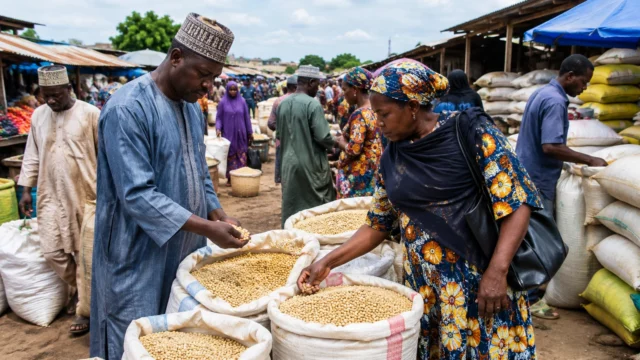
OPay has grown in a country where mobile phones are increasingly serving as an interface between consumers, traders and financial services. Abuja, the federal capital, is home to national institutions, but the platform’s activity extends well beyond administrative centres and major cities. Digital payments meet, in particular, the everyday needs of traders who use electronic terminals and customers who transfer money from their phones.
This expansion is also part of a wider West African trend. ECOWAS, which brings together the region’s states, is seeking to strengthen trade and economic integration, while digital payments are already facilitating some cross-border transactions. But financial regulations, currencies and infrastructure remain largely organised at national level. OPay also operates in Indonesia, Egypt and Pakistan, but Nigeria remains its core market.
The figures filed with the US regulator show the extent of this dependence. OPay attributes nearly 90% of its revenue to Nigeria. The platform said it had 50.1 million monthly active users as of 31 July 2026. In the first half of the year, it processed $339.1 billion in transactions, compared with $139.3 billion over the same period in 2025. This volume represents the value of transactions, not the company’s revenue.
Growth is increasingly driven by lending
OPay’s revenue reached $467.1 million between January and June 2026, up from $197.5 million a year earlier. Net profit rose from $21.7 million to $90.9 million. In 2024, the company was still reporting an operating loss of $35.1 million. It posted a positive operating result in 2025, according to the figures provided in its IPO filing.
Lending explains much of this growth. In the first half of 2026, OPay directly extended $927.6 million in new loans in Nigeria, about three times the amount in the same period a year earlier. Revenue related to loan financing increased from $88.1 million to $236.1 million. The company says the number of unique borrowers per quarter rose from 3.5 million to 6.7 million.
This growth, however, increases exposure to risk. Provisions for credit losses rose from $38.1 million to $118.4 million between the two half-year periods. This does not mean all these amounts are definitively lost: the provisions anticipate possible defaults. OPay reported a non-performing loan ratio of 4.3% as of 30 June 2026, down from 4.8% a year earlier. The company attributes the improvement to tighter criteria for some consumer loans and a greater share of lending to traders.
These indicators will need to be watched closely. More lending can support revenue and fund the immediate needs of households or businesses. But rising defaults, a depreciation of the naira or an economic slowdown could weigh on borrowers as well as the platform’s profitability. The effects will not be the same for customers, traders and investors, who face different risks and costs.
Standard Bank backs direct access to the Nigerian market
The plan has attracted Standard Bank, a South African banking group with a presence in several African markets. Its subsidiary Stanbic Africa Holdings has committed to subscribe for OPay shares at the time of the IPO or shortly afterwards, subject to the transaction going ahead and regulatory approvals. The subscription is capped at $200 million and cannot exceed 4.99% of the company’s capital after the transaction. The final amount will depend, among other things, on the share price.
The two groups plan to explore cooperation in payments and the distribution of banking services through the platform. For Standard Bank, OPay provides a link to millions of consumers and traders already active in Nigeria’s digital economy. For OPay, the backing of a major African bank could strengthen its financial capacity and facilitate its regional expansion. The agreement does not, however, guarantee either the success of the IPO or the realisation of these plans.
The transaction also signals the ambitions of African financial companies: to access international markets to fund growth while remaining rooted in local economies. It puts a model built largely in Nigeria under the scrutiny of US investors. The filing does not yet set a listing date, and its figures are those disclosed by the company to the regulator. The central question will be less about payment volumes than OPay’s ability to expand lending without causing a lasting deterioration in loan quality.