Algeria
 Egypt
 Libya
 Morocco
 Sudan
 Tunisia
 Benin
 Burkina Faso
 Cabo Verde
 Côte d'Ivoire
 Ghana
 Guinea
 Guinea-Bissau
 Liberia
 Mali
 Mauritania
 Niger
 Senegal
 Sierra Leone
 The Gambia
 Togo
 Cameroon
 Central African Republic
 Chad
 DR Congo
 Equatorial Guinea
 Gabon
 Republic of the Congo
 São Tomé and Príncipe
 Burundi
 Comoros
 Djibouti
 Eritrea
 Ethiopia
 Kenya
 Madagascar
 Malawi
 Mauritius
 Mozambique
 Rwanda
 Seychelles
 Somalia
 South Sudan
 Tanzania
 Uganda
 Angola
 Botswana
 Eswatini
 Lesotho
 Namibia
 South Africa
 Zambia
 Zimbabwe
In Abuja and rural states alike, access to electricity no longer depends solely on extending the national grid. For millions of Nigerians, solar mini-grids and stand-alone systems are becoming a practical response to power cuts, distance and the cost of thermal generators.
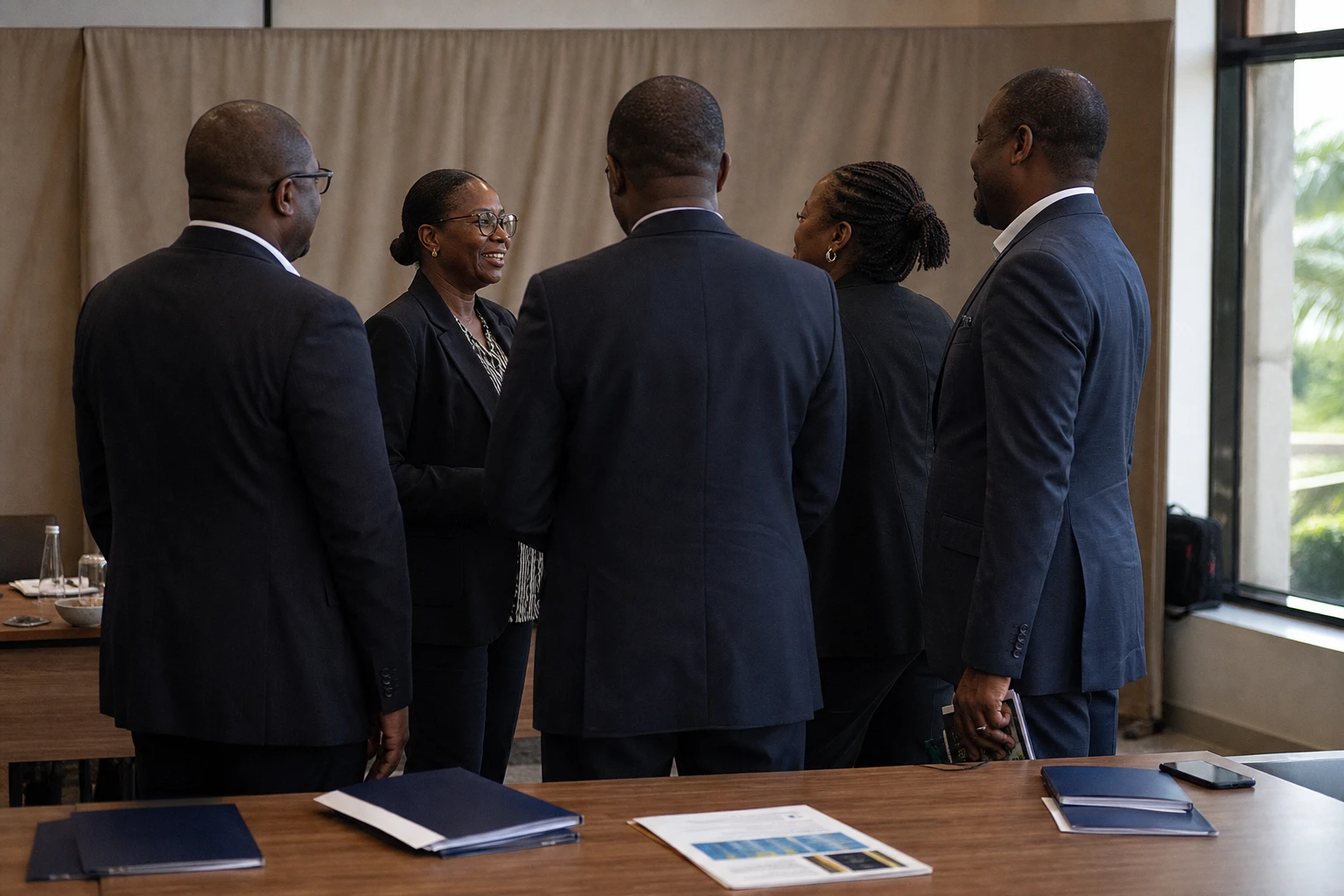
Nigeria has just taken another step in this strategy. On 22 September 2026, the Nigeria Sovereign Investment Authority (NSIA), Africa50 and Sustainable Energy for All (SEforALL) announced the commercial launch of a fund dedicated to distributed renewable energy. Its stated target is $300 million.
A fund designed to move from promise to projects
The Nigeria Distributed Renewable Energy Fund is to finance mini-grids, stand-alone solar installations and other solutions able to generate electricity close to households, businesses and public services. The NSIA, Nigeria’s sovereign wealth fund, and Africa50, an African infrastructure investment platform, are jointly managing it.
The commercial launch marks the shift from a structuring phase to one of capital mobilisation and deployment. The fund aims to attract institutional and private investors to a market with substantial needs but significant risks: irregular household incomes, foreign-currency equipment costs, weak local infrastructure and difficulties financing small-scale projects.
The World Bank is making an initial contribution of $25 million through the International Development Association, its facility for low-income countries. This initial investment is intended to act as a catalyst by reducing some of the risk perceived by other investors.
The structure thus combines several types of capital. Concessional resources, provided on more favourable terms, can support the first projects. Private and institutional funds are then expected to scale up investment. The challenge now is to turn this financial architecture into installed power plants, connected subscribers and economic activity supplied with electricity on a regular basis.
A response to gaps in access and reliability
The need is particularly acute in Nigeria, West Africa’s largest economy and the continent’s most populous country. According to data cited in the national energy financing framework, more than a third of the population had no access to electricity in 2024. Even where the grid is available, supply is often unreliable.
This situation leads households, shops, workshops and health facilities to rely on generators. Their fuel raises production costs. Maintenance weighs on small businesses. Their use also worsens air pollution in cities and rural centres.
Distributed renewable energy can reduce this dependence. A solar mini-grid generally combines photovoltaic panels, batteries and a local grid. It can serve an isolated community or supplement an existing grid. Stand-alone systems, meanwhile, supply electricity directly to a home, shop, school or health centre.
Nigeria’s regulator distinguishes, in particular, between isolated mini-grids, which operate independently of an operator’s grid, and interconnected mini-grids, which can work with it. This distinction matters in rural areas, but also in peri-urban neighbourhoods where the national grid does not meet demand.
The Rural Electrification Agency says the DARES programme, funded to the tune of $750 million, aims to provide electricity services to 17.5 million people. It is intended to support the deployment of solar mini-grids and stand-alone solar systems, with significant private-sector participation.
DARES, blended finance and new players
The $300 million fund is therefore not starting from scratch. It joins a range of mechanisms already under way to develop Nigeria’s off-grid market. DARES is the main public programme in this effort. It combines grants, technical assistance and private investment to make projects more viable.
Implementation has already begun on the ground. In April 2025, Nigeria’s Rural Electrification Agency announced the signing of initial agreements with eight companies in the sector. In June that year, four more developers received grants tied to connection targets in several states, including Kano, Oyo, Delta, Bayelsa, Ondo and Taraba.
This results-based financing approach seeks to link public money more closely to measurable impact. Operators are assessed not only on the purchase of equipment. The agreements also take account of the number of households and businesses actually connected. In rural areas, this requirement is crucial: an installation can be built without guaranteeing an affordable and sustainable service.
The market is also attracting specialist lenders. The International Finance Corporation and Norfund have announced financing of up to $83.2 million for five companies in the sector, according to information available on the transactions concerned. In addition, the federal government and the Rural Electrification Agency signed a 100 billion naira agreement with Lotus Bank in February 2026 to facilitate financing for developers already supported by DARES.
Local financing remains the sticking point
The range of mechanisms does not, however, resolve every obstacle. Operators have to buy much of their equipment in foreign currencies. Their revenues are mainly collected in naira. Exchange-rate fluctuations can therefore quickly undermine the financial viability of projects.
Long-term financing in local currency also remains insufficient. This constraint particularly affects small Nigerian businesses, which do not always have enough collateral to obtain conventional loans. It can slow installations in regions where needs are most urgent but customers’ ability to pay is more limited.
Tariffs will be just as important. Solar power can cut spending on diesel, but the initial investment remains high. Operators will need to strike a balance between profitability, equipment maintenance and prices affordable for households, farmers and small businesses.
The effects will vary by location. Urban businesses will be able to use electricity to extend their hours and secure production. In rural areas, the challenge will also be to preserve cold chains, power water pumps, support workshops and maintain health services.
A Nigerian initiative with regional reach
The fund is part of Mission 300, an initiative backed by the World Bank and the African Development Bank to connect 300 million Africans to electricity by 2030. Nigeria has a particular role because of its population, the size of its market and its influence within ECOWAS, the Economic Community of West African States.
The Nigerian model could interest other West African countries facing costly grid extensions and widely dispersed needs. Africa50 describes the fund as the first national platform, intended to inform a pan-African approach to financing distributed renewable energy.
The next stage will be a practical one. The pace of disbursements, project selection and the number of connections actually delivered will need to be assessed. The scheme’s success will not be measured by the amount announced, but by its ability to provide regular, affordable and productive electricity to underserved Nigerian communities.