Algeria
 Egypt
 Libya
 Morocco
 Sudan
 Tunisia
 Benin
 Burkina Faso
 Cabo Verde
 Côte d'Ivoire
 Ghana
 Guinea
 Guinea-Bissau
 Liberia
 Mali
 Mauritania
 Niger
 Senegal
 Sierra Leone
 The Gambia
 Togo
 Cameroon
 Central African Republic
 Chad
 DR Congo
 Equatorial Guinea
 Gabon
 Republic of the Congo
 São Tomé and Príncipe
 Burundi
 Comoros
 Djibouti
 Eritrea
 Ethiopia
 Kenya
 Madagascar
 Malawi
 Mauritius
 Mozambique
 Rwanda
 Seychelles
 Somalia
 South Sudan
 Tanzania
 Uganda
 Angola
 Botswana
 Eswatini
 Lesotho
 Namibia
 South Africa
 Zambia
 Zimbabwe
When schools become targets, the whole social contract is shaken
In Nigeria, the kidnapping of pupils can no longer be seen merely as a security incident. It also says something more far-reaching: in a country where millions of children are already out of school, every attack on a classroom leaves more families torn between education and fear. Available data point to a deep crisis, with 18.3 million out-of-school children according to UNICEF, while the government now puts the figure at about 15 million.
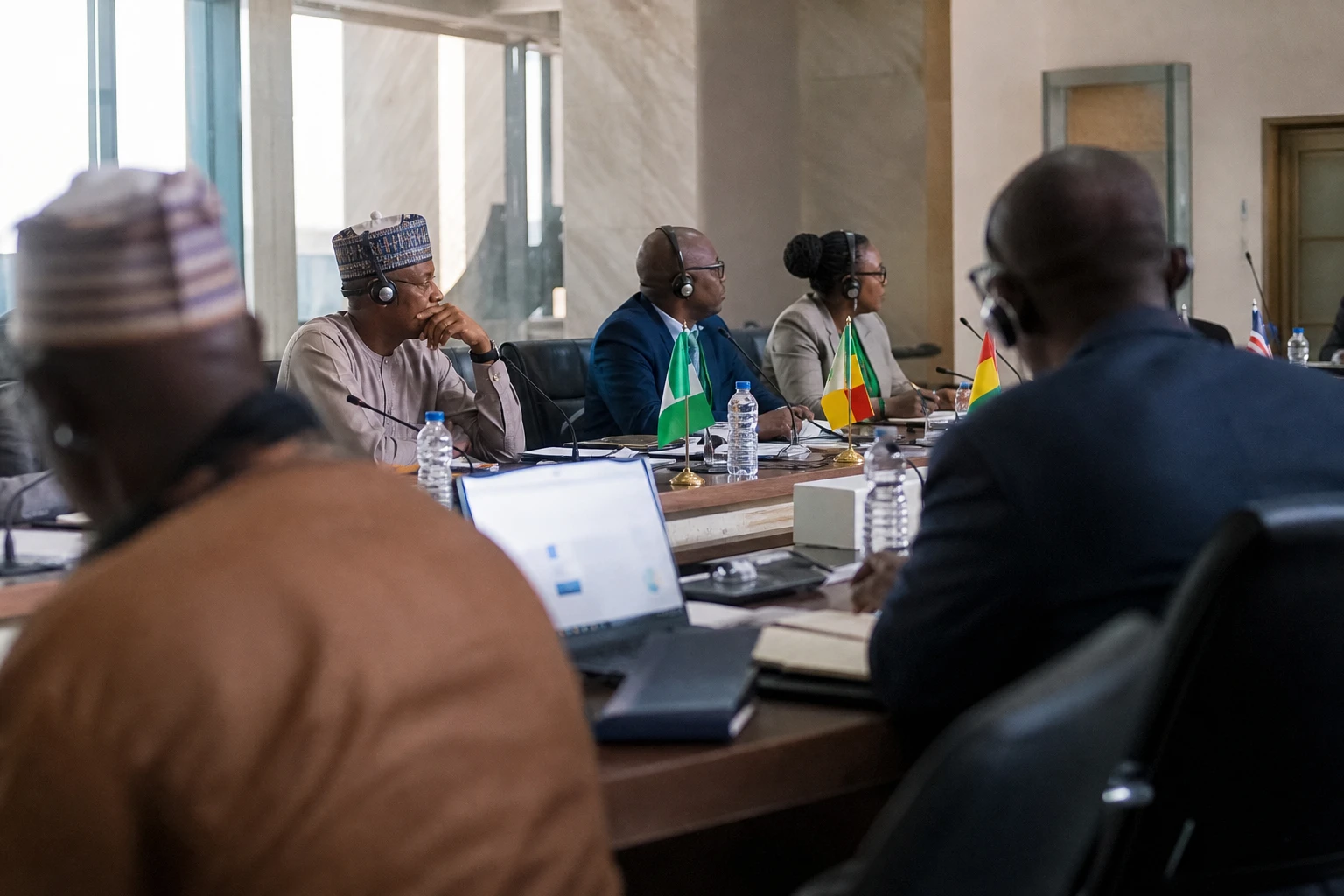
This reality weighs heavily on Abuja, the federal capital, as well as on inland states where roads are long, patrols scarce and schools isolated. Nigeria, Africa’s most populous country, remains a pillar of ECOWAS, whose headquarters are in Abuja. What happens there therefore has immediate regional significance.
Three charged in Abuja after Oyo attack
On Friday 17 July, the federal government filed ten charges at the Federal High Court in Abuja against three men arrested after pupils and teachers were kidnapped in Oyo State. The charges include terrorism, kidnapping, concealment, incitement and illegal activities linked to mining.
The accused are Abdulrazak Umar, Yunusa Musa and Shamsu Adamu Sani. According to the indictment reported by Nigerian media, they are suspected of acting with other people between January and May 2026, and of claiming links to Darul Salam, described as an affiliate of Jama’atu Ansarul Muslima Fi Biladis Sudan, better known as Ansaru, a group banned in Nigeria.
The case dates back to 15 May, when gunmen attacked several schools in the Oriire area of Oyo State, in the south-west of the country. Initial reports said at least 40 children had been kidnapped, and higher figures circulated in the following hours. Caution is therefore needed over the exact number of victims until legal proceedings and official verification are complete.
What also sets this case apart is its geography. Oyo is not in north-east Nigeria, long associated with Boko Haram and the Islamic State West Africa Province. The strike on schools in the south-west shattered a sense of relative distance and showed that criminal and terrorist networks know how to expand their reach.
In villages, fear means absences, silence and closures
On the ground, the impact extends beyond the legal proceedings. In Oyo, families waited weeks for news of their children. Some parents refused material assistance, saying they wanted the minors and teachers returned first. The National Union of Teachers subsequently called for staff to be withdrawn from public schools in the state, a sign of deeply eroded trust.
This distrust affects rural households first. Where attending school already entails difficult journeys, hidden costs and safety concerns, kidnapping turns education into a risky gamble. The poorest families, especially those dependent on informal work, absorb the shock in silence: one child’s absence can mean a class abandoned, a girl withdrawn earlier, or a journey deemed too dangerous.
The authorities, meanwhile, want to show that the state is responding. The use of terrorism charges reflects this strategy: legally defining the attack as a major security threat, rather than a simple rural kidnapping. The case is also a test for Nigeria’s criminal justice system, from investigation to federal court, as Abuja seeks to demonstrate that it can prosecute those responsible for violence targeting schools.
A Nigerian warning, but a West African one too
Nigeria is not alone in facing this kind of crisis. Across West Africa, armed groups move around, adapt and exploit forested areas, porous borders and criminal economies. The link to Ansaru cited in the indictment is a reminder that threats are not confined to a single region, even if they do not strike everywhere with the same intensity.
The continental significance is clear: when schools become vulnerable, Africa’s goal of expanding access to education is set back. UNICEF says Nigeria accounts for a major share of the continent’s out-of-school children, while the federal authorities are trying to revive programmes to get children back to school and improve the collection of education data. The struggle is therefore security-related, social and economic all at once.
For ECOWAS, the issue goes beyond Nigeria alone. The movement of armed groups, weapons and illicit economies weakens the whole of West Africa. And for Abuja, the test is as much political as it is security-related: to prove that a large federal country can protect its children without allowing rural areas to become abandoned territory.
The coming weeks will show whether these charges open a genuine judicial process or remain a one-off response to a much older crisis. What is already clear, however, is the message sent to Nigerian families: in several parts of the country, going to school remains an act of trust.