Algeria
 Egypt
 Libya
 Morocco
 Sudan
 Tunisia
 Benin
 Burkina Faso
 Cabo Verde
 Côte d'Ivoire
 Ghana
 Guinea
 Guinea-Bissau
 Liberia
 Mali
 Mauritania
 Niger
 Senegal
 Sierra Leone
 The Gambia
 Togo
 Cameroon
 Central African Republic
 Chad
 DR Congo
 Equatorial Guinea
 Gabon
 Republic of the Congo
 São Tomé and Príncipe
 Burundi
 Comoros
 Djibouti
 Eritrea
 Ethiopia
 Kenya
 Madagascar
 Malawi
 Mauritius
 Mozambique
 Rwanda
 Seychelles
 Somalia
 South Sudan
 Tanzania
 Uganda
 Angola
 Botswana
 Eswatini
 Lesotho
 Namibia
 South Africa
 Zambia
 Zimbabwe
A financial bet on a very real electricity divide
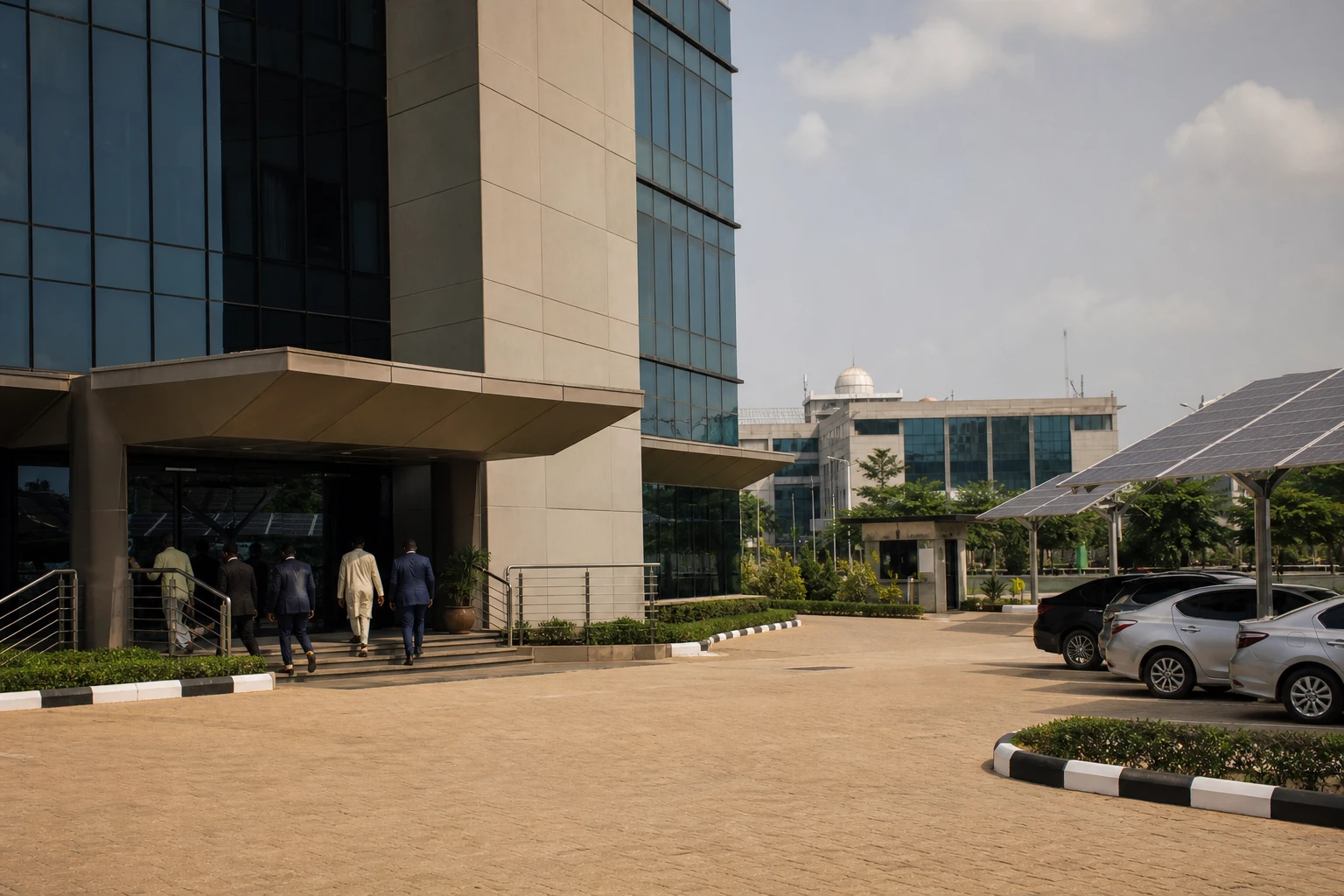
In Nigeria, the lack of electricity is not just a problem on dashboards. It affects workshops, shops, homes and schools far from major roads. In a country where access to the grid remains among the lowest on the continent, off-grid solutions are becoming an economic response before they are simply a technological choice.
Against this backdrop, a fund dedicated to decentralised renewable energy takes on particular significance. It is not just about financing solar panels. It is also about making mini-grids, standalone systems and installations capable of supplying areas poorly served by the national grid, or served too unreliably, commercially viable.
Abuja backs mini-grids and private investment
In Abuja, the Nigeria Sovereign Investment Authority, the public body that manages part of the country’s sovereign savings, announced the launch of the Nigeria Distributed Renewable Energy Fund, a $300 million vehicle intended to accelerate investment in decentralised solar power. The fund is to finance mini-grids, standalone solar systems and other off-grid solutions for households, businesses and small industries.
The initiative is being led with Africa50 and Sustainable Energy for All, with support from the World Bank Group and the participation of the International Solar Alliance in the broader architecture of the DRE Africa Platform. In terms of African financing structures, the idea is clear: attract patient capital where commercial banks are still reluctant to invest, for lack of guarantees, tariff visibility or market depth.
The NSIA presented the fund as a signal that Nigeria’s decentralised renewables market is maturing. The argument is as much political as economic. If Nigeria, Africa’s largest economy, structures a vehicle of this size around access to electricity, it acknowledges that the challenge is no longer just generation, but useful distribution, close to consumers.
A strained grid and a vast access gap
The launch comes as Nigeria’s electricity system remains under severe pressure. Transmission infrastructure is ageing, outages are recurrent and supply is uneven between cities and outlying areas. According to estimates cited by the government and the World Bank, around 92 million people in the country still lack access to electricity. Other World Bank documents put the share at close to 45% of the population.
This shortfall weighs first on households, which often rely on costly generators. It also affects small businesses, which pay more for energy to make up for grid failures. In Nigeria’s large informal economy, an unreliable electricity supply reduces productivity, limits operating hours and raises the cost of every service provided.
The country had already begun this shift. The World Bank says the DARES project is expected to help more than 17 million Nigerians gain access to electricity through decentralised solutions. In April 2025, the IFC and Norfund also announced $83.2 million in financing for hybrid solar mini-grids. The new fund is therefore part of a broader sequence, not an isolated break with the past.
What Nigeria’s energy transition means
Nigeria has set out its climate pathway in its Energy Transition Plan, with the goal of reaching carbon neutrality by 2060. The country also aims for renewables to make up 30% of installed capacity by 2030, with an ambition of 30 gigawatts. In this context, solar photovoltaics and mini-grids are no longer just pilot projects. They are becoming a pillar of electrification.
But the fund’s significance goes beyond the environmental sphere. For rural populations and underserved communities, it could reduce the cost of accessing reliable energy. For SMEs, it could secure production. For the federal government, it could ease some of the social pressure caused by outages. And for investors, it opens up a market long seen as too risky, but now better structured through public and multilateral partnerships.
The fund also follows a broader co-financing logic. Across Africa, Mission 300, led by the World Bank and the African Development Bank, aims to connect an additional 300 million people by 2030. Nigeria’s DRE Fund thus becomes one link in a continental chain in which decentralised renewables offer a rapid response for areas too remote or too costly to connect to the conventional grid.
A signal for West Africa and beyond
For ECOWAS, where access to energy remains a major obstacle to economic integration, Nigeria’s initiative matters beyond its borders. If West Africa’s largest market succeeds in building sustainable financing for mini-grids, the model could inspire other countries facing the same dilemma: expanding access quickly without waiting for the national grid to reach everywhere.
The next steps will depend on two things. First, the fund’s ability to turn announcements into projects actually deployed across the states of the federation, including outside major urban centres. Second, its ability to mobilise private investors without placing all the risk on public finances. That is where the credibility of Nigeria’s energy transition will be measured in practical terms.