Algeria
 Egypt
 Libya
 Morocco
 Sudan
 Tunisia
 Benin
 Burkina Faso
 Cabo Verde
 Côte d'Ivoire
 Ghana
 Guinea
 Guinea-Bissau
 Liberia
 Mali
 Mauritania
 Niger
 Senegal
 Sierra Leone
 The Gambia
 Togo
 Cameroon
 Central African Republic
 Chad
 DR Congo
 Equatorial Guinea
 Gabon
 Republic of the Congo
 São Tomé and Príncipe
 Burundi
 Comoros
 Djibouti
 Eritrea
 Ethiopia
 Kenya
 Madagascar
 Malawi
 Mauritius
 Mozambique
 Rwanda
 Seychelles
 Somalia
 South Sudan
 Tanzania
 Uganda
 Angola
 Botswana
 Eswatini
 Lesotho
 Namibia
 South Africa
 Zambia
 Zimbabwe
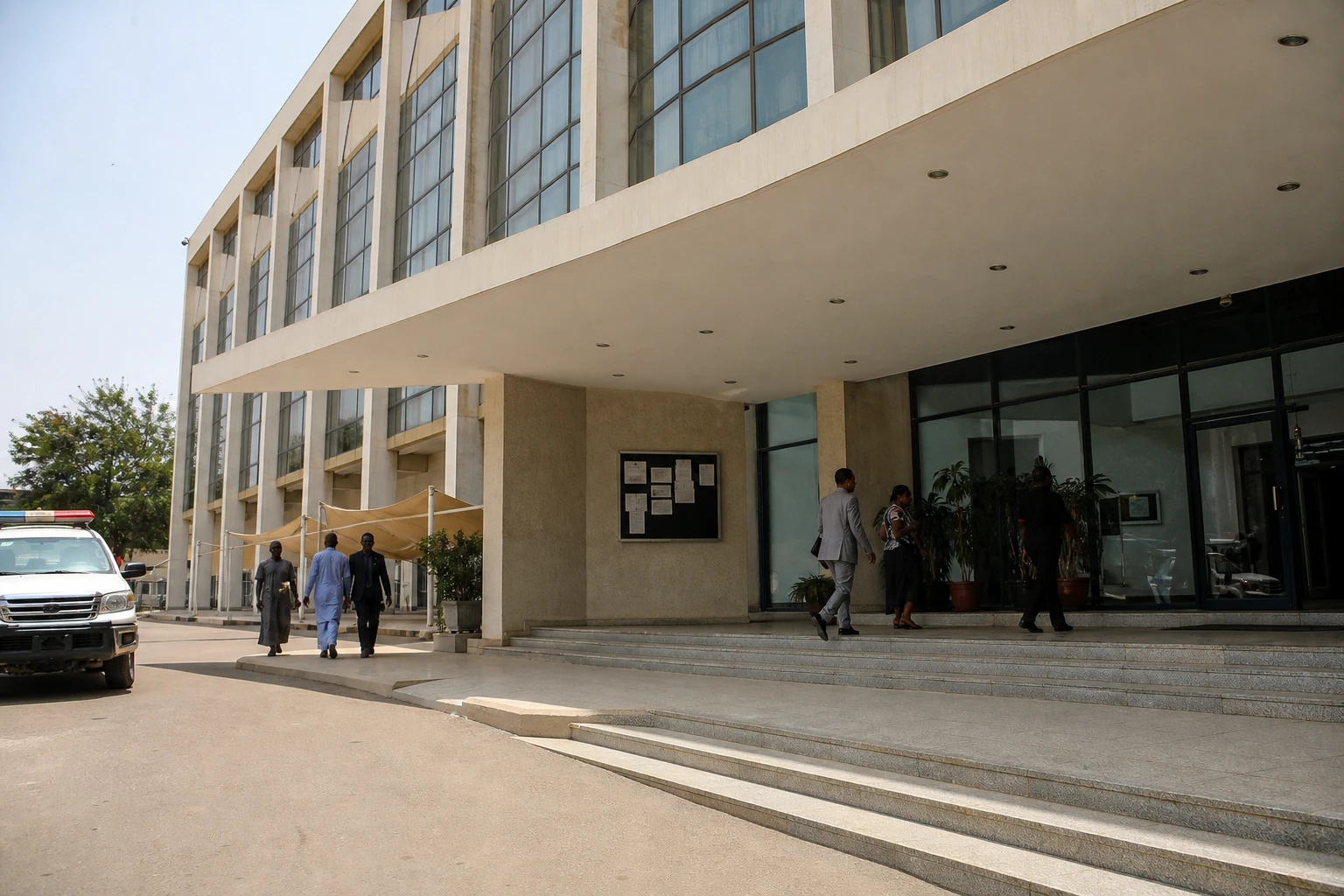
An election under pressure in a tense country
In Nigeria, electoral security is never a mere logistical detail. It determines participation, the movement of ballot boxes and, above all, the confidence of voters already exposed to armed violence, kidnappings and communal clashes.
This time, too, the stakes extend beyond Abuja. The 2027 presidential election, whose first round is scheduled for 16 January 2027 by the electoral commission, is being prepared in a country still beset by several security flashpoints. Nigeria, Africa’s most populous country, with around 237.5 million inhabitants according to the UN’s 2025 estimate, faces different threats in different regions: a jihadist insurgency in the North-East, armed banditry in the North-West, violence between pastoralist and farming communities in the Middle Belt, and separatist tensions in the South-East.
Abuja promises a police force ready for the task, but the reality on the ground tells a different story
In Abuja, the head of the federal police, Olatunji Disu, says the security forces can guarantee a “safe and secure” vote. The assurance is reassuring, but it comes in a context in which Nigeria’s police themselves acknowledge their operational limitations and exposure to casualties. The police’s official website identifies Olatunji Disu as inspector-general since February 2026, following the departure of Kayode Egbetokun, and several communications from the institution point to intensive preparations for state elections and the 2027 general election.
At the same time, ACLED continues to describe Nigeria as a place where several overlapping conflicts coexist. The organisation notes that jihadist violence continues in the North-East, while banditry is spreading in the North-West and spilling into other states. In July 2026, ACLED even reported an increase in jihadist violence in the region, and noted that the North-West remains one of the country’s main crisis hotspots.
What the police want to change before polling day
The federal police say they want to increase their personnel from 300,000 to 350,000 officers. The aim is clear: to cover a vast territory, where roads are often in poor condition and the state is sometimes absent outside regional capitals. There is also a political challenge. In parts of the country, residents still associate the police with corruption, abuses and a slow response to attacks. This distrust complicates any strategy to secure the vote.
To address these shortcomings, the police are also banking on modernisation. Officers are being trained to use drones, and artificial intelligence is being presented as a tool for analysing crime data. On paper, the approach is intended to make the forces faster and more precise. On the ground, it will not replace basic needs: vehicles, fuel, reliable communications, local contacts and a permanent presence in rural areas.
This preparation is also part of a wider debate in Nigeria: that over state police, or the possibility for each federated state to establish its own force. The federal parliament has been considering bills related to police reform and funding for the force for several months, while the lower house has already discussed changes concerning women’s representation, training and the Police Trust Fund. Supporters of the reform see it as a way to bring security forces closer to the population. Critics, however, fear forces that are too dependent on powerful governors.
A useful reform, but a politically sensitive one
The issue of state police touches on a central aspect of Nigerian federalism. In a country of 36 states, security is often experienced as being too far removed from daily life. A local police force could have better knowledge of roads, villages, markets and the escape routes used by armed groups. It could also respond more quickly to an electoral incident, when tensions can rise within hours.
But the opposite risk is real. If safeguards are weak, state police could become a tool of electoral pressure, especially where rivalries between parties, ethnic groups and local powerbrokers remain fierce. The debate is therefore not merely technical. It concerns the balance between the federal centre, states and local authorities, in a country where elections have often been accompanied by targeted violence, intimidation and allegations of fraud.
The stakes are not the same for everyone. For the central government, the task is to prove that Abuja still controls the essentials. For governors, the reform could strengthen their room for manoeuvre. For traders, farmers and voters in rural areas, the question is simpler: will they be able to travel, vote and return home without being threatened?
Regional implications beyond Nigeria
Nigeria never votes in isolation. In West Africa, what happens there affects ECOWAS, cross-border movement and stability in areas near Niger, Benin and Cameroon. ACLED recently reported an intensification of jihadist attacks in the Niger-Benin-Nigeria border area, with corridors increasingly exposed. This shows that a secure election in Abuja also depends on dynamics that extend beyond national borders.
At continental level, the Nigerian case sums up a broader reality: African elections are now decided as much at polling stations as by the state’s ability to protect roads, rural centres and election workers. For ECOWAS and the African Union, the stakes are clear. A large federal country beset by several security crises is seeking to organise a credible vote without suspending democratic life. The success or failure of this period will say much about Nigeria’s institutional strength, but also about the ability of West African states to meet their electoral deadlines in an increasingly fragmented environment.