Algeria
 Egypt
 Libya
 Morocco
 Sudan
 Tunisia
 Benin
 Burkina Faso
 Cabo Verde
 Côte d'Ivoire
 Ghana
 Guinea
 Guinea-Bissau
 Liberia
 Mali
 Mauritania
 Niger
 Senegal
 Sierra Leone
 The Gambia
 Togo
 Cameroon
 Central African Republic
 Chad
 DR Congo
 Equatorial Guinea
 Gabon
 Republic of the Congo
 São Tomé and Príncipe
 Burundi
 Comoros
 Djibouti
 Eritrea
 Ethiopia
 Kenya
 Madagascar
 Malawi
 Mauritius
 Mozambique
 Rwanda
 Seychelles
 Somalia
 South Sudan
 Tanzania
 Uganda
 Angola
 Botswana
 Eswatini
 Lesotho
 Namibia
 South Africa
 Zambia
 Zimbabwe
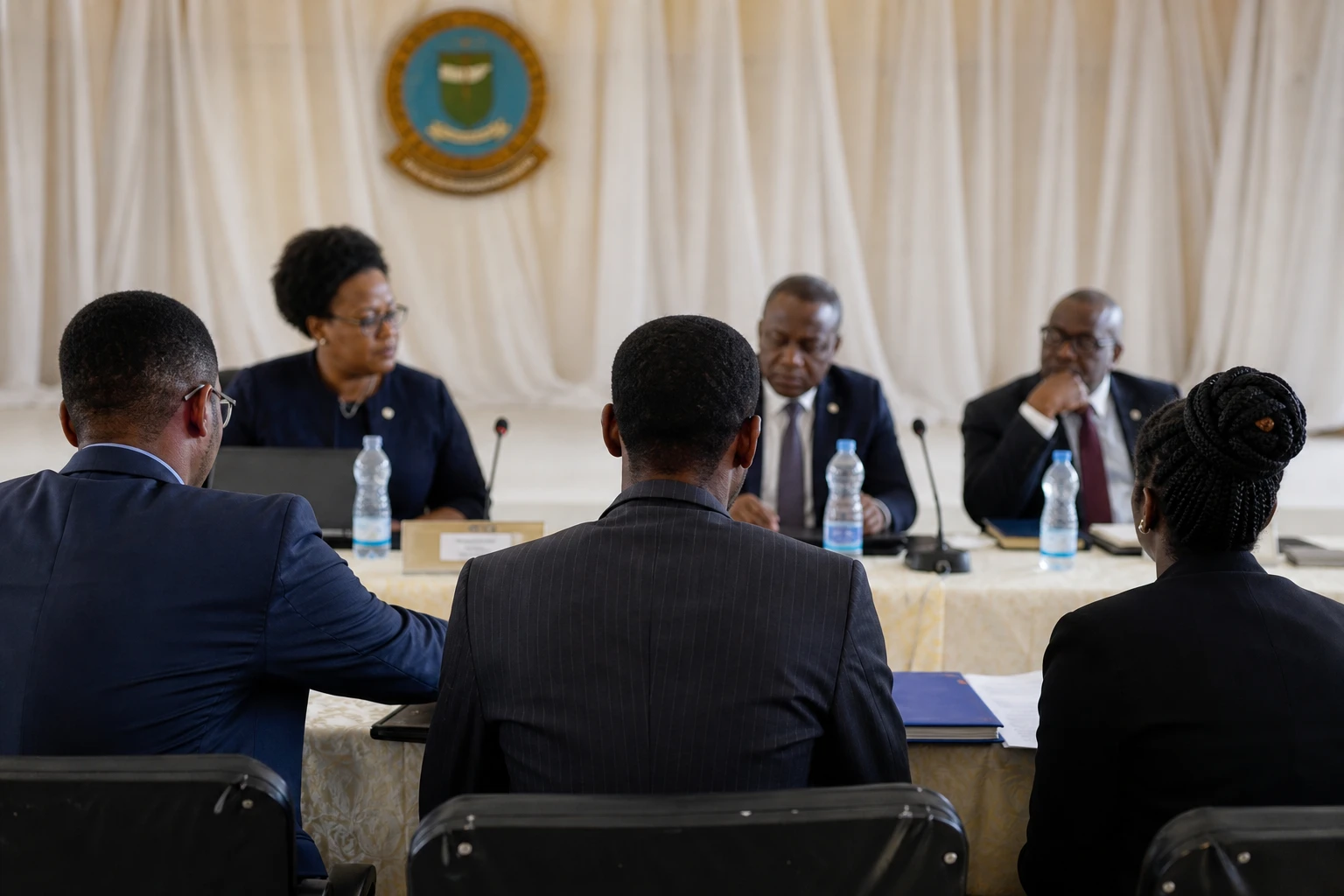
When the campus falls silent, the whole academic calendar is thrown off course
In Akungba-Akoko, Ondo State, the anger of students at Adekunle Ajasin University points to something broader than a simple university dispute: when classes stop, exams, internships, graduations and life plans are all put on hold. At a Nigerian public university, a strike does not just bring a campus to a standstill; it often places an additional burden on families already grappling with the cost of living, transport and uncertainty.
Nigeria is no stranger to this kind of crisis. In Ondo, the AAUA dispute is part of a familiar pattern: wage demands, agreements announced and then only partly implemented, and students left at the end of the chain. The state is in the country’s south-west, where public universities depend largely on budget decisions by the state government in Akure, while Abuja sets the federal framework for relations with higher education unions.
Student protest sparked by a double deadlock
On Thursday 3 September 2026, AAUA students blocked roads around the campus and shut the university’s main gate to protest 68 days of disruption to academic activities. Their demand was simple: an immediate resumption of classes. Placards seen at the scene summed up their frustration. The protest was described as peaceful, although it paralysed traffic around the institution.
At the heart of the problem are two separate but related union disputes. On one side, the AAUA branch of the Academic Staff Union of Universities (ASUU) began an indefinite strike on 11 August 2026, following the failure to implement the 2025 federal ASUU agreement and amid salary arrears. On the other, non-academic staff grouped in the Joint Action Committee of Ondo’s tertiary institutions, alongside SSANU, NASU and NAAT, also launched an indefinite strike from 3 September 2026. The convergence brought the campus close to a complete standstill.
Ondo authorities had nevertheless announced on 18 August a 60% increase in monthly grants to the state’s public tertiary institutions, as well as the immediate implementation of the agreement reached between the federal government and university unions. Lucky Aiyedatiwa’s government also said it had released 1.1 billion naira to clear salary arrears. But the unions judged the announcement insufficient without actual payments and a credible timetable. In other words, the crisis is not simply a dispute between students and leaders; above all, it exposes a gap between political statements and budgetary delivery.
Military presence sends a sensitive signal about the management of public space
Thursday’s events took a different turn with the arrival of Nigerian army personnel, seen in camouflage and patrol vehicles, according to images shared from the area around the campus. Students were dispersed, but no independent source consulted could, at this stage, confirm any injuries or arrests. This caution matters. In an already tense university setting, the use of armed forces to manage a student protest raises questions of method as well as public order.
The unease is all the more evident because the intervention recalls a previous incident in Ondo: in 2022, students protesting a university strike were also dispersed by soldiers, an episode that left a mark on local memory. Nigeria is a civilian state, but the role given to security forces in managing peaceful protests remains a sensitive issue, especially when those involved are students rather than armed groups. A military response may disperse a crowd in the short term; it does not resolve salary arrears or social grievances.
For students, the costs are immediate: a longer semester, extra accommodation expenses, reduced mobility and psychological strain. For academic and non-academic staff, the battle is about being paid on time, agreements being honoured and working conditions. For the Ondo government, the stakes are political: preserving the credibility of a promise to turn things around without allowing campuses to become a symbol of an administration unable to settle a recurring dispute. In Akure as in Abuja, a university crisis always becomes a matter of governance.
What this crisis says about Nigeria and West Africa
Regionally, the AAUA dispute reflects a broader reality in West Africa: public universities remain highly vulnerable to funding delays, fragile labour agreements and end-of-year budget decisions. Nigeria, the region’s largest economy and a key ECOWAS country, cannot treat instability in its higher education sector as a merely local problem. When a public university closes for too long, the entire training pipeline for teachers, engineers, lawyers and healthcare workers is disrupted, with lasting effects on employment and competitiveness.
The continental significance is clear: in several African countries, tensions between budget promises, labour dialogue and the maintenance of public order pose the same dilemma. What is unfolding at AAUA is therefore not an isolated incident. It is a test of a Nigerian state government’s ability to restore trust with its own universities, in a country where young people make up the majority of the population and every month lost in higher education comes at a collective cost. The next signals to watch are straightforward: whether the announced grants are actually delivered, whether the strikes are lifted in a coordinated manner and the effective date for classes to resume.