Algeria
 Egypt
 Libya
 Morocco
 Sudan
 Tunisia
 Benin
 Burkina Faso
 Cabo Verde
 Côte d'Ivoire
 Ghana
 Guinea
 Guinea-Bissau
 Liberia
 Mali
 Mauritania
 Niger
 Senegal
 Sierra Leone
 The Gambia
 Togo
 Cameroon
 Central African Republic
 Chad
 DR Congo
 Equatorial Guinea
 Gabon
 Republic of the Congo
 São Tomé and Príncipe
 Burundi
 Comoros
 Djibouti
 Eritrea
 Ethiopia
 Kenya
 Madagascar
 Malawi
 Mauritius
 Mozambique
 Rwanda
 Seychelles
 Somalia
 South Sudan
 Tanzania
 Uganda
 Angola
 Botswana
 Eswatini
 Lesotho
 Namibia
 South Africa
 Zambia
 Zimbabwe
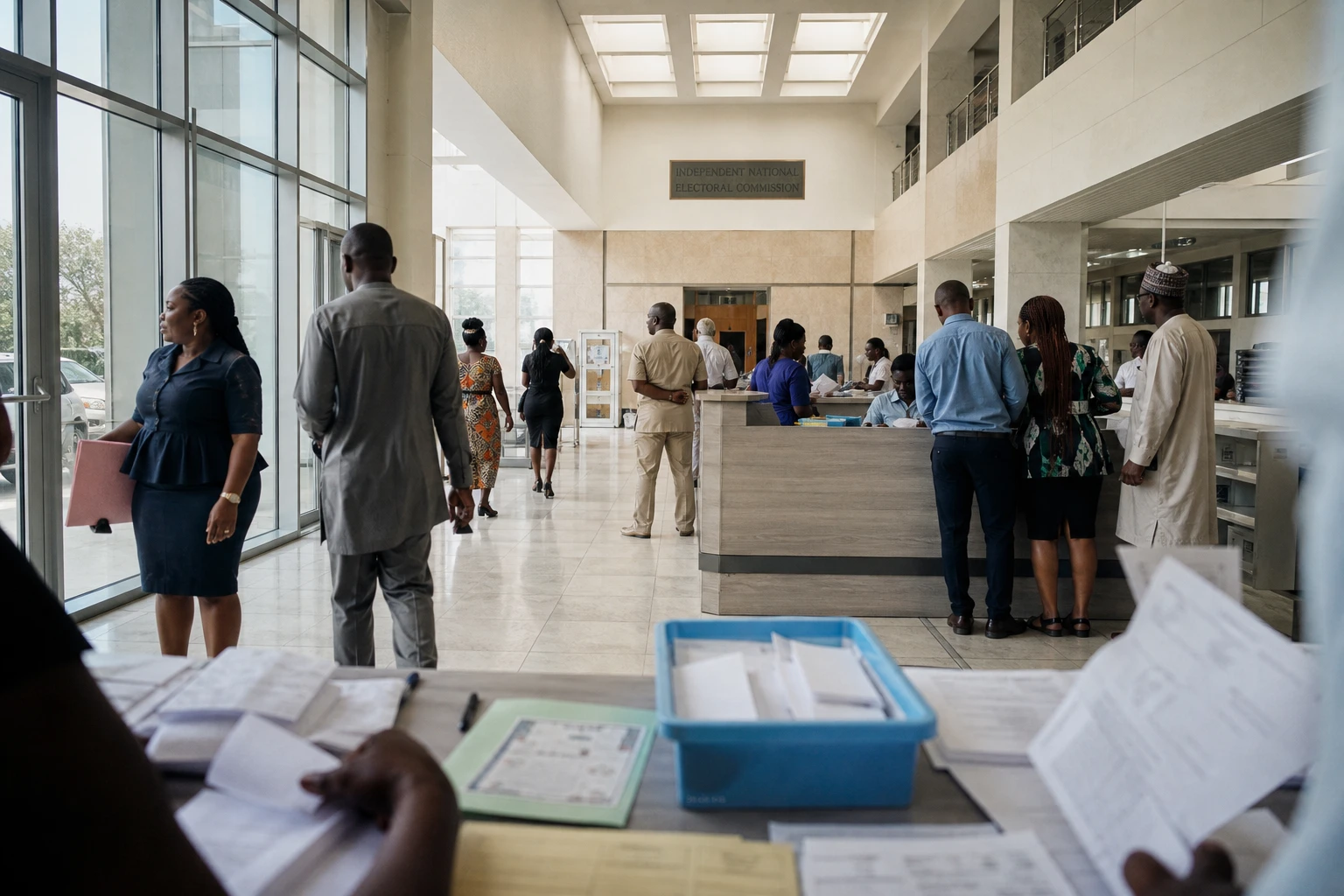
In Nigeria, 2027 will not be decided at the ballot box alone
In Abuja, the coming election battle is already about more than simply choosing a successor as president. It can be read in market prices, road safety, power cuts and the way votes will be counted. In January 2027, followed by governorship and state assembly elections in March, Nigerians will choose a president, federal legislators and local leaders in a country where every election is also a test of trust.
The institutional framework has also shifted. The Independent National Electoral Commission (INEC) has set the timetable for the 2027 election and says electoral law continues to govern the use of technology without abandoning manual collation. At the same time, the commission says it is reviewing its regulations for 2027, following the controversies surrounding the 2023 vote.
Tighter electoral rules, but tensions remain
The memory of 2023 is still fresh. That election was marked by delays in uploading results to the IReV portal, which was intended to make polling-unit results more transparent. INEC has since reiterated that results are first counted by hand, entered on official forms, photographed using the BVAS and then uploaded to IReV. The change is that electronic transmission is now more clearly governed by the rules, although the exception for network outages continues to fuel debate.
Another major change concerns the voter register. INEC announced that 96,251,597 voters were registered in January 2026 following the continuous voter registration campaign, with young people making up a large share of new registrants. This is a strong signal in a country where young people already had a significant impact in 2023, without the surge in registrations translating into mass turnout.
Politically, the landscape has narrowed around the ruling party. A series of defections by governors has strengthened the All Progressives Congress (APC), with several press tallies and political reports now giving it 31 of the 36 governorships, although such counts change quickly as allegiances shift. The effect is clear: the APC has a much stronger territorial foothold than it did in 2023.
The real vote will also be a referendum on the cost of living
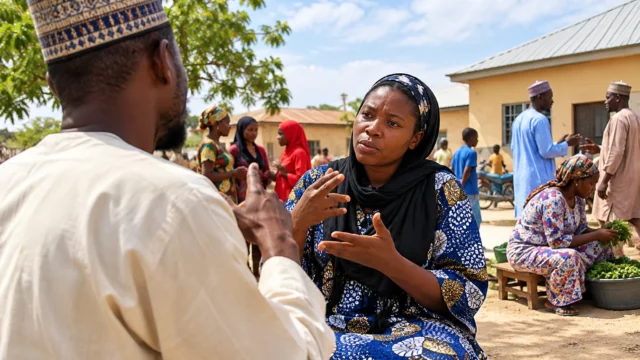
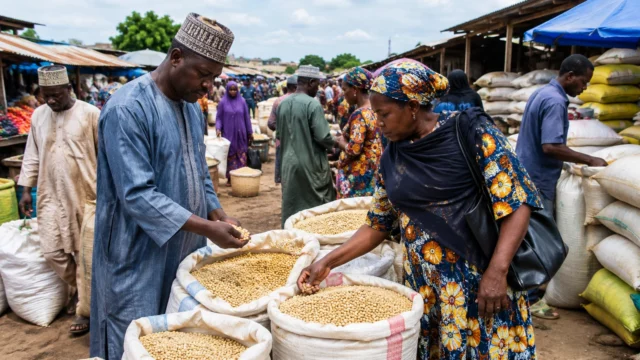
The second major shift is economic. Since the end of the fuel subsidy and the liberalisation of the naira, households have faced higher transport and food costs, as well as rising prices for many everyday services. Official data from the Central Bank of Nigeria show that inflation fell sharply in 2026 from the peaks reached after the reforms, but prices remain high for many families. Macroeconomic easing has yet to bring relief in the markets.
This pressure will weigh on the coming campaign. In 2023, the economy was already a major issue. Four years later, the question is no longer simply who governs, but whether people’s purchasing power has stopped deteriorating. For urban wage earners, small traders and the informal economy, the choices are tangible: getting around, producing, heating homes and selling goods. In Abuja as in Lagos, monetary policy is not an abstraction but a shopping basket.
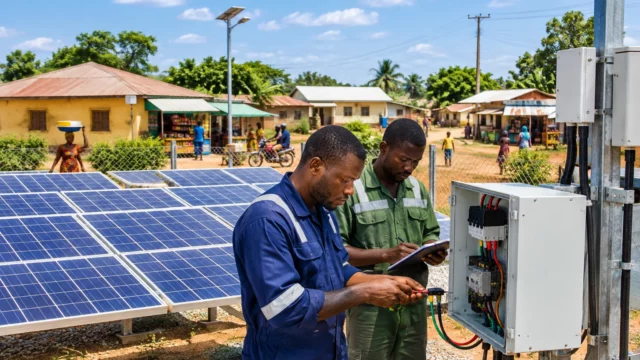
Electricity remains another barometer. The government has launched a fundamental reform of the sector, paving the way for state-run electricity markets and approving a $2.4 billion debt-reduction plan. Yet available supply remains far below installed capacity, and power cuts continue to drive up production costs for businesses and household spending, as families make up the shortfall with generators.
Security, hunger and the geography of risk
Finally, insecurity has spread. Kidnappings and attacks are no longer confined to their traditional strongholds in the north-east and north-west. They are also affecting parts of the south-west, extending the sense of insecurity beyond the regions long considered most exposed. The government says it has increased police numbers and overhauled the security command structure, but attacks on schools, farming communities and roads continue.
The human and economic cost is severe. The World Food Programme estimates that around 35 million Nigerians face food insecurity in 2026, with the north-east at the epicentre. When farmers can no longer cultivate their land, markets empty, prices rise and forced displacement further weakens households. Security is therefore an electoral issue, but also a matter of survival.
In this context, the 2027 election will matter far beyond Abuja. Nigeria is West Africa’s largest economy and a central player in ECOWAS, the Economic Community of West African States. When its political climate becomes tense, trade, migration and regional security dynamics are quickly felt in Benin, Niger, Chad, Cameroon and beyond. The next test will therefore be played out as much at polling stations as in the institutions’ ability to restore the credibility lost in 2023.