Algeria
 Egypt
 Libya
 Morocco
 Sudan
 Tunisia
 Benin
 Burkina Faso
 Cabo Verde
 Côte d'Ivoire
 Ghana
 Guinea
 Guinea-Bissau
 Liberia
 Mali
 Mauritania
 Niger
 Nigeria
 Senegal
 Sierra Leone
 The Gambia
 Togo
 Cameroon
 Central African Republic
 Chad
 DR Congo
 Equatorial Guinea
 Gabon
 Republic of the Congo
 São Tomé and Príncipe
 Burundi
 Comoros
 Djibouti
 Eritrea
 Ethiopia
 Kenya
 Madagascar
 Malawi
 Mauritius
 Mozambique
 Rwanda
 Seychelles
 Somalia
 South Sudan
 Tanzania
 Uganda
 Angola
 Botswana
 Eswatini
 Lesotho
 South Africa
 Zambia
 Zimbabwe
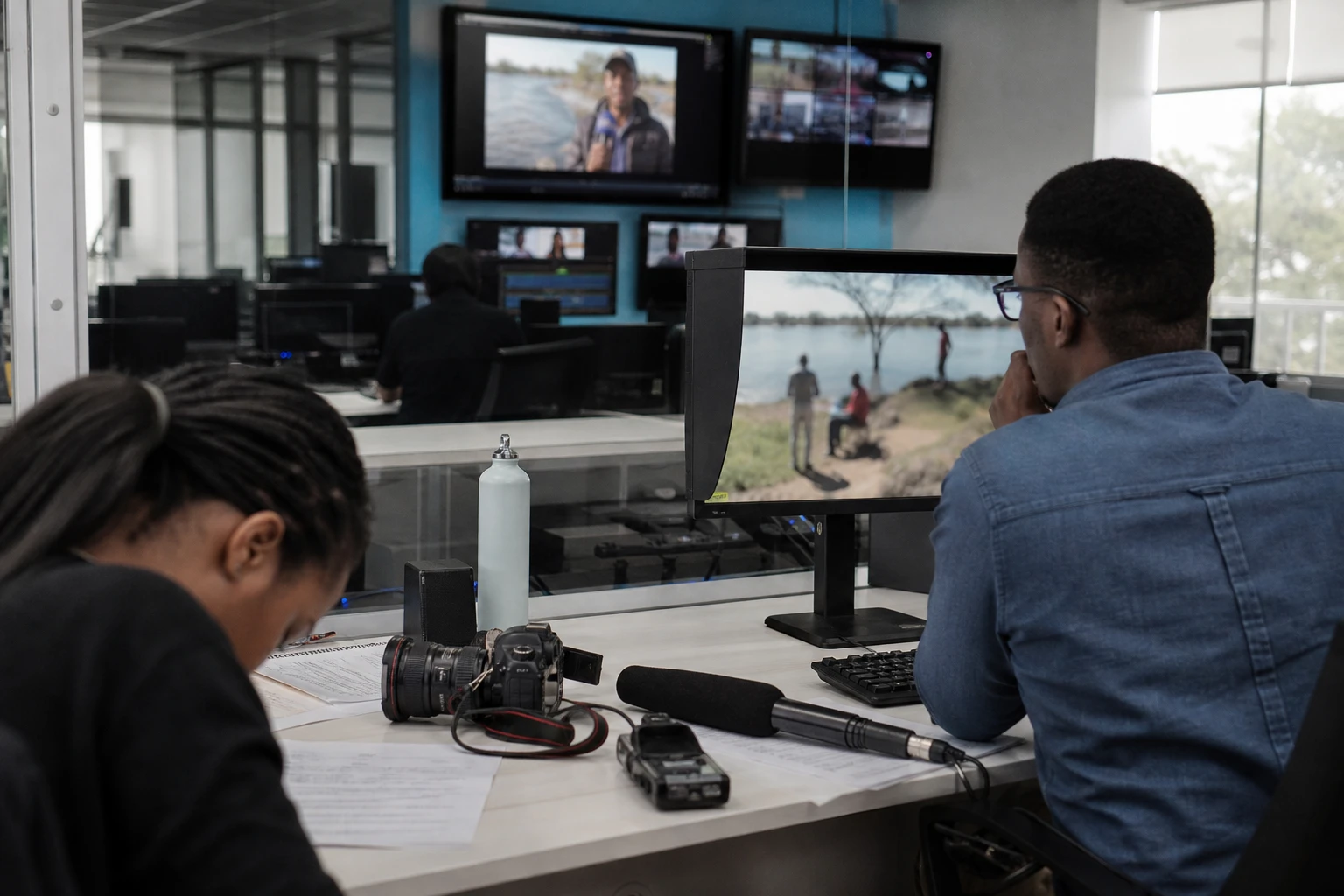
In north-eastern Namibia, the question is no longer simply whether there are hydrocarbons underground. The real question is now broader: how to turn a geological promise into a credible industrial project without putting further strain on areas already under heavy environmental and social pressure. The Kavango case illustrates this Namibian dilemma, caught between expectations of future revenue and the need for caution in a sensitive region.
A test that changes the picture, but not yet the commercial status
ReconAfrica announced on 16 July 2026 that the Kavango West 1X well had brought natural gas and liquids to the surface during tests on the Elandshoek formation in the Kavango basin. According to the company’s statement, tests covered three zones over 163 metres, with around 24 hours of cumulative production from the upper zone, before the other hydrocarbons recovered on site were flared. The company described this as a positive signal, but stressed that the results were preliminary and that the equipment used did not allow reliable flow rates to be measured.
This point is essential. In the oil industry, a flow of hydrocarbons at the surface is not enough to qualify as a commercially viable discovery. Actual flow rates, pressure, fluid quality, reservoir continuity and, above all, the profitability of development still need to be established. ReconAfrica itself says these initial tests do not make it possible to draw conclusions about the well’s future production capacity.
The campaign does not end there. The team has moved its equipment to the Hüttenberg formation, which is closer to the surface, where logging identified 76 metres net of hydrocarbon columns, according to the company. Full results from the new tests are expected after about ten days of work per zone, with an update promised at the end of August 2026.
PEL 73, Namibia and southern Africa: a closely watched case
The Kavango West 1X well is located on exploration licence PEL 73 in the north-east of the country, in the Kavango East and Kavango West regions. The licence is operated by ReconAfrica, with a 70% stake, alongside BW Energy with 20% and national oil company NAMCOR with 10%. BW Energy formally joined the project in 2024, before a realignment of the partnership was confirmed in 2025.
This structure matters to the analysis. It shows that this is not a single private gamble, but a case in which Namibia retains an institutional stake through NAMCOR. It also indicates that the project is part of a wider regional picture: the Kavango basin extends from north-eastern Namibia towards Angola and Botswana, within a geological and hydrological area closely monitored by authorities and cross-border stakeholders. ReconAfrica says it is also working on the Damara Fold Belt and the Kavango Rift Basin, in the Kalahari Desert.
The institutional context remains governed by Namibian rules. Drilling and testing operations are subject to the Environmental Management Act and the national petroleum regime. The ministry responsible for the environment has already issued environmental clearance certificates for the project, allowing work to continue within the PEL 73 area.
Between energy promise and environmental vigilance
The case remains controversial because it concerns an area where natural balances are finely poised. The exploration area is not in a national park, but it is close to a major transfrontier conservation area: the Kavango Zambezi Transfrontier Conservation Area, or KAZA TFCA, established by five southern African countries to protect a vast ecological and tourism region. Namibia’s environment ministry describes it as a regional conservation and sustainable development area.
It is precisely this proximity that fuels concerns among communities and environmental advocates. In 2022, local organisations brought a case before Namibia’s High Court to challenge environmental approvals linked to the project. ReconAfrica contested the allegations, and the court dismissed the case that year, but the debate has not gone away. It has shifted to other questions: the quality of local consultation, risk management, water use, and the role given to communities in Kavango East and Kavango West in any potential benefits.
Caution is also warranted because the project’s history is still recent. Before the 2026 test, ReconAfrica had already announced hydrocarbon indications in several wells and raised funds to continue exploration, without confirming a commercial discovery. The Kavango West 1X well, drilled in 2025, was described in December as having encountered about 400 metres of hydrocarbon-bearing section, including 64 metres net of reservoir confirmed by logging and mud analysis. The new tests in July 2026 therefore mark a further step, not yet an outcome.
What Namibia is now watching: timing, credibility and value sharing
For Windhoek, the stakes are twofold. On the one hand, a credible exploration success could strengthen Namibia’s appeal in an African upstream oil market where major offshore discoveries have already attracted international attention. On the other, premature excitement would create false hopes, while the country needs clarity on costs, impacts and the distribution of benefits. The difference between a geological breakthrough and lasting revenue often comes down to technical details, but also to governance.
The case’s continental significance is clear. In southern Africa, oil exploration is no longer confined to offshore platforms or major known basins. It is also advancing in inland and border areas, sometimes close to protected zones, where every decision can have consequences beyond a single country. For Namibia and the SADC, the southern African regional bloc, Kavango West 1X will therefore be watched for what it truly reveals: whether a state, a national oil company and private operators can turn an announced discovery into a well-managed, transparent project compatible with the region.