Algeria
 Egypt
 Libya
 Morocco
 Sudan
 Tunisia
 Benin
 Burkina Faso
 Cabo Verde
 Côte d'Ivoire
 Ghana
 Guinea
 Guinea-Bissau
 Liberia
 Mali
 Mauritania
 Niger
 Senegal
 Sierra Leone
 The Gambia
 Togo
 Cameroon
 Central African Republic
 Chad
 DR Congo
 Equatorial Guinea
 Gabon
 Republic of the Congo
 São Tomé and Príncipe
 Burundi
 Comoros
 Djibouti
 Eritrea
 Ethiopia
 Kenya
 Madagascar
 Malawi
 Mauritius
 Mozambique
 Rwanda
 Seychelles
 Somalia
 South Sudan
 Tanzania
 Uganda
 Angola
 Botswana
 Eswatini
 Lesotho
 Namibia
 South Africa
 Zambia
 Zimbabwe
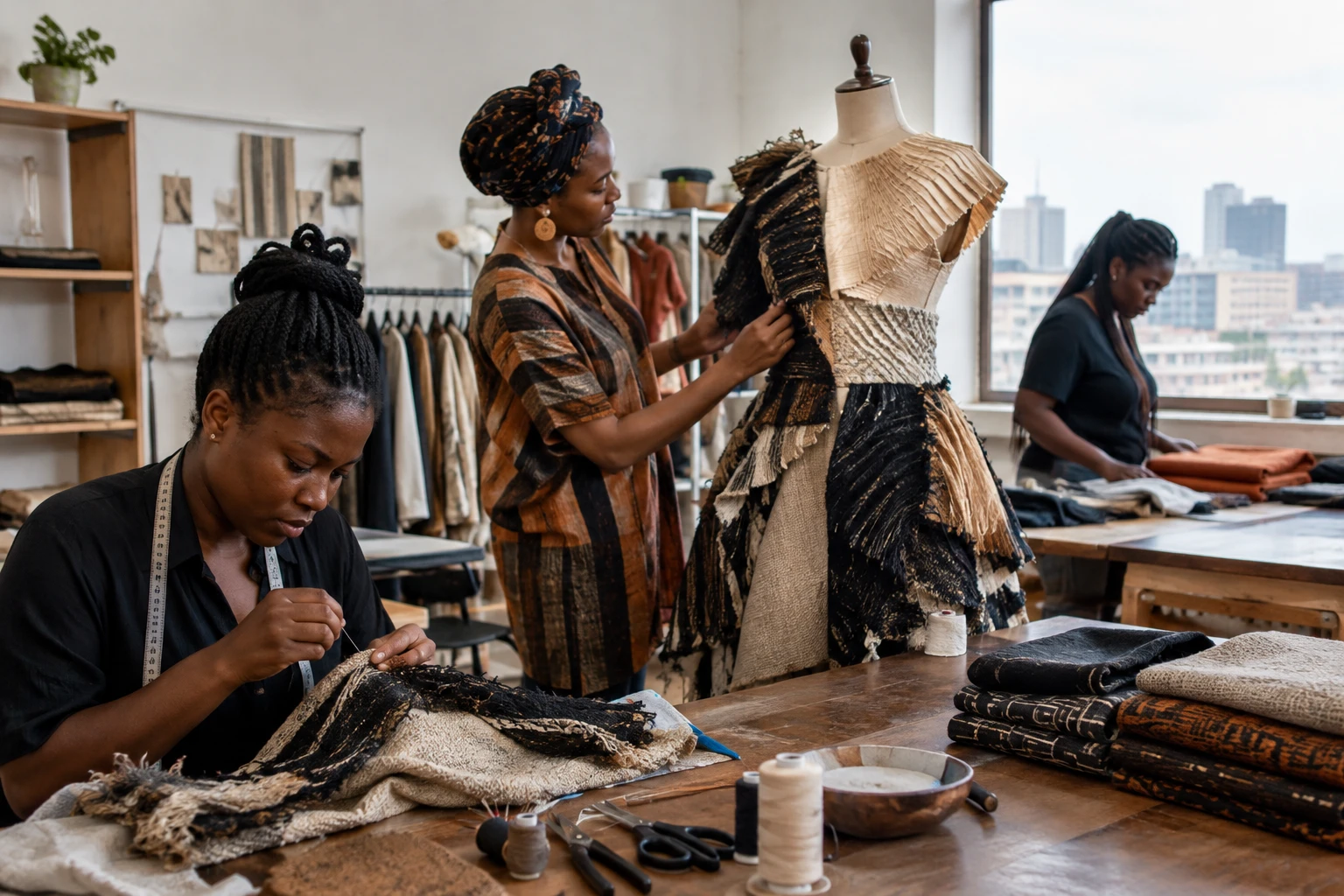
In Lagos, a garment can be more than a silhouette to look at or buy. In the work of Nigerian designer Bubu Ogisi, it also becomes a vehicle for storytelling, a craft gesture and a staged experience. This approach shifts the usual boundaries between runway show, performance and installation.
In Lagos, the runway becomes a space for experimentation
On the final day of the latest edition of Lagos Fashion Week, the IAMISIGO label presented a collection combining sculptural clothing, staging and spiritual references. The handmade pieces used materials and craft techniques from different regions of the continent. The precise date of the presentation has not been established by the information available.
Ogisi describes her approach as a way of challenging conventions and imagining other ways of creating. The presentation was therefore not limited to showing outfits: it offered a visual and sensory journey in which the body, materials and space all contributed to the meaning of the work.
French photographer and artist Hubert Crabières designed the staging for the show. He spoke of the bold colours and expressive constructions of the designs, as well as the intensity of the urban experience in Lagos. His perspective brings an outside point of view, but the artistic vision remains Ogisi’s, along with the craft practices her label highlights.
Craft techniques transformed, not frozen in time
Founded in 2013, IAMISIGO operates between Lagos, Nairobi and Accra. The label collaborates with small craft communities in several African countries and is interested in textile techniques passed down through generations. It reworks them into contemporary forms without reducing this heritage to decorative patterns.
This method gives materials a central place. Fibres, textiles and manufacturing processes become aesthetic choices, but also vehicles for memory and knowledge. The designs can thus appear on international runways while pointing to practices rooted in specific places and communities.
This work also invites people to look at the production chain behind a piece. A garment’s value lies not only in its appearance or price: it also depends on the time taken to make it, technical expertise and the pay of those who contribute to its creation. The available information does not, however, specify production volumes or the economic terms of the collaborations concerned. The approach should therefore not be presented as, in itself, a guarantee of sustainability or an equitable sharing of value.
A Nigerian fashion scene reaching multiple audiences
Lagos Fashion Week offers designers a platform for showcasing their work and making professional connections. It brings together designers, artisans, buyers, media and audiences from Nigeria and beyond. The shows are part of a broader ecosystem: workshops, production, trade, communications and the passing on of skills.
For designers, this visibility can open up opportunities. But it also raises practical questions: how can production be scaled without diluting a way of working? How can a craft skill be promoted without separating it from the people who practise it? And how can international attention be turned into sustainable income for local teams? These issues affect established fashion houses as well as workshops and artisans working far from the major stages.
Nigeria’s federal capital is Abuja, but Lagos remains a major centre of the country’s economic and creative activity. Fashion there engages with a local audience, a growing cultural industry and regional markets. It thus contributes to the city’s economic life while bringing visibility to practices whose networks extend beyond national borders.
A continental ambition, with balances to monitor
IAMISIGO champions a continental approach rather than an identity confined to a single country. This movement between Lagos, Nairobi and Accra is a reminder that African creative exchanges cannot be reduced to a relationship between one capital and Western markets. They also draw on collaborations, techniques and histories shared across several regions.
The pan-African reach of this approach will nevertheless depend on the place given to artisans in the creative process and in the income generated. Recognition of techniques is not enough if the people who master them remain invisible or are poorly paid. Monitoring partnerships, production conditions and the continuity of collaborations will make it possible to assess the effects of this model more precisely.
In Lagos, Bubu Ogisi’s work reflects a scene that does not necessarily separate fashion, art and craft. It turns the runway into a place for experimentation and raises a broader question: how can forms evolve without erasing the knowledge that makes them possible?