Algeria
 Egypt
 Libya
 Morocco
 Sudan
 Tunisia
 Benin
 Burkina Faso
 Cabo Verde
 Côte d'Ivoire
 Ghana
 Guinea
 Guinea-Bissau
 Liberia
 Mali
 Mauritania
 Niger
 Nigeria
 Senegal
 Sierra Leone
 The Gambia
 Togo
 Cameroon
 Central African Republic
 Chad
 DR Congo
 Equatorial Guinea
 Gabon
 Republic of the Congo
 São Tomé and Príncipe
 Burundi
 Comoros
 Djibouti
 Eritrea
 Ethiopia
 Madagascar
 Malawi
 Mauritius
 Mozambique
 Rwanda
 Seychelles
 Somalia
 South Sudan
 Tanzania
 Uganda
 Angola
 Botswana
 Eswatini
 Lesotho
 Namibia
 South Africa
 Zambia
 Zimbabwe
When health prevention clashes with sovereignty
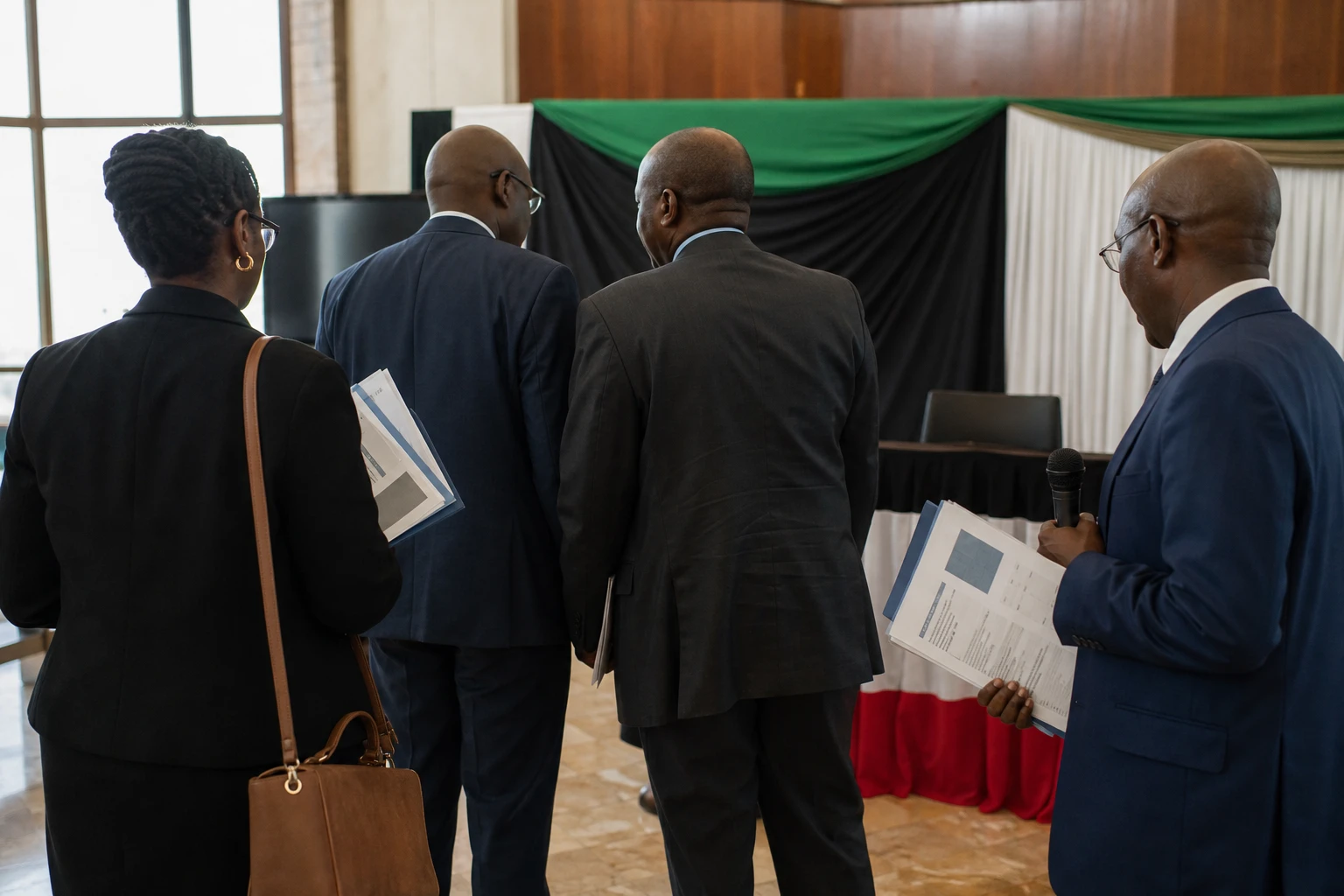
In Nairobi, a public health case has taken on much broader significance. It touches on the transparency of the Kenyan state, the role of foreign partners in emergency responses and a simple question: who decides, in Kenya, what can be established on its soil when health and security are at stake?
The debate began over a proposed Ebola quarantine centre at an airbase in Laikipia, in central Kenya. The country has reported no confirmed Ebola cases, but has stepped up surveillance since the Bundibugyo outbreak, a strain of Ebola, was declared in May in the Democratic Republic of the Congo and Uganda. The region is therefore on alert, and Kenya, a member of the East African Community, is on the front line when it comes to cross-border flows.
What the Kenyan courts say
The case became a legal dispute at the end of May. Nairobi’s High Court suspended the project pending a full hearing, after a petition was filed by civil society actors and Kenyan lawyers. At this stage, the suspension bars the quarantine site from opening and from receiving anyone exposed to the virus.
The latest hearings took place on 23 and 24 July 2026 before Nairobi’s High Court. The petitioners argue that the project moved forward without sufficient consultation or clear safeguards for the public. They also believe that Kenya does not yet have sufficiently robust capacity to manage an Ebola risk of this kind. The authorities, for their part, say they acted within the law and describe the facility as a preparedness tool in response to a regional threat. The ruling is due on 26 November.
Kenya’s Ministry of Health, for its part, stresses that the country remains free of confirmed cases. In its statements, it refers to thousands of travellers screened at the borders, dozens of alerts that tested negative and a national Ebola incident management system that has already been activated. The official position is clear: the risk exists in the region, but Kenya wants to contain it before it enters its territory.
Why Laikipia is at the centre of tensions
Laikipia is no ordinary location. It is a strategic area near Nanyuki, with a military presence and sensitive civilian concerns. That is also what fuels the opposition: critics say a quarantine facility in this area raises questions about security, local consent and compliance with procedures. The authorities, by contrast, argue that the site serves the need for rapid preparedness amid a regional health emergency.
The Kenyan government has also defended the need to strengthen the country’s response capacity, both before Parliament and in its statements. The ministry has said that gaps remain in case management, infection prevention, logistics and the sustainable funding of health emergencies. In other words, the Laikipia case is about more than infrastructure. It also exposes broader weaknesses in Kenya’s health system.
The case is also unfolding amid wider public mistrust. In Kenya, public health issues are now under close scrutiny, as debates over access to care, the quality of medicines and the management of medical resources loom large in public life. In this context, a project presented late and poorly explained can quickly become a symbol of a lack of trust between the state, communities and foreign partners.
Issues beyond the Kenyan case
The central issue is not solely a health one. It is political. Several African actors are following the case closely because it touches on how responses to epidemics are built in Africa: with which partners, under what rules, and with what role for national and regional institutions. Africa, with its major health corridors, porous borders and professional mobility, cannot simply accept orders from elsewhere. It must be able to decide, scrutinise and coordinate.
The regional dimension is equally important. Kenya shares daily flows with Uganda, Tanzania, South Sudan and the Democratic Republic of the Congo, where the current Bundibugyo Ebola outbreak calls for close coordination. The World Health Organization and Africa CDC launched a six-month continental preparedness and response plan in June 2026. The Kenyan case therefore fits into a broader African framework, in which Nairobi is a health, logistics and diplomatic hub.
That is precisely what makes the controversy sensitive. When foreign nationals potentially exposed to Ebola are received in Kenya, even under a prevention agreement, the public demands specific assurances: where the centre is located, who works there, what protections are in place, and why the decision was not explained sooner. US authorities have confirmed discussions with Nairobi, while media have reported transfers of US nationals to a centre in Kenya run by US staff. But operational details remain limited, and this lack of transparency fuels suspicion.
What happens next depends on the ruling due on 26 November. Until then, the court suspension remains in force, although activists claim that some activities may have continued at the site. Beyond the fate of a centre in Laikipia, the case will show whether Kenya can reconcile health preparedness, democratic oversight and institutional sovereignty without allowing confusion to take hold. It is a Kenyan question, but also a test for African health governance.