Algeria
 Egypt
 Libya
 Morocco
 Sudan
 Tunisia
 Benin
 Burkina Faso
 Cabo Verde
 Ghana
 Guinea
 Guinea-Bissau
 Liberia
 Mali
 Mauritania
 Niger
 Nigeria
 Senegal
 Sierra Leone
 The Gambia
 Togo
 Cameroon
 Central African Republic
 Chad
 DR Congo
 Equatorial Guinea
 Gabon
 Republic of the Congo
 São Tomé and Príncipe
 Burundi
 Comoros
 Djibouti
 Eritrea
 Ethiopia
 Kenya
 Madagascar
 Malawi
 Mauritius
 Mozambique
 Rwanda
 Seychelles
 Somalia
 South Sudan
 Tanzania
 Uganda
 Angola
 Botswana
 Eswatini
 Lesotho
 Namibia
 South Africa
 Zambia
 Zimbabwe
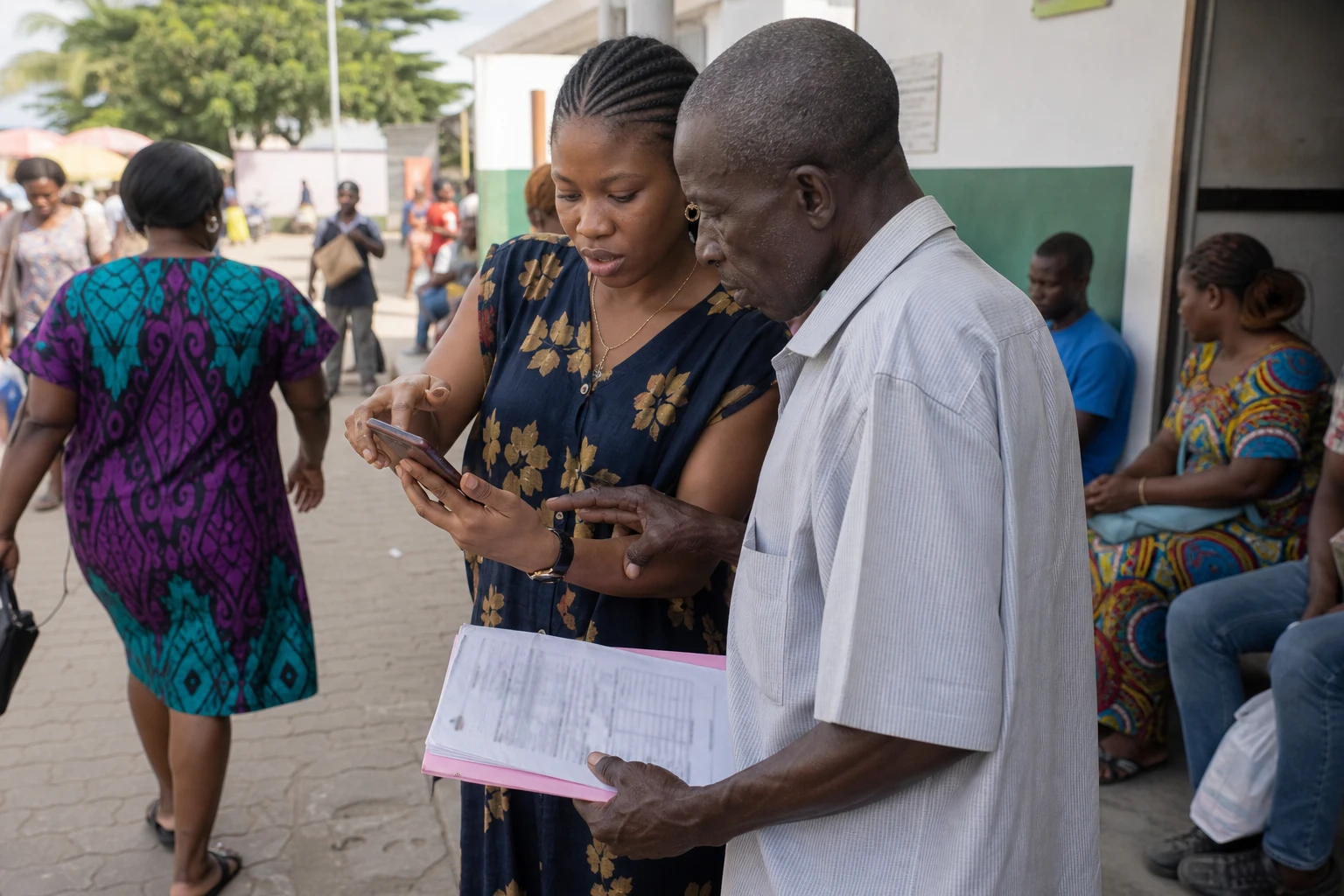
In Abidjan and other Ivorian cities, an administrative procedure can still require several identifiers, repeated supporting documents and separate checks. The project launched on 5 October 2026 aims to reduce these obstacles, but its success will depend on one essential point: linking existing systems without weakening data protection.
A study to link public services
The Ivorian government has launched a feasibility study in Abidjan-Plateau on a national authentication platform and a digital identity wallet. The ceremony was chaired by the Minister of the Interior and Security, Vagondo Diomandé, in the presence of Djibril Ouattara, Minister of Digital Transition and Technological Innovation.
The mission is part of the Support Project for Strengthening E-Government, or PARAE. It is intended to specify the technical, legal and institutional conditions required to establish the future system. The first recommendations are expected by January 2027.
The aim is to give Côte d’Ivoire national digital authentication capabilities. In practical terms, a user could log in to several public services using a shared trusted mechanism. The administration could then verify certain attributes, such as civil status, without routinely asking for the same document.
The proposed digital wallet would function as a secure space. It would allow a person to present information or verifiable documents to an authorised service. Depending on the options selected, these documents could relate to identity, civil status, a diploma, a driving licence or other administrative records.
The system has not yet been finalised. The study must compare several options. In particular, it will need to define the required level of security for different procedures, the rules governing data access and how users will give their consent.
The RNPP and ONECI at the heart of the architecture
The future platform is not expected to operate as an independent database. The government plans to build on infrastructure already developed by the National Office for Civil Status and Identification, ONECI, as well as the National Register of Natural Persons, or RNPP.
Established to bring together identification data on people living in Côte d’Ivoire, the RNPP assigns a National Identification Number to each person registered. This number provides a common reference for public and private procedures, subject to the rules applicable to each use.
ONECI currently describes the RNPP as a foundation for legal and digital identity. In May 2026, the institution brought together several project stakeholders in Yamoussoukro to assess its performance, constraints and prospects. Discussions covered identity, civil status, migration flows and the interoperability of systems.
Côte d’Ivoire already has digital services linked to identification. The MyONECI+ app, for example, offers a digital identity card equivalent to the physical document for eligible Ivorian citizens. The future wallet will therefore need to clarify how it fits with these tools, rather than create a new, parallel experience.
This requirement for interoperability is crucial. It means that different systems can exchange information according to common rules. Without it, each ministry would retain its own account, files and procedures. The benefits for users would then remain limited.
Potential benefits for users, with safeguards
For citizens, the main expected benefit is a reduction in the time required and the number of supporting documents needed. A person could, for example, authorise one service to verify information already held by another government department. This would avoid several trips or repeatedly submitting copies of documents.
The effects would not be the same for everyone. In large urban centres, users who already have a compatible phone could adopt these services quickly. In rural areas, access would depend more on network coverage, the cost of connectivity, the availability of devices and in-person support.
Older people, users with limited literacy and those without a smartphone will also need to retain alternative ways of accessing services. A genuinely inclusive digital administration cannot make proficiency with a tool a condition for accessing rights.
Security is the other major issue. A poorly protected digital identity can expose users to impersonation, profiling or the excessive circulation of personal data. The future system will therefore need to limit the information shared to what is strictly necessary for each procedure.
Authorities will also need to specify who can access which data, for how long and what avenues of appeal are available. Access logs, notifications about sensitive uses and the correction of errors will be essential to building trust.
In this area, authentication should not be confused with the mere existence of a register. A register indicates that a person is known to the system. Authentication verifies that they are the person attempting to access a service. This distinction explains why a shared infrastructure requires standards, security mechanisms and clearly allocated responsibilities.
A building block for Ivorian digital government
The project is part of a broader transformation of Ivorian government. Digital public infrastructure generally comprises several shared building blocks: identity, payments, secure data exchange and trust services. Their value lies in pooling resources, allowing several administrations to use the same foundations instead of developing isolated solutions.
The digital strategy led by the Ministry of Digital Transition and Technological Innovation is intended to prioritise high-impact public services. Digital identity could serve as an entry point to these procedures, but it will not be enough on its own. Government departments will also need to review their internal processes and the quality of their databases.
The business sector could also be affected. Verifiable identity can simplify certain banking operations, access to financial services, business formalities and the signing of documents. It can also reduce fraud, provided private-sector uses remain governed by law and by clearly understood consent.
A regional project to watch
Côte d’Ivoire is moving forward in a West African region where the movement of people, digital financial services and trade extend beyond national borders. ECOWAS, the Economic Community of West African States, has for several years been working on mobility and the recognition of documents among its members.
In time, national interoperability could therefore become a regional issue. Ivorian systems will need to protect data sovereignty while remaining able to exchange certain information with compatible systems. This prospect is particularly relevant to mobile workers, students, traders and companies operating in several countries.
The next step will be publication of the recommendations expected in January 2027. They will show whether the project favours a centralised architecture, a federated model linking government departments or a combination of the two. They will also need to set out the timetable, costs, responsibilities and safeguards offered to users.
For Côte d’Ivoire, the challenge therefore goes beyond creating an app. It is about building a simpler digital relationship between the state, citizens and businesses. That relationship will only be sustainable if it combines administrative efficiency, equitable access, control over how data is used and trust in the institutions that hold it.