Algeria
 Egypt
 Libya
 Morocco
 Sudan
 Tunisia
 Benin
 Burkina Faso
 Cabo Verde
 Côte d'Ivoire
 Ghana
 Guinea
 Guinea-Bissau
 Liberia
 Mali
 Mauritania
 Niger
 Nigeria
 Senegal
 Sierra Leone
 The Gambia
 Togo
 Cameroon
 Central African Republic
 Chad
 DR Congo
 Equatorial Guinea
 Gabon
 Republic of the Congo
 São Tomé and Príncipe
 Burundi
 Comoros
 Eritrea
 Ethiopia
 Kenya
 Madagascar
 Malawi
 Mauritius
 Mozambique
 Rwanda
 Seychelles
 Somalia
 South Sudan
 Tanzania
 Uganda
 Angola
 Botswana
 Eswatini
 Lesotho
 Namibia
 South Africa
 Zambia
 Zimbabwe
When the sea becomes a gateway to asylum
In Djibouti, the Red Sea is never merely a strategic backdrop. It is also a lifeline for families fleeing war, supply disruptions and the collapse of basic services on the other side of the Gulf of Aden. Small in size but central to the region, the country has for years shouldered a disproportionate share of human movements between the Horn of Africa and the Arabian Peninsula.
In this corridor, Djibouti occupies a particular position. It is one of the closest crossing points to Yemen, via Obock and the Bab el-Mandeb Strait, a narrow maritime passage exposed to currents, smuggling networks and security risks. The International Organization for Migration still describes this eastern route as one of the most dangerous in the world.
What the figures say, and what they tell us
The movement of Yemenis to Djibouti is not new. In 2015, the United Nations had already reported that more than 2,000 Yemenis had arrived in the country within a few weeks, while more than 15,000 people seeking refuge had crossed into Djibouti since the conflict in Yemen intensified. The UN agency estimated at the time that about 2,800 people were living at Markazi camp in Obock, the main reception point in the north of the country.
Since then, the Yemeni presence has become a long-term reality. At the end of 2024, Djibouti had 32,643 refugees and asylum seekers, including 3,555 Yemenis, according to the United Nations refugee agency. In 2026, data from the same agency indicate that Yemenis account for about 11% of the country’s refugee population.
The pressure does not come from Yemen alone. Djibouti also remains a hub for mixed migration, with departures and returns along the eastern route linking the Horn of Africa to the Gulf. In 2025, the International Organization for Migration recorded 522,587 migration movements in the country, a 20% increase year on year. This intensity helps explain the growing difficulty Djiboutian authorities face in receiving new arrivals while protecting those already in transit.
Djibouti faces a double burden: reception and transit
Djibouti’s role is often reduced to that of a transit point. This is reductive. The country also hosts refugees over the long term, with limited public services, vulnerable communities and accommodation capacity concentrated around Obock, Ali-Addeh, Holl-Holl and Djibouti City. UNHCR says Djibouti now hosts about 32,000 people forced to flee, mainly from Somalia, Ethiopia and Yemen.
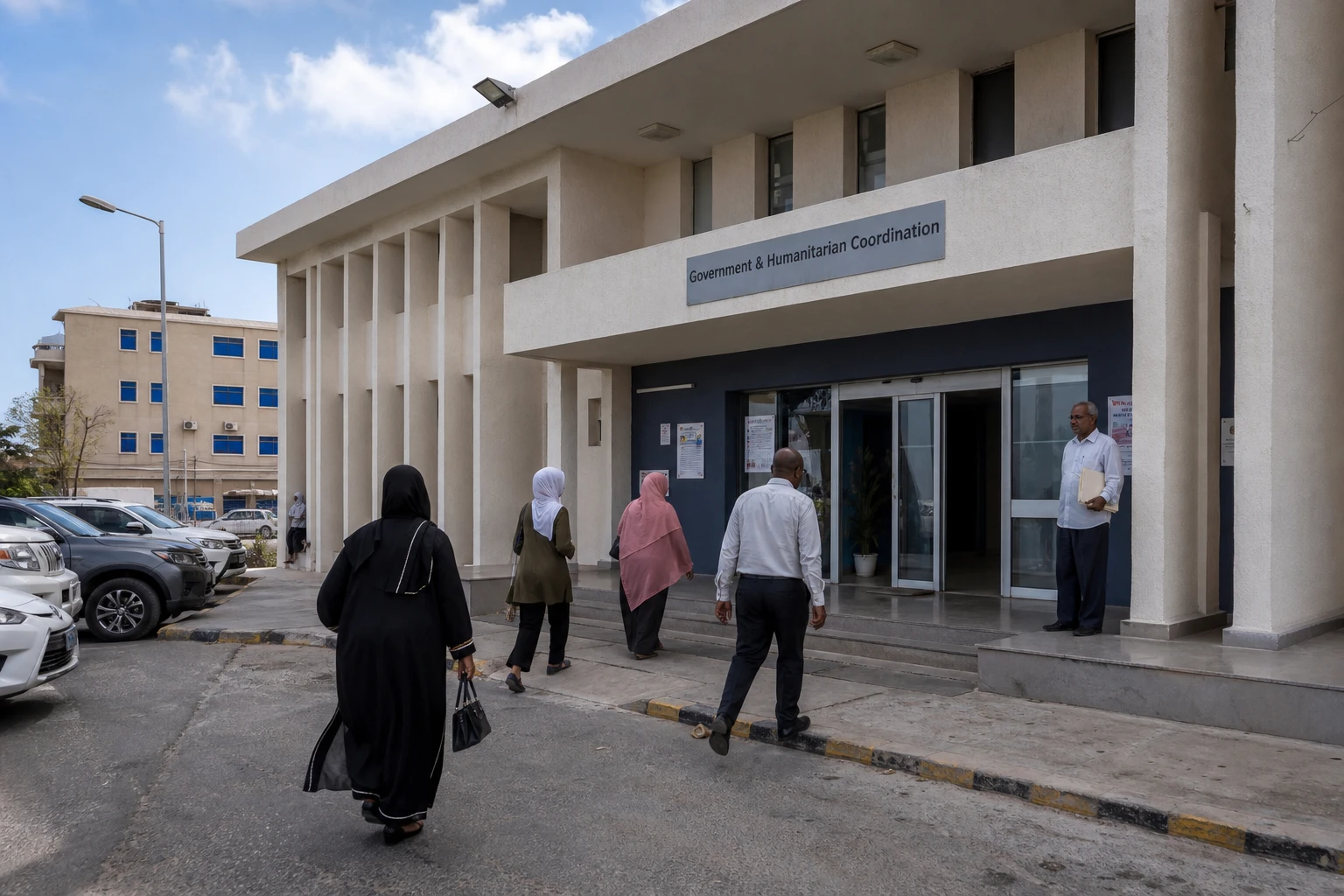
This reality weighs differently across the country. In the capital, Djibouti City, government departments, NGOs and UN agencies coordinate registration and assistance. In the north, particularly in Obock, municipalities, local communities and state services manage arrivals, often under strained logistical conditions. This unequal distribution of the burden is a central issue in Djibouti’s migration policy.
Regional cooperation has therefore become more important. IGAD, the East African intergovernmental organisation to which Djibouti belongs, has made repeated calls for shared governance of migration along the eastern route. In April 2026, in Tadjourah, Djiboutian authorities, IGAD, the IOM and several partners again stressed the need to strengthen migrant protection, maritime security and the fight against smuggling networks.
Why Yemen remains at the centre of the issue
The war in Yemen continues to drive departures. Even when front lines are static, the effects of the conflict remain visible: lost income, fear of air strikes, coastal insecurity, difficulty accessing healthcare and prolonged internal displacement. For some households, Djibouti remains the closest and least costly option for getting children to safety, even though the crossing of the Bab el-Mandeb remains perilous.
The Bab el-Mandeb Strait gives this crisis an immediate geopolitical dimension. The passage links the Red Sea to the Gulf of Aden and concentrates commercial, military and diplomatic interests that extend far beyond the fate of migrants. When security there deteriorates, the effects are felt in shipping, smuggling networks and Djibouti’s reception capacity. Migration then becomes an issue of sovereignty, security and humanitarian protection.
For Yemenis arriving in Djibouti, the issue is not only asylum. It is also access to healthcare, registration, schooling for children and a degree of legal stability. For the Djiboutian state, the challenge is to balance reception, maritime surveillance and local social cohesion. For the region, finally, the situation is a reminder that no IGAD country can manage alone the movements generated by a war that spills across its borders.
What happens next will depend on three factors: the course of the conflict in Yemen, Djibouti’s capacity to maintain its reception arrangements, and regional coordination along the eastern route. As flows resume or shift, the country remains one of the first barometers of human crises in the Red Sea.