Algeria
 Egypt
 Libya
 Morocco
 Sudan
 Tunisia
 Benin
 Burkina Faso
 Cabo Verde
 Côte d'Ivoire
 Ghana
 Guinea
 Guinea-Bissau
 Liberia
 Mali
 Mauritania
 Niger
 Nigeria
 Senegal
 Sierra Leone
 The Gambia
 Togo
 Cameroon
 Central African Republic
 Chad
 DR Congo
 Equatorial Guinea
 Gabon
 Republic of the Congo
 São Tomé and Príncipe
 Burundi
 Comoros
 Eritrea
 Ethiopia
 Kenya
 Madagascar
 Malawi
 Mauritius
 Mozambique
 Rwanda
 Seychelles
 Somalia
 South Sudan
 Tanzania
 Uganda
 Angola
 Botswana
 Eswatini
 Lesotho
 Namibia
 South Africa
 Zambia
 Zimbabwe
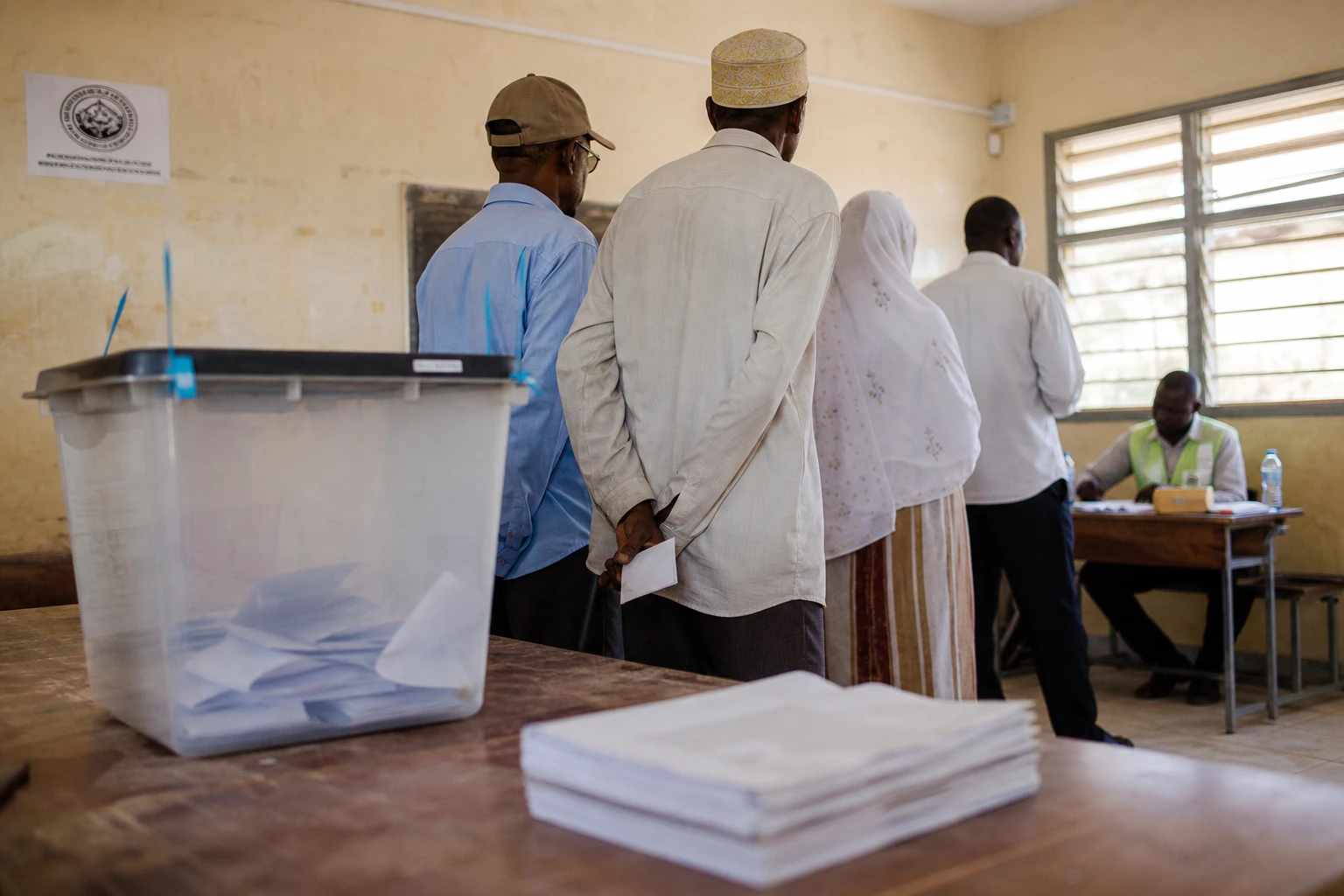
In Djibouti, football is about more than the pitch
In a country where every piece of infrastructure matters, football is not just about results. It is also a test of governance, trust and the use of public or quasi-public money. In Djibouti, the controversy shaking the Djiboutian Football Federation reveals precisely this: when clubs doubt how funds are managed, the entire chain of sports development is weakened.
The issue has particular significance in a Horn of Africa country where football remains one of the few platforms for national and regional visibility. The Djiboutian federation has been affiliated to FIFA since 1994 and to CAF since 1994, and belongs to CECAFA, the East African zone grouping the region’s football federations. In this context, Djibouti is not isolated: its management difficulties, infrastructure and ambitions are viewed within a highly competitive regional sporting environment.
What the audits and figures say
The case centres on a 2024 government inspection report, made public only belatedly according to several sources, which raises concerns about flawed procurement procedures for the new federation headquarters project. The document cites favouritism in the awarding of the contract and inflated costs across several items. Funds from Saudi Arabia for the project may also have been used in a disputed manner. The government, which was approached for comment, had not publicly responded to questions raised by the international press when the case resurfaced.
The debate is not limited to an internal dispute. It also affects the funders of Djiboutian football. FIFA describes Djibouti as an active beneficiary of its Forward programme, with $4,925,732 committed to infrastructure, followed by $943,501 for capacity-building, $750,000 for other projects, $331,079 to support national teams and $299,688 for competitions. The same page lists three technical centres and eight funded pitches in the country. This level of funding explains why any suspicion of mismanagement carries such weight: the federation administers scarce resources in a fragile sporting ecosystem.
The tensions are also personal. Executive committee member Mohamed Elmi Farah resigned on 12 August, saying he had concerns about the federation’s management and use of resources. Souleiman Hassan Waberi, the long-serving president of the body, says FIFA confirmed that no oversight mechanism had found any misuse of the funds provided. He nevertheless acknowledges shortcomings in some tender procedures, which he attributes to local procurement constraints in Djibouti.
Angry clubs, an institution under pressure
On the pitch, the crisis is seen as a problem of how resources are shared. Local club officials believe the federation’s resources do not sufficiently support the league, training or competitiveness. One of them, quoted anonymously by the press, even threatened to boycott the competition unless the leadership changed. This stance reflects a familiar divide in small federations: on one side, a leadership that highlights projects, partnerships and international recognition; on the other, clubs that consider the tangible benefits too limited given the resources involved.
This rift comes as Djiboutian football is still seeking to find its stride. Local media report that the current leadership claims real progress: the Douda academy, regional centres, training for young people, the promotion of women’s football and Djibouti’s growing profile in international bodies. FIFA itself speaks of an acceleration in the development of football in the country. But these developments are not enough to resolve a central question: who oversees spending, and what safeguards are in place? In a context of a weak economic base, a poorly managed contract or opaque tender has an immediate impact on clubs, young players and supporters’ engagement.
The comparison with Cape Verde made by some figures is instructive. The point is not to compare the two countries like for like, but to show that a small population does not preclude a clear, structured and effective sports policy. Djibouti therefore faces a twofold challenge: restoring trust in management and turning investment into lasting results. Without this, infrastructure remains underused, and the federation’s international profile does not translate into local progress.
A local case, but a signal for East Africa
The case goes beyond Djibouti. Across CECAFA, where several federations face comparable challenges in funding, professionalisation and internal oversight, Djibouti is becoming a case study. If international football funds do not build local trust, the risk is twofold: weakening national competitions and fuelling widespread suspicion about football development mechanisms. The question therefore extends beyond the federation concerned. It tests the ability of African sports institutions to reconcile autonomy, oversight and transparency.
The national context reinforces this message. Transparency International gives Djibouti a score of 31 out of 100 on the 2024 Corruption Perceptions Index, ranking it 124th out of 182 countries. This is not a verdict on any one case. It is an indicator that a dispute over the management of a sports federation sits within a wider climate of institutional distrust. For Djibouti City and the regions alike, the practical challenge remains: ensuring that resources announced for sport are used first and foremost to train, equip and get people playing.