Algeria
 Egypt
 Libya
 Morocco
 Sudan
 Tunisia
 Benin
 Burkina Faso
 Cabo Verde
 Côte d'Ivoire
 Ghana
 Guinea
 Guinea-Bissau
 Liberia
 Mali
 Mauritania
 Niger
 Nigeria
 Senegal
 Sierra Leone
 The Gambia
 Togo
 Cameroon
 Central African Republic
 Chad
 DR Congo
 Equatorial Guinea
 Gabon
 Republic of the Congo
 São Tomé and Príncipe
 Burundi
 Comoros
 Djibouti
 Eritrea
 Ethiopia
 Kenya
 Madagascar
 Malawi
 Mauritius
 Mozambique
 Rwanda
 Seychelles
 Somalia
 South Sudan
 Tanzania
 Uganda
 Angola
 Botswana
 Eswatini
 Lesotho
 Namibia
 Zambia
 Zimbabwe
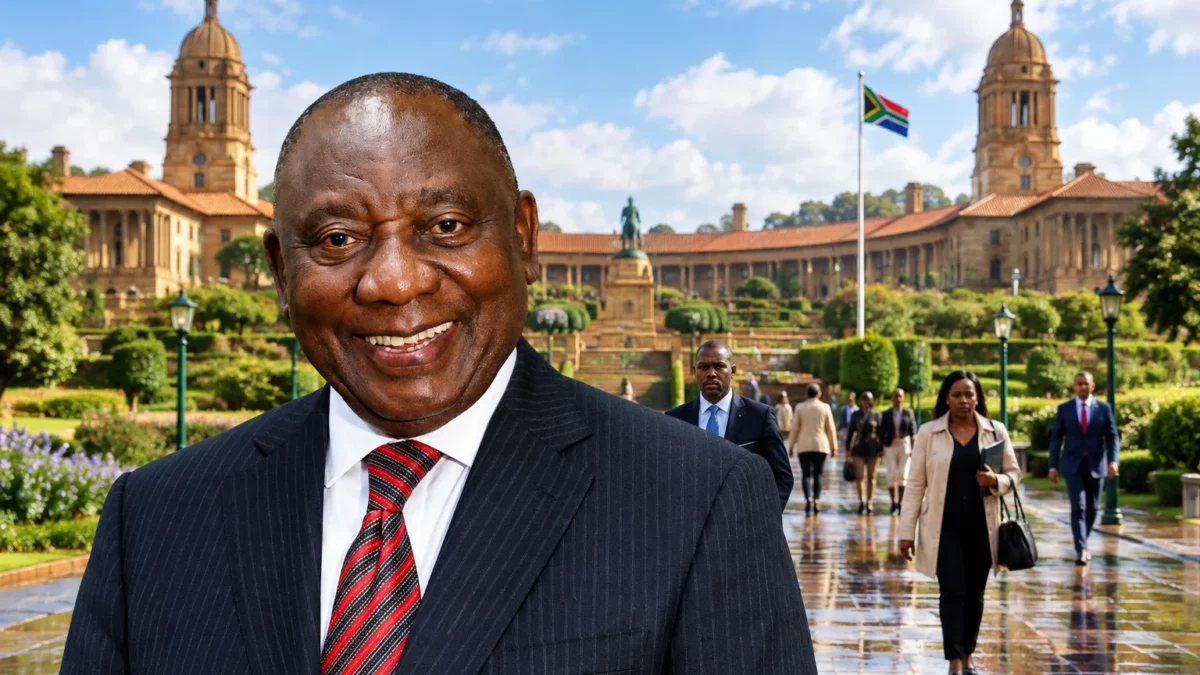
In South Africa, a court ruling can halt a political process without making the questions that triggered it disappear. That is the new balance surrounding Phala Phala: Cyril Ramaphosa has, for now, escaped parliamentary impeachment proceedings, but the substance of the case remains disputed.
Proceedings revived, then halted by the courts
On 25 November 2026, the Western Cape High Court set aside the report of an independent parliamentary panel on the president’s conduct. It also invalidated parliamentary steps based on that document. The impeachment committee, tasked with considering possible removal from office, has therefore suspended its work pending legal advice. National Assembly Speaker Thoko Didiza said she would consider the implications of the ruling.
The court found that the panel had exceeded its mandate and made errors of law, including by relying on hearsay evidence. It did not, however, resolve all the substantive questions concerning the money, its origin or the president’s response to the burglary. The report’s annulment thus removes the immediate basis for the parliamentary process; it is not a general ruling that every aspect of the case has been resolved.
The judgment could be challenged. The African Transformation Movement (ATM), which brought the original request for a parliamentary inquiry, criticised the decision and raised the possibility of a challenge. Other parties have yet to assess its implications. The parliamentary committee, for its part, awaited advice from legal services before deciding whether to hold its scheduled meeting. The next step therefore depends as much on the parties’ choices as on the avenues of appeal available.
A burglary becomes a question of public accountability
The case dates back to February 2020, when foreign currency was stolen from the private Phala Phala farm in Limpopo province. The theft only became public in June 2022, following allegations by Arthur Fraser, a former intelligence chief. The amount often reported is about $580,000. Ramaphosa has said the money came from the sale of buffalo and that he reported the theft to the head of his team’s security. These points are at the centre of contested allegations, not definitive judicial findings on the president’s responsibility.
In November 2022, an independent panel established by the National Assembly found that there was, on the face of it, evidence warranting further examination. On 13 December, MPs voted against referring the report to an impeachment committee. At the time, the ANC still had a parliamentary majority. That decision was set aside by the Constitutional Court in May 2026, which ruled the voting mechanism unconstitutional and referred the report back to the relevant committee. Ramaphosa then asked the High Court to set aside the report.
This sequence illustrates the separation of institutional roles. The 2022 panel was tasked with establishing whether there were sufficient grounds for further examination; it did not rule on removal from office. Parliament was then to decide what steps to take, while the courts review the legality of rules and procedures. In South Africa, presidential impeachment requires a constitutional process and a parliamentary vote by a qualified majority. The issue therefore goes beyond Ramaphosa himself: it also concerns the ability of elected representatives to hold the executive to account without bypassing legal safeguards.
A political setback, not the end of the case
For the president, the annulment provides tangible respite: the impeachment process based on the report has been halted. For his opponents, it narrows the opportunities to examine publicly the questions raised by the panel. The ATM denounced what it regards as different treatment for the head of state and ordinary citizens. The Democratic Alliance, by contrast, said it would study the judgment while defending Parliament’s oversight role. ActionSA regretted the outcome of a process it considered intended to secure accountability. These reactions reflect political disagreement; they do not replace the full legal reasoning behind the decision.
The political context makes the issue particularly sensitive. In the 2024 elections, the ANC lost its outright majority for the first time since the end of apartheid and now governs as part of a coalition. In an Assembly with no single dominant party, oversight of the president depends more heavily on the balance of power between parties. How MPs handle Phala Phala could affect trust in institutions, as well as coalition negotiations and dynamics.
For the public, the issue is less the procedural battle than the credibility of shared rules. The question is whether oversight mechanisms apply in practice at the highest levels of government, and whether their decisions are based on evidence tested through adversarial proceedings. The High Court ruled the report irregular; that alone did not erase questions about the handling of the theft. Any separate investigations and proceedings that continue will have to be assessed on their own evidence and conclusions.
An institutional test watched across the region
The case is also of interest in southern Africa. South Africa is a central player in the Southern African Development Community (SADC), which brings together states in the region for economic and political co-operation. The strength of its institutions matters to its ability to influence regional and continental debates. But Phala Phala alone does not support a conclusion about SADC as a whole: each country follows its own constitutional framework and political trajectory.
In the short term, three developments are worth watching: publication of the High Court’s full reasons, a possible challenge to the judgment and the Assembly’s decision on what happens next in the process. In May, the Constitutional Court had stressed the need for a parliamentary mechanism that enables effective scrutiny. The November judgment now shifts the question to the validity of the report intended to inform that scrutiny. For Ramaphosa, the immediate risk of impeachment has receded; for South Africa’s institutions, the debate over presidential accountability remains open.