Algeria
 Egypt
 Libya
 Morocco
 Sudan
 Tunisia
 Benin
 Burkina Faso
 Cabo Verde
 Côte d'Ivoire
 Ghana
 Guinea
 Guinea-Bissau
 Liberia
 Mali
 Mauritania
 Niger
 Nigeria
 Senegal
 Sierra Leone
 The Gambia
 Togo
 Cameroon
 Central African Republic
 Chad
 DR Congo
 Equatorial Guinea
 Gabon
 Republic of the Congo
 São Tomé and Príncipe
 Burundi
 Comoros
 Djibouti
 Eritrea
 Ethiopia
 Kenya
 Madagascar
 Malawi
 Mauritius
 Mozambique
 Rwanda
 Seychelles
 Somalia
 South Sudan
 Tanzania
 Uganda
 Angola
 Botswana
 Eswatini
 Lesotho
 Namibia
 Zambia
 Zimbabwe
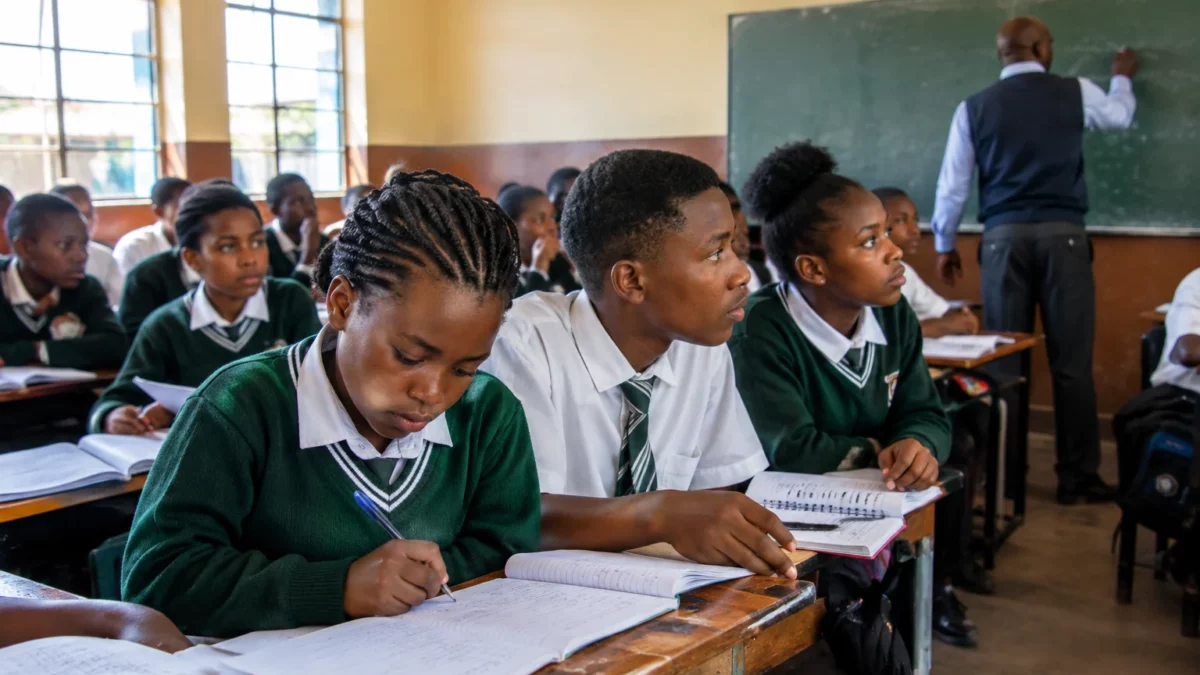
For a pupil, a classroom is more than a place of learning: it must also be safe, adequately equipped and accessible. Conditions observed in several South African public schools show how unevenly these requirements are still being met, depending on the school and province.
A constitutional right confronted by the realities of schools
South Africa’s Constitution recognises everyone’s right to basic education. Yet that right still runs up against dilapidated buildings, overcrowded classrooms and unusable toilets. The South African Human Rights Commission (SAHRC), the independent institution responsible for monitoring respect for human rights, made these difficulties public in its 2026 report on the state of schools.
The commission monitored schools in all nine provinces. The number of schools examined varies between accounts: several articles cite 173, while another gives 170. The total should therefore not be presented as definitively established. The findings, however, point to persistent problems with infrastructure, sanitation and school staffing. Eyewitness News’s account of the commission’s findings and the Sowetan’s report confirm the nationwide scope of the monitoring, while citing different totals.
At one school in Limpopo, a Grade 8 class had 101 pupils, according to reports published afterwards. In Gauteng, Grade 1 and 2 classrooms at Isiqalo Primary School were built with asbestos. In the Eastern Cape, only two of the 30 toilets at Van Koller Primary School were working. These examples do not describe every school in the country, but they illustrate the range of shortcomings identified. Eyewitness News details these local findings.
Conditions that weigh more heavily on rural areas
Access to safe, working toilets remains a major concern. Pit latrines are still used at some rural schools, exposing pupils to health and safety risks. The problems are not limited to facilities: recently built infrastructure can remain unusable, particularly when work is unfinished or disputes with contractors prevent it from being brought into service.
The commission describes failings in building maintenance, staff availability and support for pupils. It also identified safety concerns and limited access to teaching materials. An overcrowded classroom reduces the time a teacher can devote to each child. A school without working toilets disrupts the day for all pupils, with particular consequences for girls and younger children. These difficulties compound one another, even though their severity varies from one school to another.
Geography and family resources therefore shape the school experience. Rural schools or those far from urban centres may depend on construction work and public services that are more difficult to maintain. Families, meanwhile, do not all have the same means to make up for shortcomings at school. The report thus highlights an issue of equality: formal access to education alone does not guarantee comparable conditions for learning.
A recurring problem despite public programmes
School sanitation problems are not new in South Africa. The national SAFE programme, launched to speed up the replacement of pit latrines in schools, demonstrates that a public response is already under way. But the gap between stated targets, completed work and maintenance remains a source of tension. An earlier parliamentary note had already highlighted the scale of the need for sanitation upgrades, particularly in rural provinces. The parliamentary document on school infrastructure provides this context, without replacing the commission’s more recent findings.
The SAHRC has asked national and provincial education authorities to submit response plans within 60 days. According to the commission, the plans must specify who is responsible, what work will be carried out and how progress will be monitored. The request will not immediately resolve problems on the ground. It is intended to turn repeated recommendations into commitments with deadlines and verifiable monitoring.
This division of responsibilities matters. The national ministry sets policy, while provincial administrations manage much of the organisation of schooling and local interventions. Available budgets, monitoring capacity and the management of construction projects can therefore affect the pace of repairs. For pupils, the practical impact will depend less on the announcement of a plan than on toilets being brought back into use, classrooms being made safe and excessively large classes being reduced.
An implementation test for southern Africa
The issue also concerns the credibility of South African institutions: upholding a right recognised by the Constitution requires disparities between schools to be addressed. The SAHRC can investigate, publish its findings and demand accountability, but repairs require coordinated action by the responsible departments. The 60-day deadline is therefore the next milestone to watch, along with the substance of the responses and the oversight mechanisms announced.
At regional level, the findings are relevant to the countries of the Southern African Development Community (SADC), which brings neighbouring states together around economic and social cooperation. They are a reminder that access to school is measured not only by the number of pupils enrolled: buildings, hygiene and teaching resources also determine the quality of that access. For South Africa, the immediate challenge is to reduce risks and disparities between schools, without allowing these recommendations to join earlier ones without visible effect.