Algeria
 Egypt
 Libya
 Morocco
 Sudan
 Tunisia
 Benin
 Burkina Faso
 Cabo Verde
 Côte d'Ivoire
 Ghana
 Guinea
 Guinea-Bissau
 Liberia
 Mali
 Mauritania
 Niger
 Nigeria
 Senegal
 Sierra Leone
 The Gambia
 Togo
 Cameroon
 Central African Republic
 Chad
 DR Congo
 Equatorial Guinea
 Gabon
 Republic of the Congo
 São Tomé and Príncipe
 Burundi
 Comoros
 Djibouti
 Eritrea
 Ethiopia
 Kenya
 Madagascar
 Malawi
 Mauritius
 Mozambique
 Rwanda
 Seychelles
 Somalia
 South Sudan
 Tanzania
 Uganda
 Angola
 Botswana
 Eswatini
 Lesotho
 Namibia
 Zambia
 Zimbabwe
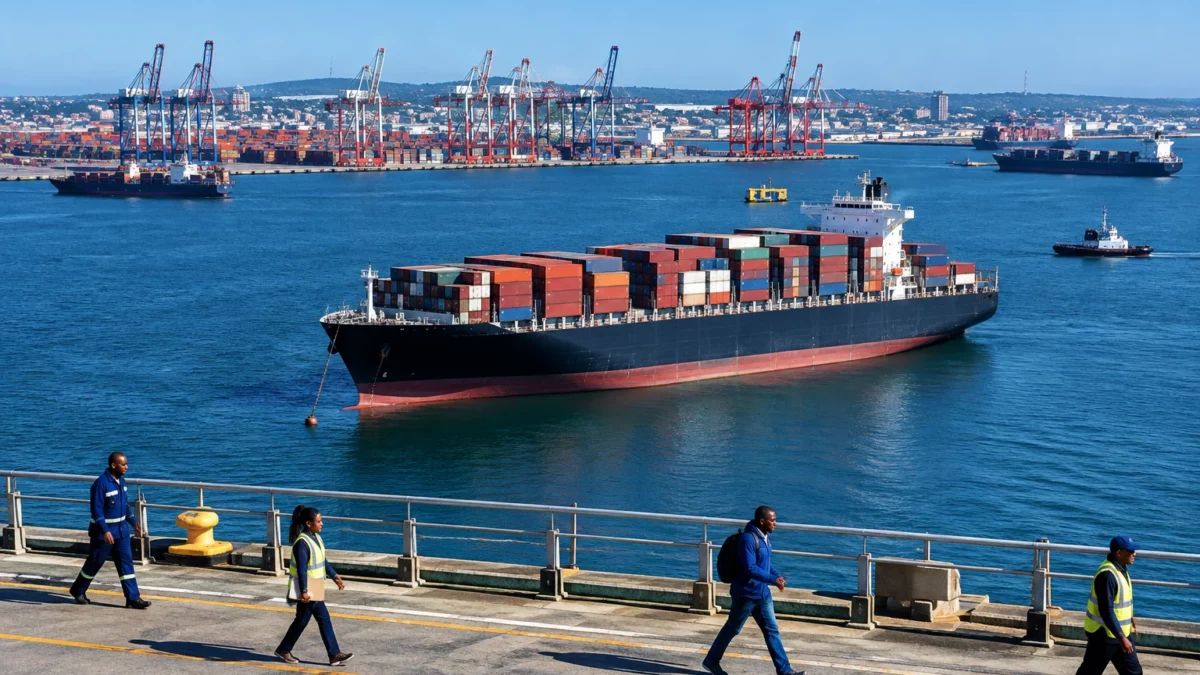
When a ship waits offshore from Durban for several days, the delay does not remain in the port. It can ripple through factories, shops and import costs. The announced arrival of new equipment promises an additional resource, but on its own will not be enough to clear the bottlenecks.
New equipment faces congestion already entrenched
On 26 November 2026, Durban Gateway Terminal (DGT) confirmed an order for 12 hybrid straddle carriers from Finnish manufacturer Konecranes. These vehicles move and stack containers within the port. The first deliveries are expected in June 2027. According to the manufacturer and operator, the machines should increase the reliability of operations and reduce fuel consumption compared with traditional diesel-electric models.
The timetable nevertheless highlights the gap between investment and urgency. The new equipment will not arrive for several months, while the terminal is already experiencing severe congestion. Transnet, the South African state-owned company responsible for ports and rail, among other things, acknowledged on 18 November that it needed to take urgent measures to reduce delays at DGT. These include making six quay cranes available, reserving a berth for certain ships and facilitating the transfer of vessels to other facilities.
The available figures indicate the scale of the problem, although they do not describe exactly the same period. An analysis published in early November reported an average wait of about 12 days at anchorage. Then, on 25 November, Transnet estimated that the backlog could persist until January 2027. These delays concern ships and cargo, not only containers waiting in the terminal yard.
A public-private partnership under pressure
DGT is the port of Durban’s Pier 2 container terminal, now operated under a partnership between Transnet and International Container Terminal Services (ICTSI), a group based in the Philippines. The management transition began on 1 January 2026. The 25-year agreement gives ICTSI a 49% stake and Transnet 51%. It is an important test of South Africa’s strategy of opening some port operations to private operators.
This opening comes after several years of difficulties in South Africa’s logistics infrastructure. Durban port, on the Indian Ocean, is a major gateway for the country’s trade. Its performance also depends on the road and rail links connecting the quay to businesses and inland regions. Increasing capacity in handling equipment alone cannot therefore resolve problems with traffic, crane availability or coordination between stakeholders.
The situation is also testing the division of responsibilities. ICTSI manages operations and is expected to contribute to the terminal’s development. Transnet retains the majority stake and remains central to the national port infrastructure. When delays persist, customers expect improvements from the operator, but also a coordinated response from the port authority, rail and other logistics services.
Delays extend beyond the quays
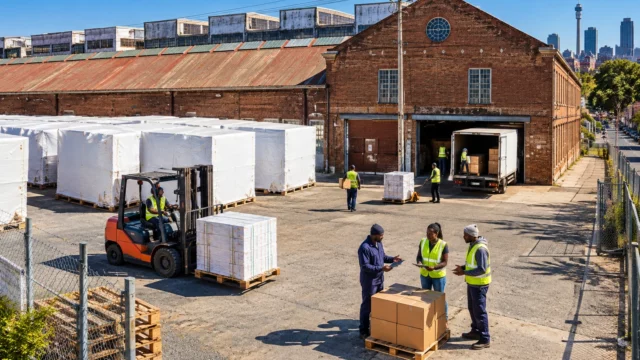
The consequences vary by sector. Importers have to contend with less predictable deliveries. For manufacturers, a part held up can disrupt a production line; for retailers, delays during a period of strong demand make restocking more difficult. Small businesses often have less capacity to absorb extra costs or build up safety stocks.
Disruption does not affect only large formal businesses. Hauliers, freight agents and workers linked to port traffic may also feel the effects of changed schedules and irregular activity. For consumers, delays do not automatically translate into a specific price rise, but they add uncertainty to supply chains already sensitive to transport costs.
Hybrid straddle carriers can address one specific part of the problem: moving containers within the terminal. The hybrid technology is intended to reduce fuel consumption and emissions compared with conventional equipment. But the announcement does not specify the value of the order or the amount of emissions that could be avoided in Durban. The stated aim must therefore be distinguished from measured results, which will depend on how the machines are actually used and integrated into operations.
Credibility of logistics reform at stake
For Pretoria, the issue goes beyond the delivery of 12 machines. The partnership must show whether a private operator’s expertise can improve productivity while maintaining clear public accountability for strategic infrastructure. The first months of management, marked by delays and emergency measures, make performance indicators especially important.
The crisis also calls for a look beyond the terminal. Transnet has announced additional berthing capacity and the rerouting of some ships. Meanwhile, November’s analysis noted that a full recovery could take much longer than simply clearing the backlog. This is a reminder that port efficiency is measured across the entire journey: a ship’s arrival, handling, storage, departure by road or rail, and final delivery.
SADC, the Southern African Development Community, links the region’s economies through trade that relies on land and maritime corridors. Delays in Durban can therefore affect businesses beyond South Africa’s borders, although the impact varies by route and goods. The next concrete milestone will be how waiting times evolve over the coming weeks, followed by the arrival of the first equipment in June 2027. It is against this measure — not the investment announcement alone — that the partnership’s ability to sustainably facilitate trade will be judged.