Algeria
 Egypt
 Libya
 Morocco
 Sudan
 Tunisia
 Benin
 Burkina Faso
 Cabo Verde
 Côte d'Ivoire
 Ghana
 Guinea
 Guinea-Bissau
 Liberia
 Mali
 Mauritania
 Niger
 Nigeria
 Senegal
 Sierra Leone
 The Gambia
 Togo
 Cameroon
 Central African Republic
 Chad
 DR Congo
 Equatorial Guinea
 Gabon
 Republic of the Congo
 São Tomé and Príncipe
 Burundi
 Comoros
 Djibouti
 Eritrea
 Ethiopia
 Kenya
 Madagascar
 Malawi
 Mauritius
 Mozambique
 Rwanda
 Seychelles
 Somalia
 Tanzania
 Uganda
 Angola
 Botswana
 Eswatini
 Lesotho
 Namibia
 South Africa
 Zambia
 Zimbabwe
Can the end of emergency rule bring a long-delayed election closer, while civilians remain exposed to violence? In South Sudan, a decision announced this week opens political space but does not resolve local insecurity or electoral delays.
A measure affecting four states
President Salva Kiir has ended the state of emergency in the states of Lakes, Warrap, Western Bahr el Ghazal and Unity. The public broadcaster SSBC announced the presidential order on Thursday. It takes effect immediately, according to the South Sudanese press. No detailed justification has been made public.
The directive tasks the defence forces, police, National Security Service and the governors concerned with its implementation. It comes after political leaders called for an expansion of civil liberties in the run-up to the elections, local media Radio Tamazuj and Eye Radio report.
The state of emergency was declared in Warrap and Unity, among other places, in 2025, amid communal clashes, cattle theft and insecurity. Such measures can strengthen the authorities’ powers and restrict movement. Their lifting does not, however, in itself mean that roads are safe or that clashes have stopped.
An election postponed again
The electoral timetable has been pushed back once more. The National Elections Commission has set the vote for 11 February 2027, instead of 22 December 2026, according to the schedule announced on 14 November. The vote is intended to mark the first national elections since the country gained independence in 2011. Elections have already been postponed several times, including in 2022 and 2024, according to the Associated Press.
This latest delay comes amid a still-fragile political transition. The 2018 revitalised peace agreement established a power-sharing framework after the civil war. It was also intended to prepare the way for a return to a durable political order. But implementing its provisions, building trust between political actors and making practical preparations for the vote remain major challenges. The United Nations has recently highlighted difficulties related to security, political dialogue and the preparation of electoral institutions.
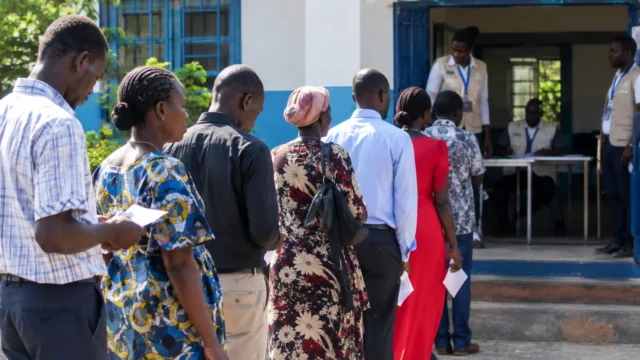
For voters, the stakes are tangible: being able to register, travel and participate without intimidation. Constraints vary across the country. A capital such as Juba concentrates institutions and services, while rural areas, where travel is more difficult and local tensions persist, may be harder for election organisers to reach.
Lifting emergency rule does not guarantee security
Warrap and Unity remain marked by cycles of reprisals and conflicts linked in particular to cattle and resources. In October, clashes near the border between the two states left at least 72 people dead, according to reports cited in the press. This figure has not been confirmed here by a second independent source consulted; it should therefore be treated as reported, rather than definitively established.
ACLED’s monitoring also documents recurring violence in Warrap. The organisation describes clashes involving armed youth and local groups, as well as attacks linked to communal rivalries. Its data shed light on trends but do not replace independent verification of each death toll. More broadly, UN reports record security incidents in several states, including Unity and Warrap.
South Sudanese activist Edmund Yakani welcomed the lifting of the emergency, saying that emergency rule could threaten the electoral process. This is a view expressed by civil society, not a guarantee that the decision will actually improve conditions for the vote. Other observers interviewed by Radio Tamazuj question the announcement’s immediate impact: security will also depend on how the order is implemented, on civilian protection and on addressing the local causes of the clashes.
For the authorities, lifting the emergency may signal a willingness to ease restrictions and respond to criticism ahead of the vote. For residents, its impact will be measured instead by freedom of movement, the presence of public services and the security forces’ ability to prevent attacks without obstructing civil rights. For parties and candidates, the challenge is to campaign in the four states without pressure or violence.
A test for the region and its institutions
South Sudan is part of East Africa and the Intergovernmental Authority on Development (IGAD), a regional organisation involved in the region’s peace processes. The African Union is also monitoring the transition. In its statements, it has stressed the need for inclusive dialogue and implementation of the peace agreement. The vote will therefore not be decided in Juba alone: its credibility will also depend on the national institutions’ ability to maintain an open political space in the states.
The next milestone to watch is now 11 February 2027. Before then, voter registration, campaign rules, the resources available to the Elections Commission and security in rural areas will offer more tangible indications than the end of the state of emergency alone. For South Sudanese, the presidential decision marks a change in the framework. It is neither a renewed political agreement nor an assurance that violence will recede.