Algeria
 Egypt
 Libya
 Morocco
 Sudan
 Tunisia
 Benin
 Burkina Faso
 Cabo Verde
 Côte d'Ivoire
 Ghana
 Guinea
 Guinea-Bissau
 Liberia
 Mali
 Mauritania
 Niger
 Nigeria
 Senegal
 Sierra Leone
 The Gambia
 Togo
 Cameroon
 Central African Republic
 Chad
 DR Congo
 Equatorial Guinea
 Republic of the Congo
 São Tomé and Príncipe
 Burundi
 Comoros
 Djibouti
 Eritrea
 Ethiopia
 Kenya
 Madagascar
 Malawi
 Mauritius
 Mozambique
 Rwanda
 Seychelles
 Somalia
 South Sudan
 Tanzania
 Uganda
 Angola
 Botswana
 Eswatini
 Lesotho
 Namibia
 South Africa
 Zambia
 Zimbabwe
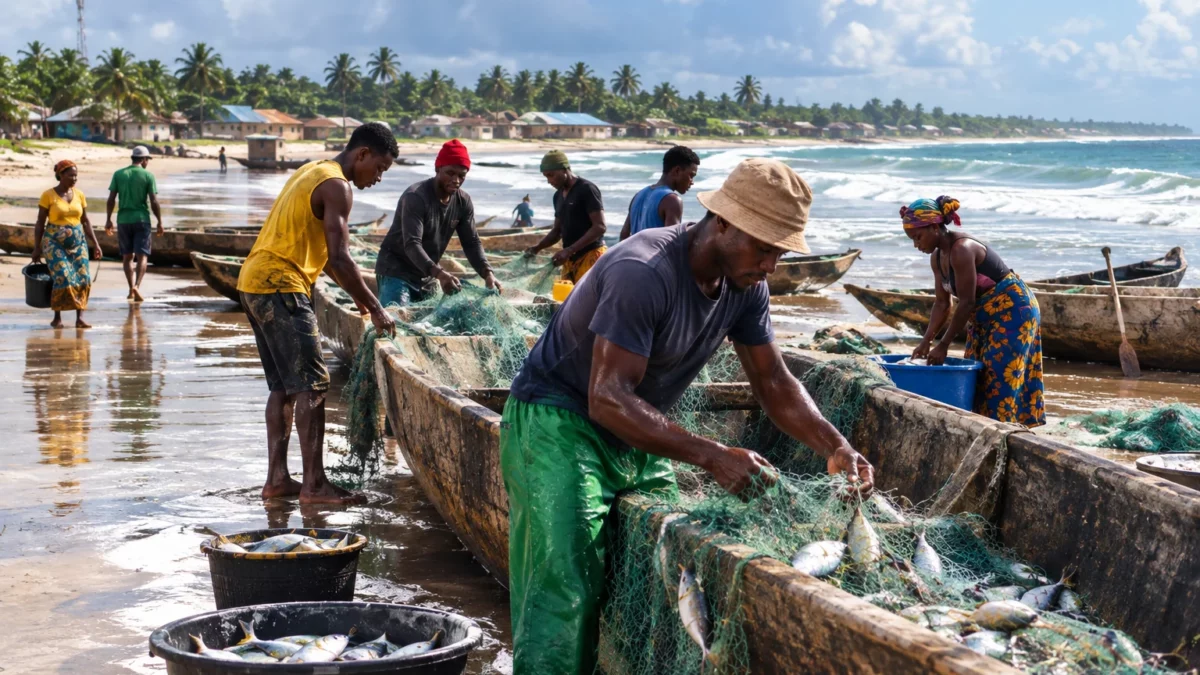
In Mayumba, in southern Gabon, mining projects raise a practical question: will the new wealth be visible in the town, or will it pass through the region without creating enough jobs and economic activity? Iron ore, potash, a port and railways are now linked to prospects for development in Nyanga. But announcements, construction work and lasting benefits are not the same thing.
A mining hub envisaged around Mayumba
Mayumba is in Nyanga province, on the Atlantic coast, far from Gabon’s main economic centres. Small-scale fishing remains an important activity for its residents. Difficult access and a lack of infrastructure weigh on trade and local services. In this context, industrial projects have raised expectations, but also questions about whether they will be delivered and benefit the population.
The national framework has evolved since the political transition that began in 2023. The Gabonese authorities present economic diversification and the local processing of resources as priorities. Regionally, Gabon belongs to CEMAC, the Economic and Monetary Community of Central Africa, which brings six countries together around shared economic cooperation and a common currency. The development of transport and trade outlets therefore extends beyond Nyanga’s borders.
The National Growth and Development Plan 2026-2030 includes a railway line between Milingui and Mayumba, as well as a deep-water port. These infrastructure projects are conceived as a corridor: they could link a deposit to a port facility and future industrial activities. The plan sets out a public ambition; it does not prove that the works are funded, completed or already operational. The Gabonese budget document setting out the PNCD framework details these plans.
A first step is under way at Milingui
The Milingui iron ore project in Nyanga passed an administrative milestone on 15 May 2026. The Gabonese state and Havilah Mining Gabon signed a mining agreement in Libreville. The government announced that the project would enter the operational phase from November 2026, while the Gabonese Press Agency reported the signing and the timetable announced by the authorities. This is a planned start, not confirmation that commercial production has actually begun. The Gabonese government’s account and the Gabonese Press Agency’s report corroborate this milestone.
In Mayumba itself, the Banio potash project is being developed by Canadian company Millennial Potash. The company has announced progress on studies and preparatory work. This does not mean the mine has entered production. The distinction matters: industrial timelines can change depending on studies, financing, permits and the necessary equipment.
The port component has also advanced on paper. On 23 November 2026, Millennial Potash announced that it had signed a memorandum of understanding with EXG Investments and Gabon’s ministry responsible for transport to study the development of a multipurpose deep-water port near Mayumba. A memorandum opens a phase of cooperation; it is not a final decision to build, nor does it mean the port is operational. The company’s announcement on the port project clarifies the nature of the agreement.
Local jobs and the distribution of benefits
For Gabonese people in Mayumba, the issue is not limited to the volume of ore extracted. It also concerns the jobs on offer, the skills required, contracts awarded to local businesses and the services that would accompany a potential increase in activity. Specialist jobs could go to workers recruited elsewhere if training and local hiring criteria are not planned in advance. Shops, fishers and households, meanwhile, could experience different effects depending on changes in prices, access and land use.
The Gabonese authorities have cited between 6,000 and 7,000 direct and indirect jobs across several mining projects in Nyanga. This estimate covers a group of initiatives, not jobs already created in Mayumba. It should be read as an official projection and measured against the timelines, actual recruitment and working conditions. Gabon’s presidency has also called for projects to be accelerated and for them to deliver tangible benefits to the population. The presidency’s progress update on the Nyanga projects sets out these projections.
The pressure on public services is another issue to watch. New mining activity can increase demand for roads, housing, healthcare, water and training. Without appropriate investment, the benefits could be concentrated among operators and export networks, while local people continue to bear the everyday costs. Community consultation and transparency about social and environmental commitments will therefore be crucial.
The next test: turning announcements into results
Mayumba is part of a broader Gabonese strategy: to better connect mineral resources with infrastructure and, according to public policy priorities, to develop more processing within the country. The example of manganese shows the importance of rail and port links for exporting a resource. It also highlights that the value created locally depends on the activities that accompany extraction, not merely on the presence of a deposit.
For Nyanga, the next steps are now clear: actual progress at Milingui, financing and permit decisions for Banio, and then the possible delivery of the port and railway. Their coordination will determine whether Mayumba becomes a sustainable economic hub or remains a shipping point for raw materials. In Libreville, as in the municipalities concerned, the clearest measure will be the commitments actually honoured and the jobs accessible to Gabonese people.