Algeria
 Egypt
 Libya
 Morocco
 Sudan
 Tunisia
 Benin
 Burkina Faso
 Cabo Verde
 Côte d'Ivoire
 Ghana
 Guinea
 Guinea-Bissau
 Liberia
 Mali
 Mauritania
 Niger
 Senegal
 Sierra Leone
 The Gambia
 Togo
 Cameroon
 Central African Republic
 Chad
 DR Congo
 Equatorial Guinea
 Gabon
 Republic of the Congo
 São Tomé and Príncipe
 Burundi
 Comoros
 Djibouti
 Eritrea
 Ethiopia
 Kenya
 Madagascar
 Malawi
 Mauritius
 Mozambique
 Rwanda
 Seychelles
 Somalia
 South Sudan
 Tanzania
 Uganda
 Angola
 Botswana
 Eswatini
 Lesotho
 Namibia
 South Africa
 Zambia
 Zimbabwe
Announced external funding is not yet a construction site. For Nigeria, the challenge will be to turn Polish interest into investment actually committed, lasting jobs and local capacity, without increasing the financial risks of the projects.
A funding package to explore, not a loan already granted
On 24 November 2026, in Lagos, Nigerian Finance Minister Taiwo Oyedele said that Polish export credit insurance agency KUKE was ready to examine up to $2 billion in financial support for strategic projects in Nigeria. This is an opportunity to explore, not a confirmed disbursement or a detailed financing agreement.
The announcement was made at the second Nigeria-Poland Economic Forum. Discussions covered infrastructure, energy, industry, agriculture and health. The Nigerian government also wants to involve financial institutions from both countries in future co-financing arrangements.
The move is part of a strategy to open up to foreign capital, as Nigeria seeks to broaden its partnerships beyond its usual interlocutors. The country is a member of ECOWAS, the West African economic integration organisation, and the African Continental Free Trade Area, which aims to facilitate trade between countries across the continent.
65 projects seeking capital and partners
In Lagos, Taiwo Oyedele presented “Projects Nigeria”, a government platform listing 65 projects deemed financeable and backed by feasibility studies. The total funding requirement announced is $78.5 billion. The authorities estimate that their implementation could generate around 366,000 jobs. These figures describe a portfolio put forward to investors, not jobs or funding already secured.
The projects cover five broad areas: oil, gas and electricity; transport and maritime activities; industry and mining; agriculture and agro-processing; and technology, health and urban services. Their scale makes selection criteria, contract quality and cost transparency crucial.
The government says it wants partnerships to incorporate skills transfer, training and Nigerian suppliers. This requirement is particularly important for small local businesses, which can be left out when major contracts are awarded mainly to foreign companies.
Lagos ports, the first practical test
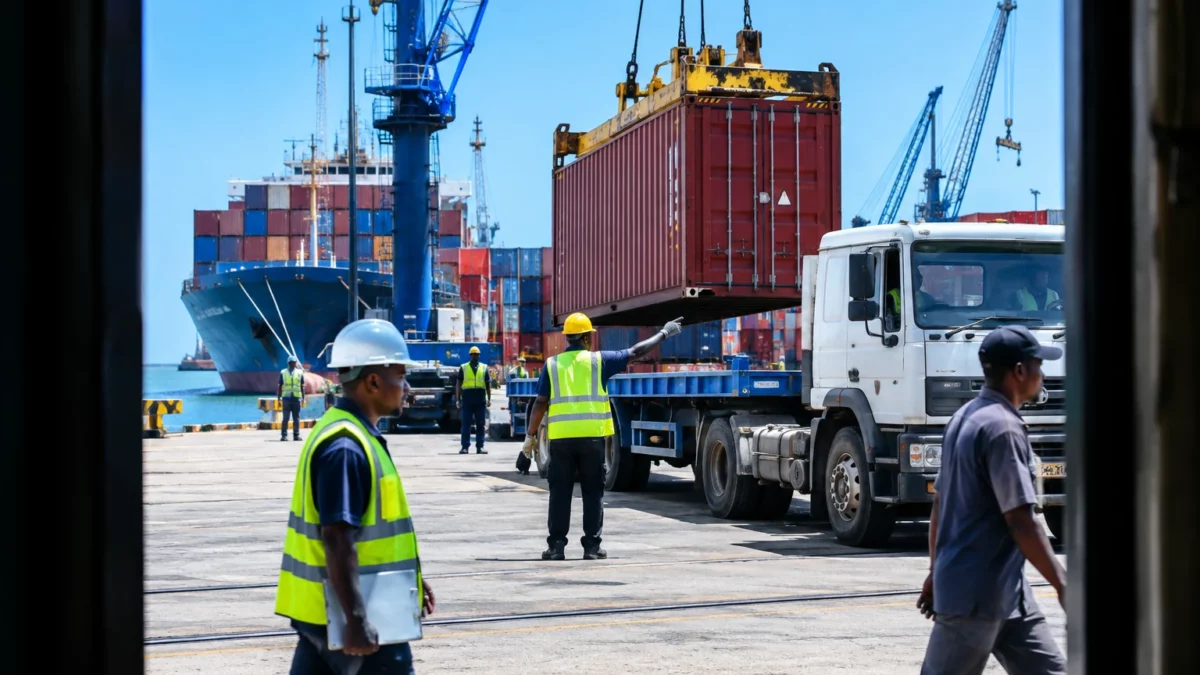
The modernisation of Apapa and Tin Can Island ports already gives this cooperation a concrete form. The operation is valued at about $1 billion and is backed by financing supported by UK Export Finance, the UK export credit agency. KUKE provides reinsurance covering a significant share of the operation. Information published by Nigeria’s ministry and by financing stakeholders confirms the overall structure of the arrangement.
These ports are vital to Nigeria’s imports and exports. Their modernisation could improve the movement of goods and reduce some logistics costs. The benefits will, however, depend on the execution of the works, their final cost and the ability of Nigerian companies to participate in related contracts.
The project also illustrates the difference between a financing announcement and an economic outcome. Export guarantees facilitate access to credit by sharing some of the risk with lenders. They do not relieve public authorities of the need to account for commitments, repayments and local benefits.
Reforms and growth: indicators to interpret with caution
Nigerian authorities point to the removal of the fuel subsidy and the unification of the foreign exchange market, introduced since President Bola Tinubu came to power in 2023. These measures are intended to reduce certain economic distortions and attract investors. They have also entailed difficult adjustments for households and businesses, particularly through the cost of energy and imports.
The Finance Ministry cited real growth of 4.43% in the second quarter of 2026. This figure corresponds to official data reported by the Central Bank of Nigeria and Nigerian media. It measures changes in output, but is not enough to describe purchasing power, employment or the distribution of income.
The minister also referred to an increase in private capital inflows, which he said rose from about $300 million in 2023 to nearly $6 billion in 2026. This comparison, provided by the government, depends on how the flows are defined and the period considered. It does not automatically mean that the capital is funding productive activities or creating jobs that benefit the population.
A bilateral partnership with regional effects
Trade between Nigeria and Poland reached about $734 million in 2025, according to figures presented at the forum and corroborated by trade data. More than 90% of Nigeria’s exports to Poland are said to consist of crude oil. This concentration highlights the gap between ambitions to diversify and the current structure of trade.
For Abuja, the value of an industrial partnership would therefore lie in developing more varied exports and strengthening local value chains. Across West Africa, more efficient port infrastructure could also support trade with neighbouring countries. But this effect will depend on genuine access to the facilities and their integration into regional networks.
The next step will be to see whether KUKE’s examination of the financing leads to specific agreements, timetables and clearly defined responsibilities. Nigeria will also need to ensure that the selected projects address measurable public needs. For Nigerians, success will not be measured solely in billions announced, but in improved services, accessible jobs and local businesses able to grow.