Algeria
 Egypt
 Libya
 Morocco
 Sudan
 Tunisia
 Benin
 Burkina Faso
 Cabo Verde
 Côte d'Ivoire
 Ghana
 Guinea
 Guinea-Bissau
 Liberia
 Mali
 Mauritania
 Niger
 Nigeria
 Senegal
 Sierra Leone
 The Gambia
 Togo
 Cameroon
 Central African Republic
 Chad
 DR Congo
 Equatorial Guinea
 Gabon
 Republic of the Congo
 São Tomé and Príncipe
 Burundi
 Comoros
 Djibouti
 Eritrea
 Ethiopia
 Madagascar
 Malawi
 Mauritius
 Mozambique
 Rwanda
 Seychelles
 Somalia
 South Sudan
 Tanzania
 Uganda
 Angola
 Botswana
 Eswatini
 Lesotho
 Namibia
 South Africa
 Zambia
 Zimbabwe
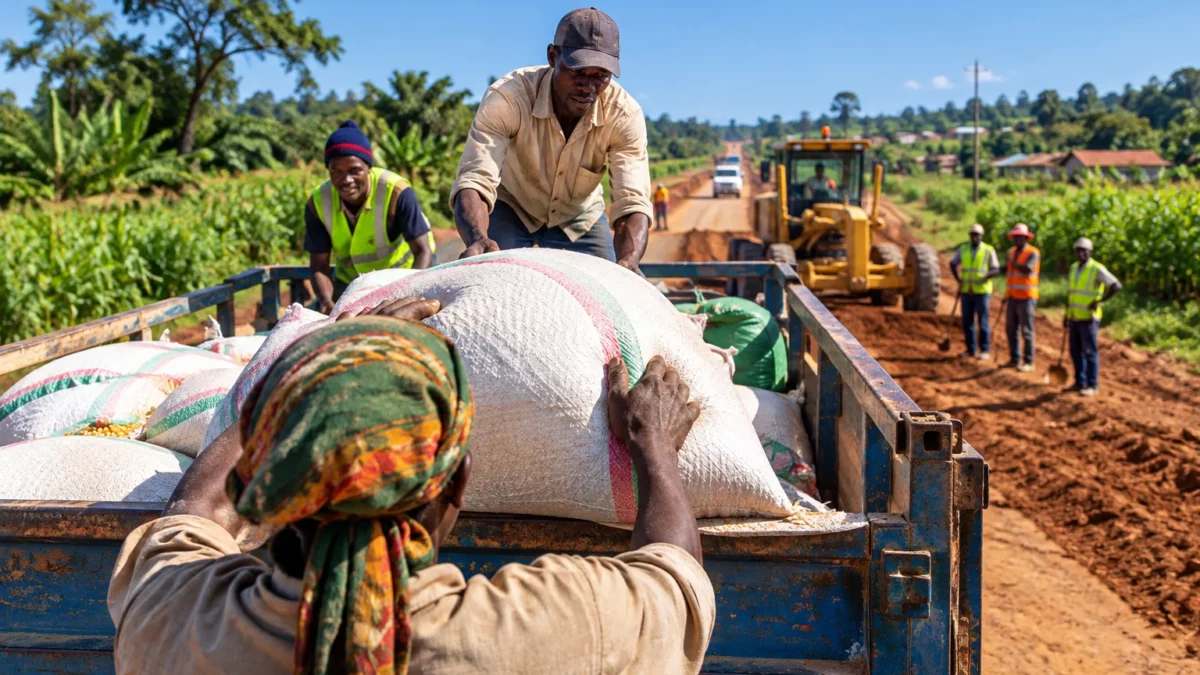
In Busia, western Kenya, the quality of a rural track can affect the price of a sack of maize as much as the distance to market. A new road project announced in the border county aims to reduce that obstacle while connecting local producers more closely to trade with Uganda.
Local roads on a busy border
Busia lies at the intersection of several flows: agriculture, fishing, local trade and cross-border traffic. The Busia border post links Kenya with Uganda. It is part of an economic area where the ease of movement matters as much to small traders as it does to transport operators.
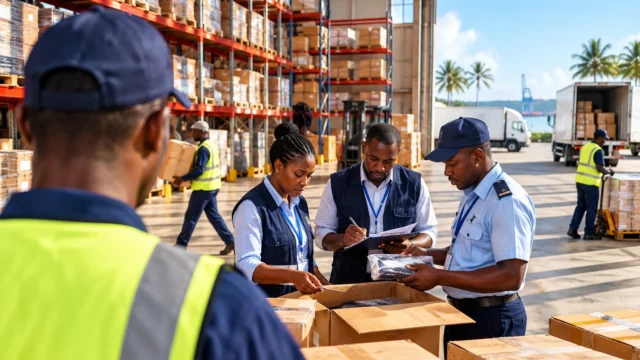
Both countries belong to the East African Community (EAC), a regional organisation that co-ordinates economic integration and trade, among other things. In July 2026, its secretariat noted that the Busia post handled thousands of traders, transporters and service providers every day. It also reported persistent problems: congestion, overlapping administrative procedures and inadequate access to some infrastructure.
In this context, secondary roads linking farming communities to commercial routes can complement investment at border crossings. They will not, however, eliminate customs delays or the other obstacles identified by the EAC.
55 kilometres announced as part of a wider programme
On 19 November 2026, Kenyan President William Ruto launched the paving of about 55 kilometres of roads in Busia county. The project covers the Butula-Nambale-Amukura, Amukura-Machakusi and Kotur-Kocholia routes. Its announced cost is 3.3 billion Kenyan shillings.
Announcements made during the president’s visit were carried by several Kenyan media outlets, which confirmed the approximate length of the routes and their cost. The government presents the works as a way to improve local connections and farmers’ access to markets. More broadly, it plans 150 kilometres of roads in the county, with an announced investment of 15 billion shillings.
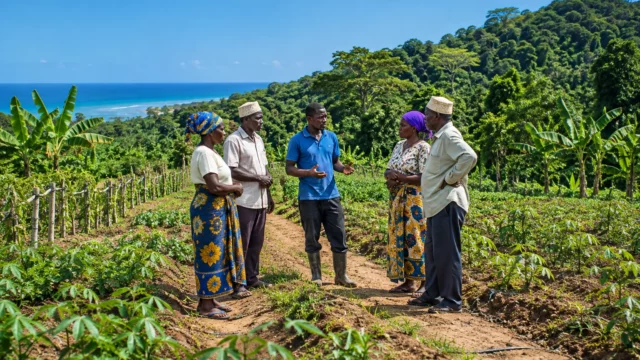
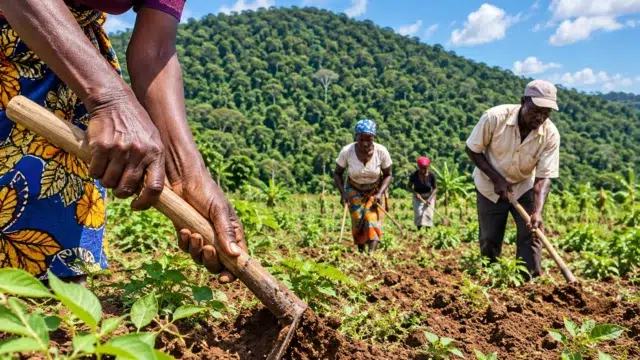
Maize and sugar cane are among the local crops. Authorities say improved roads could make it easier to transport them, reduce transport costs and limit post-harvest losses. These benefits remain objectives: they will depend on the actual condition of the roads after the works, their maintenance and the reliability of transport services.
The launch of a project does not in itself mean that its benefits will be shared equally. Farmers close to the new routes could gain easier access to buyers. Small farms further away, informal sellers and residents of communities not served by the roads could benefit less directly.
The challenge goes beyond tarmac
The promise of lower costs will also depend on transport operators’ fares, access to markets and storage capacity. If the roads speed up the movement of crops but producers lack warehouses or bargaining power, they may miss out on some of the gains.
The project forms part of a broader national policy to improve rural connectivity. In October 2026, the Kenya National Highways Authority published a notice stating that the country intended to seek $600 million from the World Bank for a separate programme. This would modernise 536 kilometres of roads in seven other counties, as well as build bridges in the Lower Eastern region.
The funding was described as being sought, not as already secured. The road authority’s document also states that the routes targeted by this programme are not in Busia. The two announcements illustrate the scale of the need, but also underline that project timelines will depend on funding, public tenders and the execution of the works.
Maintenance will then weigh on the overall outcome. Without a regular budget to repair road surfaces and structures, improvements to traffic flows can deteriorate. The management of rural roads — often shared between different levels of government — must therefore follow the initial investment.
A stake in Kenyan and regional trade
At EAC level, better connections around Busia could link Kenyan production areas more effectively to a major border post with Uganda. But a local road alone cannot make regional trade flow smoothly: border checks, opening hours, digital systems and the rules applied at crossings also matter.
Co-ordination between infrastructure and procedures will be critical for cross-border traders. The EAC has called, among other things, for administrative obstacles to be reduced and co-ordination between border services to be improved. In Busia, small businesses and women vendors on both sides of the border depend on these conditions as much as on the quality of the road network.
For the Kenyan government, the next concrete steps will be progress on the works and delivery of the wider programme announced for the county. For residents, the measure of success will be less the headline investment figure than whether the road is actually passable, the cost of travel and sustained access to markets. The Busia project thus puts a central promise of regional development to the test: turning better connections into tangible benefits for producers and traders.