Algeria
 Egypt
 Libya
 Morocco
 Sudan
 Tunisia
 Benin
 Burkina Faso
 Cabo Verde
 Côte d'Ivoire
 Ghana
 Guinea
 Guinea-Bissau
 Liberia
 Mali
 Mauritania
 Niger
 Senegal
 Sierra Leone
 The Gambia
 Togo
 Cameroon
 Central African Republic
 Chad
 DR Congo
 Equatorial Guinea
 Gabon
 Republic of the Congo
 São Tomé and Príncipe
 Burundi
 Comoros
 Djibouti
 Eritrea
 Ethiopia
 Kenya
 Madagascar
 Malawi
 Mauritius
 Mozambique
 Rwanda
 Seychelles
 Somalia
 South Sudan
 Tanzania
 Uganda
 Angola
 Botswana
 Eswatini
 Lesotho
 Namibia
 South Africa
 Zambia
 Zimbabwe
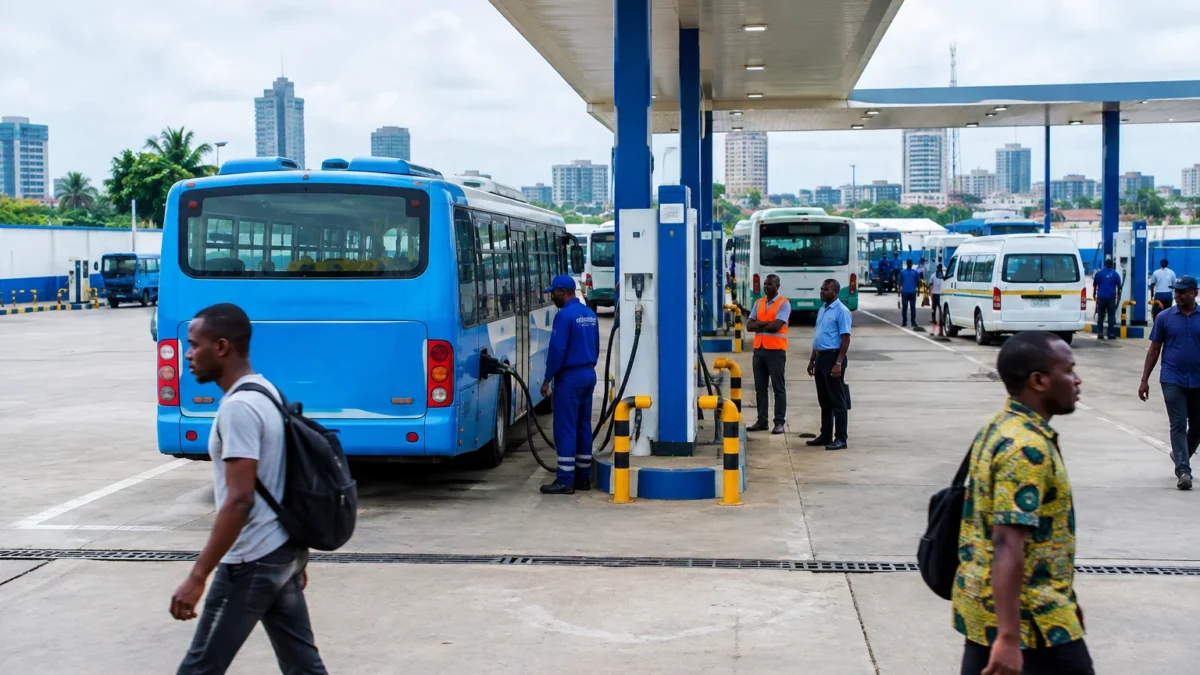
In Lagos, Ibadan and Abuja, the cost of a daily journey also depends on the fuel consumed by buses. In Nigeria, the bet on compressed natural gas (CNG) now has two aims: to reduce passengers’ fares and revive a local industrial supply chain.
Buses imported first, then assembled in Ibadan
On 19 November 2026, President Bola Tinubu announced an agreement with Chinese manufacturer Yutong and the Presidential Initiative on CNG and Electric Vehicles. The company is to supply 300 CNG buses. The first 100 are expected in Lagos by the end of December 2026, according to the Nigerian presidency, a deadline also reported by Nigerian media outlet Punch.
The following vehicles are to be assembled in Ibadan, in Oyo State, by YP Automobiles Bus Assembly at the site of the former Leyland Automotive factory. The project aims to restart existing industrial capacity, train Nigerian technicians and reduce reliance on imported buses. Yutong says it sold 49,518 buses worldwide in 2025, according to the presidential statement.
The national affordable CNG transport programme, implemented with states and operators, aims to reduce fares by about 40% on participating routes. This is a policy target, not a guaranteed reduction across the board. Its implementation will depend on the routes selected, the number of buses actually put into service and the fares set by operators.
A response to travel costs after the subsidy ends
The decision is part of the reform launched after the federal petrol subsidy was scrapped in May 2023. The measure contributed to higher transport costs. For households that use buses and minibuses, every increase in fuel prices adds to the cost of journeys to work, schools and markets.
The government presents CNG as a way to reduce transport operators’ running costs. There have already been results on some routes. In an update published in September, the presidency said the Lagos-Ibadan fare had fallen from about 8,000 to 3,200 naira during the initial deployment of CNG buses in Oyo. It also reported reductions on routes in Abuja, Enugu and other states. These official figures illustrate local experiences; they do not prove that savings will be the same everywhere.
The programme is not starting from scratch. In October, Information Minister Mohammed Idris said more than 120,000 vehicles had been converted to CNG, with more than 400 accredited centres and over 90 refuelling stations in operation. Nigerian media outlet Premium Times reported these figures and said that a further 180 stations were in development. They are based on data provided by the government.
Cheap gas is not enough: people need access to it
For drivers, switching to CNG means paying for a conversion or accessing a vehicle that is already equipped. Available figures for installation costs vary according to the vehicle and specifications, so upfront expenses could deter small transport operators. Even after conversion, expected savings depend on the price of gas and the time it takes to refuel.
Distribution is another challenge. Nigeria is vast, and there are fewer stations than petrol outlets. The presidency has announced mobile refuelling units and a target of 1,000 additional facilities. But their distribution, commissioning schedule and actual fuel supply will determine whether operators can rely on regular access, including outside major urban centres.
This disparity in access could widen the gap between Lagos, Abuja and regional cities, as well as between busy urban routes and less profitable services. A fleet concentrated on a few corridors will not change travel costs for residents who cannot access them. And if fuel costs fall without fares following suit, the savings will remain largely with operators.
An industrial and regional test
Assembly in Ibadan gives the project a scope beyond the purchase of buses. The proportion of vehicles actually assembled locally, the skills transferred and the lasting jobs created will need to be assessed. Restarting the former Leyland site could strengthen Nigeria’s automotive industry, provided that industrial activity continues beyond the first deliveries.
Across West Africa, Nigeria, a member of ECOWAS — the Economic Community of West African States — is seeking to harness its gas resources to meet its transport needs. Nigeria’s example could interest other countries facing high fuel costs and a shortage of public transport. But the model will depend on infrastructure, financing and governments’ ability to regulate fares; it cannot automatically be replicated from one country to another.
The next steps are concrete: verify that the first 100 buses arrive in Lagos by the end of December 2026, monitor the start of assembly in Ibadan and track fares on the selected routes. Any assessment will also need to distinguish investment announcements from stations that are actually operational. Only then can the affordable transport target be measured against passengers’ budgets, rather than just the government’s plans.