Algeria
 Egypt
 Libya
 Morocco
 Sudan
 Tunisia
 Benin
 Burkina Faso
 Cabo Verde
 Côte d'Ivoire
 Ghana
 Guinea
 Guinea-Bissau
 Liberia
 Mali
 Mauritania
 Niger
 Nigeria
 Senegal
 Sierra Leone
 The Gambia
 Togo
 Cameroon
 Central African Republic
 Chad
 DR Congo
 Equatorial Guinea
 Gabon
 Republic of the Congo
 São Tomé and Príncipe
 Burundi
 Comoros
 Djibouti
 Eritrea
 Ethiopia
 Kenya
 Madagascar
 Malawi
 Mauritius
 Mozambique
 Rwanda
 Seychelles
 South Sudan
 Tanzania
 Uganda
 Angola
 Botswana
 Eswatini
 Lesotho
 Namibia
 South Africa
 Zambia
 Zimbabwe
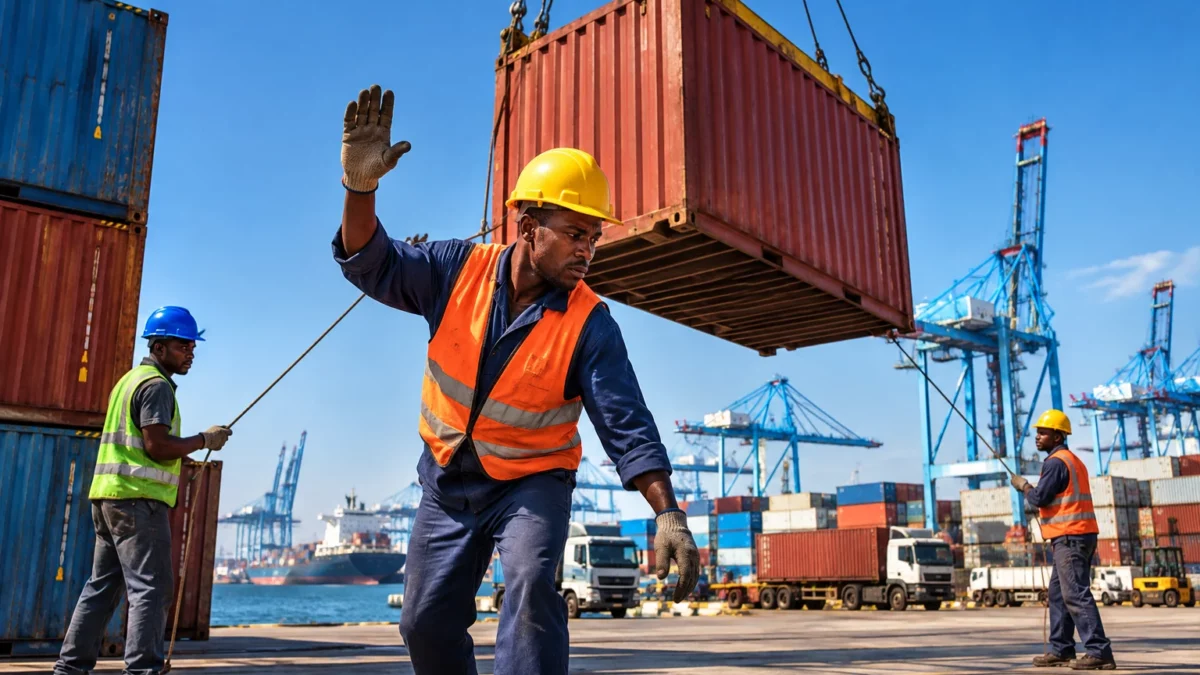
In Mogadishu, the rupture with Abu Dhabi is not playing out only in diplomatic salons. It also touches on ports, security agreements and the fragile balance between Somalia’s federal government and regional authorities. The expulsion of the UAE ambassador marks a new stage in this confrontation, without resolving its causes.
A diplomatic crisis rooted in sovereignty
Somalia is a federal republic, where the central government must work with member states and territories that have their own authorities. This division of powers is a regular source of tension. Partnerships struck directly between foreign actors and regional administrations can therefore be seen in Mogadishu as bypassing the federal government.
The country is also at the heart of strategic concerns in the Horn of Africa, between the Red Sea and the Indian Ocean. IGAD, the regional organisation bringing together East African states, monitors issues of stability and co-operation in this area. For Somalia, defending its territorial integrity remains a central concern, particularly since Somaliland declared independence in 1991, which Mogadishu does not recognise.
The issue became more contentious after Israel announced its recognition of Somaliland on 26 December 2025. Somalia denounced this as an infringement of its sovereignty. IGAD, for its part, reaffirmed its support for Somalia’s territorial unity. This does not in itself prove UAE involvement in the decision. Mogadishu nevertheless accuses the UAE of alleged interference and is concerned about its relations with the authorities of the breakaway region.
72 hours to leave the country
On Thursday 19 November 2026, the Somali government ordered the UAE ambassador to leave the country within 72 hours. It also recalled its own ambassador, who was based in Abu Dhabi, for consultations. The decision was announced by the Minister of Information, Culture and Tourism, Abdulfatah Qasim Mohamud, after a meeting of the Council of Ministers.
The minister presented the measures as a response to what the government considers an attack on national interests, territorial integrity and internal security. These are accusations made by the Somali authorities. They do not, in themselves, constitute independent proof of interference. Expelling an ambassador is a diplomatic escalation, but does not automatically mean a complete break in relations between the two countries.
Somali media, including Hiiraan Online, reported the expulsion and the recall of the Somali ambassador. The Associated Press also confirmed the measures and placed them in the context of deteriorating bilateral relations. The two sources therefore corroborate the main facts announced by the government.
The crisis did not begin this week. In January 2026, Mogadishu had already announced the cancellation of agreements with Abu Dhabi, notably in defence, security and the ports of Berbera, Bosaso and Kismayo. The decision showed that the dispute went beyond diplomatic exchanges: it also concerns infrastructure and how foreign partnerships are concluded and regulated.
Ports at the heart of the power struggle
Berbera is in Somaliland, whose authorities govern the territory in practice, while the Somali federal government considers it part of Somalia. Bosaso, in Puntland, and Kismayo, in Jubaland, are in other federal member states. Investments and agreements linked to these cities therefore do not all fall under the same political framework or involve the same counterparts.
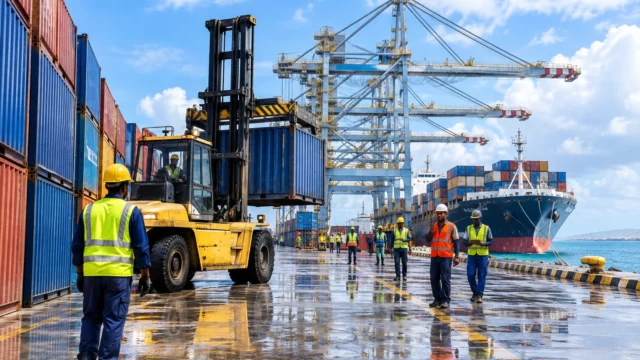
Ports are economic infrastructure, but also gateways to maritime routes and regional trade. For local authorities, an external partnership can bring investment, jobs or security capabilities. For Mogadishu, agreements concluded without its approval risk weakening federal authority. Residents, businesses and port workers, meanwhile, may bear the consequences of a suspension or renegotiation, without having taken part in the diplomatic decision.
Relations between Somalia and the UAE have also included forms of economic and security co-operation. The current crisis is putting these ties under strain, but the available information does not allow us to conclude that all relevant activities have ceased. Political announcements will need to be distinguished from their implementation, port by port and agreement by agreement.
A test for Somali federalism
The dispute exposes a long-standing institutional problem: who can negotiate with foreign partners on behalf of Somalia? The federal government is defending its role and authority over foreign relations. Regional leaders, for their part, are seeking to preserve their room for manoeuvre and economic ties. The ambassador’s expulsion strengthens Mogadishu’s position diplomatically, but does not resolve this internal disagreement.
What happens next will depend in particular on Abu Dhabi’s response and on Somali decisions concerning the agreements already contested. The reaction of the authorities in Somaliland, Puntland and Jubaland will also matter: their relations with the UAE are not the same as those of the federal government. In a region where ports and alliances are changing rapidly, this crisis will also test IGAD and the African Union, which are committed to the principle of territorial integrity but face divergent national and local interests.