Algeria
 Egypt
 Libya
 Morocco
 Sudan
 Tunisia
 Benin
 Burkina Faso
 Cabo Verde
 Côte d'Ivoire
 Ghana
 Guinea
 Guinea-Bissau
 Liberia
 Mali
 Mauritania
 Niger
 Nigeria
 Senegal
 Sierra Leone
 The Gambia
 Togo
 Cameroon
 Central African Republic
 Chad
 DR Congo
 Equatorial Guinea
 Gabon
 Republic of the Congo
 São Tomé and Príncipe
 Burundi
 Comoros
 Djibouti
 Eritrea
 Ethiopia
 Kenya
 Madagascar
 Malawi
 Mauritius
 Mozambique
 Rwanda
 Seychelles
 Somalia
 South Sudan
 Tanzania
 Uganda
 Angola
 Botswana
 Eswatini
 Lesotho
 Namibia
 Zambia
 Zimbabwe
Two attacks hundreds of kilometres apart struck South African communities on the night of Sunday 15 to Monday 16 November 2026. Behind the toll of 17 dead lies an urgent question: how can residents be protected without reducing these crimes to a single explanation, when investigations have only just begun?
Two provinces, two crime scenes
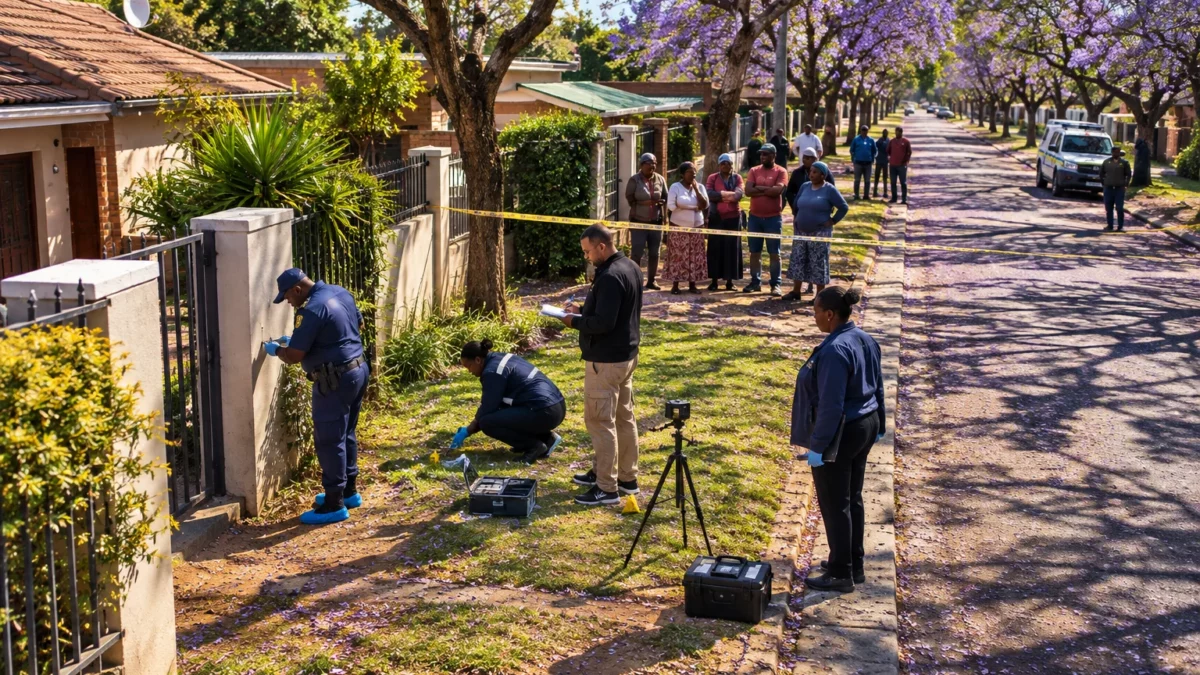
In Jeffsville, in the Atteridgeville neighbourhood, nine people were found dead in a four-room house. Police said six men and three women had been shot dead. They were alerted at about 7.30am on Monday. The shootings are believed to have taken place the previous evening, between 10pm and 11pm.
At the same time, in Sweetwaters, near Pietermaritzburg in KwaZulu-Natal province, eight men were found dead in a bullet-riddled vehicle. Investigators are trying to establish their identities and the circumstances of the attack. The two scenes are about 530 kilometres apart.
As of 16 November, no arrests had been announced in either case. The South African Police Service (SAPS) is conducting separate investigations. The information available does not establish a link between the attacks or confirm their motives. National authorities have announced additional investigative resources, including a multidisciplinary team for the Atteridgeville case. SAnews reports the first statements by the national police commissioner, while the SAPS has issued separate notices about the two scenes.
A lead, not yet a conclusion
In Gauteng, provincial commissioner Tommy Mthombeni raised the possibility of retaliation linked to an earlier shooting in Saulsville, a neighbouring area. That attack, which took place in December 2025, left 12 people dead and 13 injured. A man killed in Jeffsville was reportedly considered a person of interest in that earlier case. Mthombeni stressed, however, that investigators could not rule out a link: at this stage, it is a lead, not an established motive.
This distinction matters. Presenting the killings too soon as a settling of scores could shape public perceptions before the evidence has been gathered. Investigators must identify the victims, reconstruct their movements and determine whether the weapons used are linked to other crimes.
Gauteng premier Panyaza Lesufi said the province was working with the police and other public services. He also recalled an arrest made after an earlier shooting in Wedela, in the West Rand. That breakthrough, which he attributed to technological tools, does not, however, determine the outcome of the investigations launched after the 15 November attacks.
Communities at the forefront
The consequences extend beyond the sites of the shootings. Relatives are waiting for the victims to be identified and for answers about the circumstances of their deaths. In Jeffsville, national commissioner Fannie Masemola highlighted the difficulties that the neighbourhood’s layout can pose for police operations. He said the SAPS was working with the City of Tshwane and the relevant services. Investigations will therefore need to be accompanied by local co-ordination, without placing responsibility for the crimes committed on residents.
The two attacks also raise distinct issues. In Sweetwaters, the victims were found in a vehicle; the authorities have not publicly established why they were there or who targeted them. In Atteridgeville, a house in a residential neighbourhood was hit. In both cases, residents and families face uncertainty, while police must gather testimony and preserve physical evidence.
Caution is also needed when assessing the scale of the violence. Deadly shootings have regularly attracted considerable national attention in South Africa in recent months. But a tally of high-profile incidents alone is not enough to explain crime trends or how they are distributed. Police data and judicial investigations are still needed to distinguish confirmed facts from impressions created by the news.
A matter of security and trust
In the coming days, the key developments to watch are concrete: the identification of the Sweetwaters victims, any announcements of arrests, the results of ballistic tests and clarification of the retaliation lead raised in Gauteng. The authorities will also need to report on their progress without presenting a hypothesis as established fact.
For South Africa, these investigations raise questions about the ability of institutions to protect residents and be held to account, including in neighbourhoods where practical constraints can complicate police operations. The response cannot be measured solely by the number of arrests: it also depends on the quality of the investigations and the trust communities can place in them.
Across southern Africa, security and the movement of firearms are concerns for member states of the Southern African Development Community (SADC), which brings together countries in the region. The two shootings do not, however, prove either a cross-border link or a common origin for the weapons. For now, the established facts are more limited: two separate attacks, 17 dead and investigations that remain open.