Algeria
 Egypt
 Libya
 Morocco
 Sudan
 Tunisia
 Benin
 Burkina Faso
 Cabo Verde
 Côte d'Ivoire
 Ghana
 Guinea
 Guinea-Bissau
 Liberia
 Mali
 Mauritania
 Niger
 Nigeria
 Senegal
 Sierra Leone
 The Gambia
 Togo
 Cameroon
 Central African Republic
 Chad
 DR Congo
 Equatorial Guinea
 Gabon
 Republic of the Congo
 São Tomé and Príncipe
 Burundi
 Comoros
 Djibouti
 Eritrea
 Ethiopia
 Kenya
 Madagascar
 Malawi
 Mauritius
 Mozambique
 Rwanda
 Seychelles
 Somalia
 South Sudan
 Tanzania
 Uganda
 Angola
 Botswana
 Eswatini
 Lesotho
 Namibia
 South Africa
 Zambia
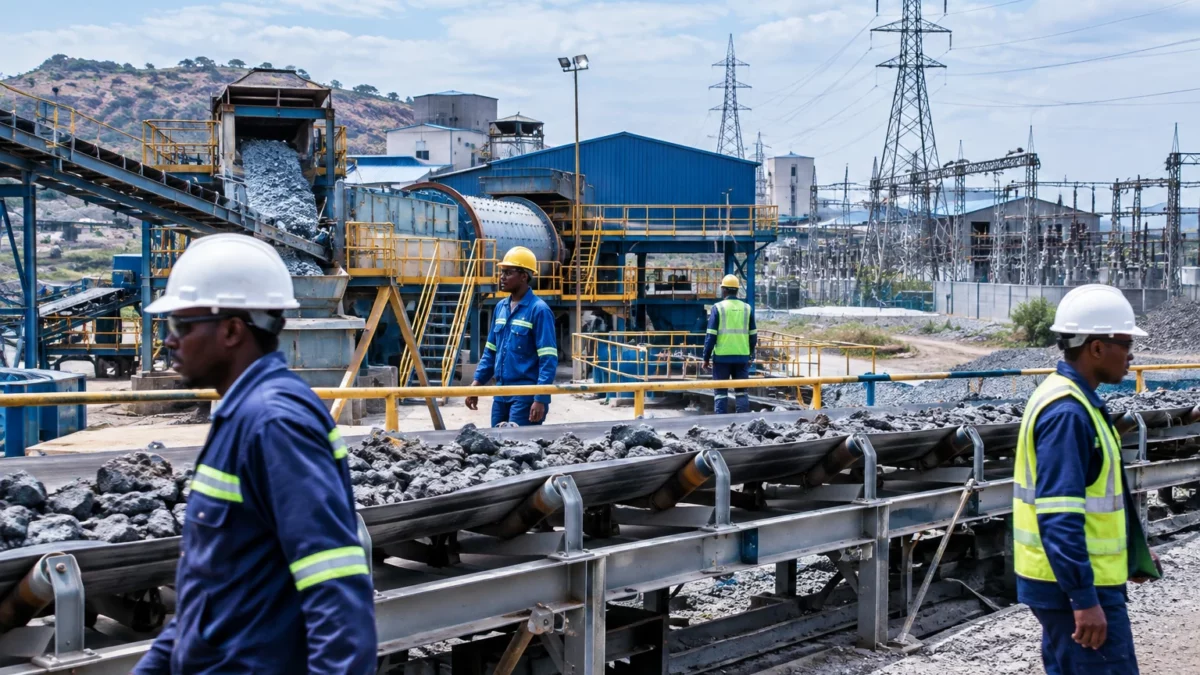
For Zimbabwe, the challenge in mining is not simply to extract more. The country wants to turn its resources into foreign currency, public revenue and local processing activity. The sector’s latest forecasts point to a sharp increase, but remain conditional on electricity, investment and global prices.
Mining ambitions on a southern African scale
Authorities in Harare have for several years looked to mining to support exports. The target of $12 billion a year was set in 2019, with an initial deadline of 2023. It was not reached by then. The country is now seeking to exceed that threshold through higher production and better use of existing facilities.
Zimbabwe operates in a regional landscape where mining revenues also shape trade and industrial choices. It is a member of the Southern African Development Community (SADC), which brings together countries in southern Africa for economic co-operation. Local mineral processing is a shared concern, particularly as countries seek to capture more value before exports.
Ambitious projections, but not revenues already recorded
On 16 November 2026, the Zimbabwe Chamber of Mines presented forecasts for mining revenues of $14.6 billion in 2027, compared with $13.6 billion expected in 2026. The forecasts were announced at a meeting attended by Mines Minister Polite Kambamura. They are based in part on increased production, more favourable prices and greater business confidence.
The Chamber also forecasts that production capacity utilisation will reach 91% in 2027, up from 76% in 2026. This measure indicates what share of installed production capacity would actually be used. These are sector projections, however, not established results. The Zimbabwean mining sector’s account and another local media outlet report the same estimates.
Recorded figures give a more concrete measure of the distance to be covered. According to the Reserve Bank of Zimbabwe, mining exports earned $7.31 billion in 2025, compared with $5.43 billion in 2024. The breakdown published by the bank shows diverging trends across minerals: gold revenues rose sharply, while those from lithium ore fell. Overall growth therefore does not mean that all subsectors are advancing at the same pace.
These recorded exports should also not be confused with projected mining revenues for 2026 and 2027. The available data do not make it possible to say that the indicators cover exactly the same scope. The central bank measures export earnings by sector; the Chamber’s forecast concerns mining-sector revenues. Reserve Bank of Zimbabwe statistics confirm the value of exports in 2025 and their annual increase.
Electricity, processing and local benefits
The growth outlook rests on several subsectors. Ferrochrome, coal and diamonds are presented as potential drivers, while gold and lithium remain important to the country’s mining performance. But increasing volumes requires mines to operate more consistently and fund their projects. The cost and availability of electricity, as well as access to capital, remain constraints flagged by industry players.
Local processing is another test. In the lithium sector, new facilities are expected to convert concentrates into more advanced products, such as lithium sulphate. The government has also announced a planned restriction on concentrate exports from 2027. The aim is to encourage processing at home, but success will depend on facilities actually coming on stream, their energy supply and sufficient commercial outlets.
Higher mining revenues can increase public income through royalties, taxes and other levies. Their benefits, however, are not automatically shared between the state, companies and communities near mining sites. Employment, procurement from local suppliers and the quality of infrastructure will also matter in measuring benefits beyond export figures.
Actual performance in 2026 will be the next indicator
For Zimbabweans, the gap between announcements and results will be decisive. The 2026 figures will show whether the promised increase is materialising, even before the 2027 target is assessed. They will also indicate whether the sector can produce more despite energy and financial constraints.
Across SADC, the issue highlights a central question for mineral-rich economies: how can they increase exports without remaining confined to selling minimally processed raw materials? Zimbabwe has set an ambitious goal. Its significance will depend less on forecasts alone than on actual production, the value created in the country and the revenue ultimately captured by the public finances.