Algeria
 Egypt
 Libya
 Morocco
 Sudan
 Tunisia
 Benin
 Burkina Faso
 Cabo Verde
 Côte d'Ivoire
 Ghana
 Guinea
 Guinea-Bissau
 Liberia
 Mali
 Mauritania
 Niger
 Nigeria
 Sierra Leone
 The Gambia
 Togo
 Cameroon
 Central African Republic
 Chad
 DR Congo
 Equatorial Guinea
 Gabon
 Republic of the Congo
 São Tomé and Príncipe
 Burundi
 Comoros
 Djibouti
 Eritrea
 Ethiopia
 Kenya
 Madagascar
 Malawi
 Mauritius
 Mozambique
 Rwanda
 Seychelles
 Somalia
 South Sudan
 Tanzania
 Uganda
 Angola
 Botswana
 Eswatini
 Lesotho
 Namibia
 South Africa
 Zambia
 Zimbabwe
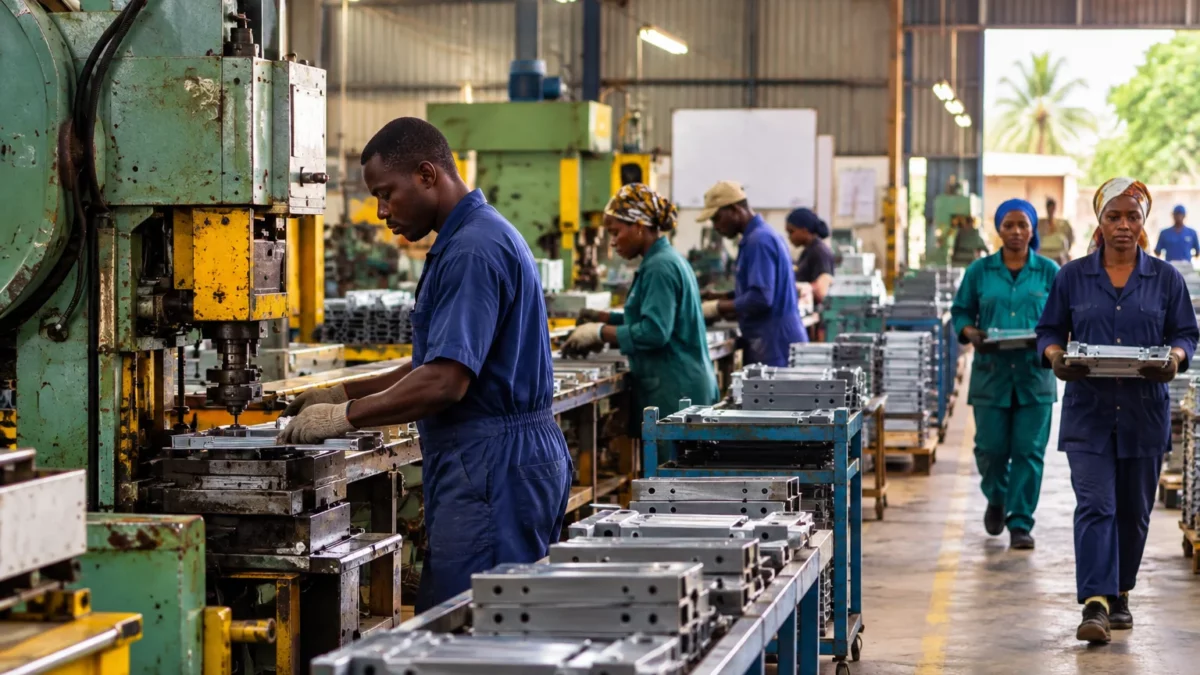
An investment approval does not build a factory. In Senegal, the gap between approved projects and those that become productive businesses has put implementation at the heart of efforts to attract investment.
The challenge goes beyond administrative procedures. It also involves distributing investment more evenly between Dakar and other regions, strengthening Senegalese businesses in value chains, and turning committed capital into jobs and local production.
A new framework within a broader national ambition
Included in the Senegal 2050 National Transformation Agenda, the new Investment Code replaces the 2004 framework. Law No. 2025-16 was adopted on 18 September 2025 and promulgated on 27 September. Its implementing decree, signed on 2 April 2026, was published in the Official Gazette on 25 April. The text aims in particular to modernise procedures and further territorialise investment, meaning distribute it more widely across the country.
The reform comes as the authorities seek to make the private sector a driver of economic transformation, in a context where project financing and the state’s budgetary headroom matter. It applies to domestic and foreign investors alike. But the challenge is also to give Senegalese businesses a concrete role, particularly as suppliers, subcontractors and industrial partners.
The regional dimension also matters. Senegal is a member of ECOWAS, the Economic Community of West African States, whose markets can broaden opportunities for businesses based in the country. To turn this advantage into reality, attracting capital is not enough: infrastructure, skills, market access and stable rules also count.
Approvals do not guarantee delivery
The record of the previous regime illustrates the problem. A study by the Directorate-General for Planning and Economic Policy, published in January 2025, estimates that total investment approved between 2004 and 2020 amounted to 17,114.7 billion CFA francs. It states that 56% of the amounts came from projects led by Senegalese promoters. These figures describe approved projects, not necessarily completed investments.
The source material cites an average annual implementation rate of 17.4%. This figure could not be corroborated in the public sources consulted; it should therefore be treated as an attributed figure, rather than an independently confirmed indicator. The distinction is essential: approval records a formalised intention, while implementation requires financing to be secured, land to be accessible, construction to be completed and operations to have actually begun.
The new Code retains some customs and tax benefits during the investment phase, but also changes the access rules and the regimes on offer. According to the published texts, certain investments of at least 15 million CFA francs must be registered. This threshold does not in itself mean that every registered business receives exemptions: eligibility depends on the conditions and procedures set out in the Code.
The decree also sets out the strategic investment and socially responsible investment regimes, as well as non-tax facilities. It regulates, in particular, access to land and vocational training. These instruments may address real obstacles, but their impact will depend on how they are applied, the transparency of decisions and the ability of government departments to monitor beneficiaries’ commitments.
Reducing concentration in Dakar
Geographical distribution is another test. According to a study by the Ministry of the Economy cited in the source material, the Dakar region accounted for 75% of approved investment between 2004 and 2020. This figure was not independently confirmed in the documents consulted. It nevertheless highlights a recognised challenge: businesses often favour locations where infrastructure, services and commercial networks are already available.
The Code provides for longer periods of benefits outside Dakar and Thiès: five years during the implementation phase, compared with three years in those two regions, according to the provisions cited. An additional period can improve a project’s cash flow, particularly before its first sales. But a tax incentive cannot replace a passable road, access to electricity, serviced land or public services.
The government’s strategy relies on economic hubs and developed zones to bring investment closer to regional resources and markets. Diamniadio, near Dakar, already hosts industrial activity. Other sites are being discussed in Médina Yoro Foulah and, in the longer term, in Touba. Their impact will depend on their facilities, links with local suppliers and the sustainable jobs created there. For people outside the capital, the promise will not be measured by the number of projects announced, but by the economic activity available in their region.
The decisive role of support
APIX, the public agency responsible for promoting investment and major works, is at the centre of implementation. The Code provides for decisions on approval applications within ten working days of receipt of a complete file. A digital platform is also intended to allow applications to be submitted and tracked remotely. The promised speed will nevertheless depend on files being complete and on coordination between government departments.
Financial preparation is just as important. A project needs a credible business model, partners and secure equipment before it can produce. Small and medium-sized enterprises may benefit from wider access to the schemes, but they sometimes have fewer resources to prepare applications or obtain credit. Support and clear criteria will therefore matter as much as exemptions.
The regulatory text also provides for monitoring approvals and the associated commitments. This is crucial: measuring investments actually made, rather than approvals alone, would make it possible to distinguish more clearly between announcements, construction work and operational businesses. Consolidated data expected from January 2027, mentioned in the source material, could provide an initial benchmark, if the calculation method and scope are made public.
A test for Senegal and the region
The Code will therefore not be judged solely on its ability to attract capital. It will be necessary to track the share of projects that actually get under way, the jobs created, the contribution of local businesses and the distribution of investment between regions. These indicators will also help show whether the reform supports production for the Senegalese market and West African trade.
For other ECOWAS countries, Senegal’s experience is a reminder of a common limitation of investment-attraction policies: tax incentives can attract attention, but they cannot replace project preparation and implementation. The transition from approval to production will thus be the real test of Senegal 2050, in Dakar as well as in the regions.