
 Algeria
 Egypt
 Libya
 Morocco
 Sudan
 Tunisia
 Benin
 Burkina Faso
 Cabo Verde
 Côte d'Ivoire
 Ghana
 Guinea
 Guinea-Bissau
 Liberia
 Mali
 Mauritania
 Niger
 Senegal
 Sierra Leone
 The Gambia
 Togo
 Cameroon
 Central African Republic
 Chad
 DR Congo
 Equatorial Guinea
 Gabon
 Republic of the Congo
 São Tomé and Príncipe
 Burundi
 Comoros
 Djibouti
 Eritrea
 Ethiopia
 Kenya
 Madagascar
 Malawi
 Mauritius
 Mozambique
 Rwanda
 Seychelles
 Somalia
 South Sudan
 Tanzania
 Uganda
 Angola
 Botswana
 Eswatini
 Lesotho
 Namibia
 South Africa
 Zambia
 Zimbabwe
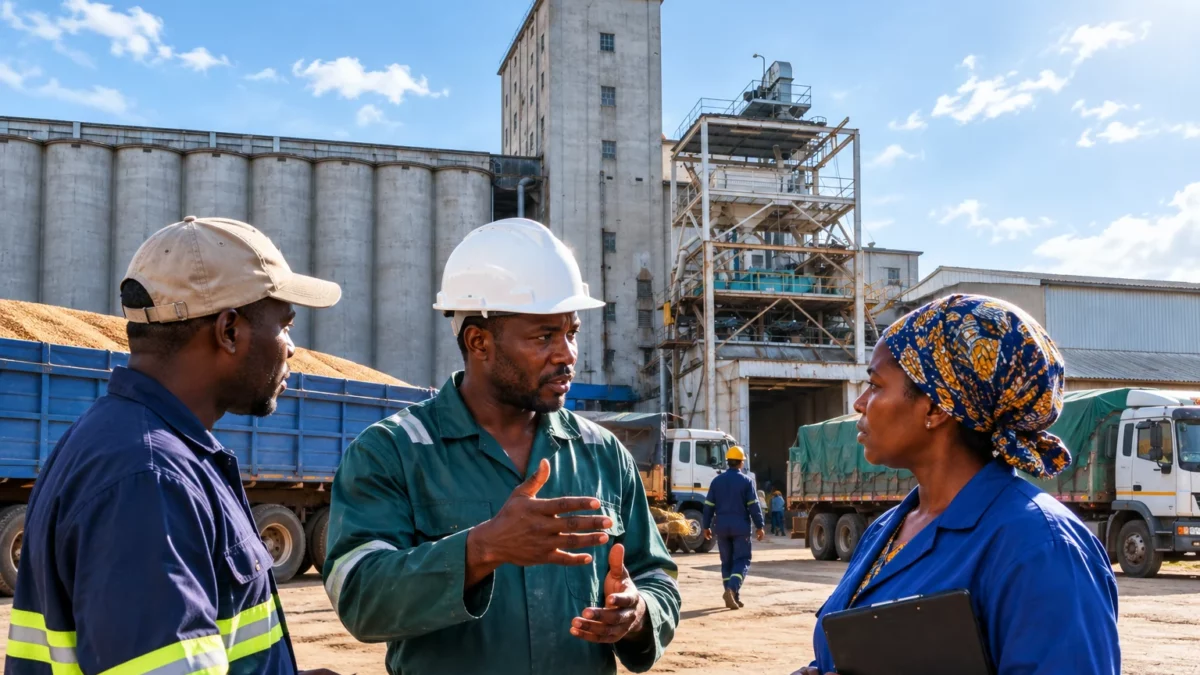
Can a new processing line help Nigeria produce more local rice without driving up prices for households? The commissioning of a large rice mill in Hadin, Jigawa State, adds another industrial facility. On its own, it will not resolve the difficulties undermining Nigerian producers and processors.
A strained domestic market
Nigeria is a major rice producer in West Africa. Yet its harvest does not meet all domestic demand. For the 2026-2027 season, the United States Department of Agriculture (USDA) forecasts production of 8.8 million tonnes and consumption of 9.1 million. Imports could reach 3.1 million tonnes, 11% more than in the previous season. These are forecasts, not a final assessment.
This reliance is also explained by the constraints facing the domestic supply chain: high input and transport costs, difficulties accessing energy, post-harvest losses and irregular supplies to mills. Land borders add another challenge. Processors complain that rice enters through smuggling routes, evading duties and potentially competing with local produce at lower prices.
The issue affects consumers concerned about the price of a staple food, farmers seeking a reliable market, and companies that need to keep their equipment running. It extends beyond Nigeria’s borders: rice trade and commercial routes connect the country with its West African neighbours, particularly Benin.
An integrated plant in Hadin
In Hadin, Jigawa State, Swiss equipment manufacturer Bühler has completed and handed over to Dangote Rice Limited a facility capable of processing 16 tonnes of paddy an hour. Paddy is harvested rice that still has its outer husk. The line brings together pre-cleaning, drying, storage, parboiling, milling and packaging.
Commissioning, announced in November 2026, brings to fruition a project launched with a groundbreaking ceremony in March 2018 by Nigerian industrialist Aliko Dangote. The cost of the facility has not been made public. However, a Jigawa investment-promotion register valued the Hadin project, which combines a mill and a commercial farming programme, at $150 million. This is therefore an estimate for the overall project, not a confirmed cost for the equipment.
The announced capacity is a processing rate, not a measure of the annual output actually sold. To turn paddy into marketable rice, the plant will need regular volumes, cost control and buyers. These conditions will determine whether installed capacity translates into a more plentiful local supply.
The challenge of linking farmers and industry
As early as 2014, the Dangote Group announced a $1 billion investment programme in rice production and processing. It envisaged farmland in several states and the construction of rice mills. In 2018, Aliko Dangote referred to six facilities with a combined capacity of 700,000 tonnes of parboiled rice a year. Available information does not establish whether all these projects were completed.
Supply security therefore remains central. In July 2025, Dangote Rice Limited and Niger Foods, a public company owned by Niger State, signed a ten-year partnership to develop 25,000 hectares and provide announced support to 50,000 farmers. In May 2026, the group said it had committed to buying one million tonnes of paddy over the duration of the agreement. These targets depend on implementation: land being developed, harvests being produced, transport organised and payments made.
An industrial buyer can give farmers greater certainty about selling their harvest. But the benefits are not automatic. Smallholders, particularly in rural areas, depend on purchase prices, access to seeds and fertiliser, as well as the availability of water and roads. For a mill, a supply contract is not enough if delivered paddy is too expensive or arrives irregularly.
Competition, prices and policy choices
The new facility is entering a sector whose margins are already under pressure. In March 2026, the director-general of the Rice Processors Association of Nigeria (RIPAN) said that nearly 90 of the roughly 150 recorded rice mills had ceased operations. According to his comments, reported by the Federal Ministry of Information, mills still operating were running at between 30% and 70% of capacity. These figures come from the trade association and reflect its own assessment of the sector.
Trade policy is also seeking a delicate balance. In 2026, Nigeria cut the stated tariff on imported rice in bulk or in packages weighing more than five kilograms from 70% to 47.5%. The government may be seeking to ease supply and contain prices. Local processors, meanwhile, fear that lower-taxed imports will intensify competition, especially if high production costs continue to disadvantage local rice.
For households, cheaper imported supply may offer some relief if lower prices are passed on to consumers. For farmers and mills, greater price pressure could reduce incomes and discourage production. Cutting duties therefore guarantees neither an immediate fall in shop prices nor an increase in the availability of local rice.
A test for the West African rice sector
The Hadin project will be judged less by its theoretical capacity than by its ability to operate consistently: the volumes of paddy purchased, sustained plant operations, commercial outlets and affordable prices. The coming farming seasons will also show whether partnerships with farmers and subnational authorities are put into practice.
Across ECOWAS — the Economic Community of West African States — the case illustrates a shared tension: securing supplies for consumers while giving regional producers and processors the means to remain competitive. For Nigeria, the Jigawa mill is another piece of industrial infrastructure. Its impact will depend on the whole chain, from field to market.



