Algeria
 Egypt
 Libya
 Morocco
 Sudan
 Tunisia
 Benin
 Burkina Faso
 Cabo Verde
 Côte d'Ivoire
 Ghana
 Guinea
 Guinea-Bissau
 Liberia
 Mali
 Mauritania
 Niger
 Nigeria
 Senegal
 Sierra Leone
 The Gambia
 Togo
 Cameroon
 Central African Republic
 Chad
 DR Congo
 Equatorial Guinea
 Gabon
 Republic of the Congo
 São Tomé and Príncipe
 Burundi
 Comoros
 Djibouti
 Eritrea
 Kenya
 Madagascar
 Malawi
 Mauritius
 Mozambique
 Rwanda
 Seychelles
 Somalia
 South Sudan
 Tanzania
 Uganda
 Angola
 Botswana
 Eswatini
 Lesotho
 Namibia
 South Africa
 Zambia
 Zimbabwe
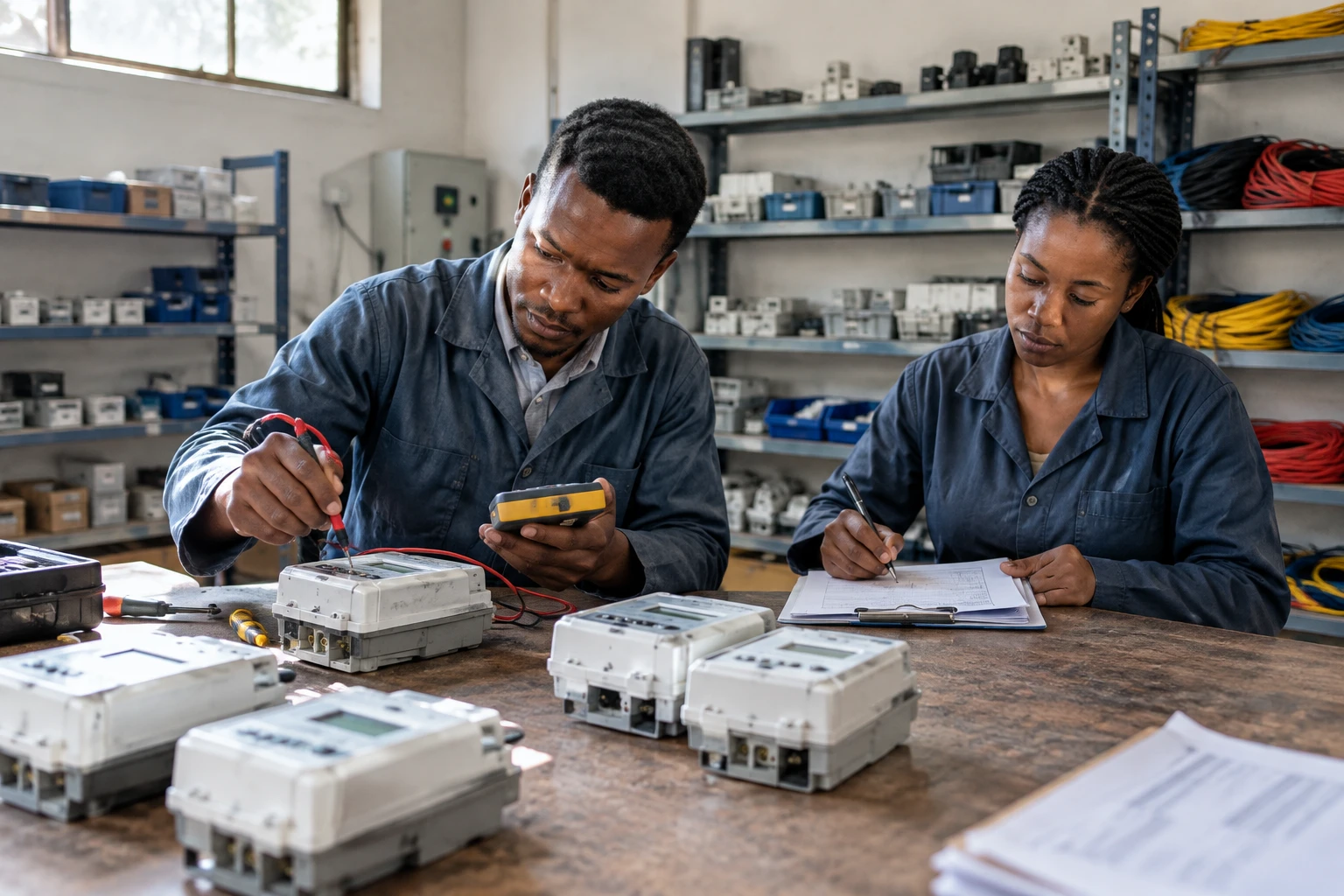
A dam can supply cities, industries and neighbouring countries without lighting every home. In Ethiopia, the gap between sharply rising electricity production and households’ still limited access reveals the central challenge: turning the megawatts generated into an accessible, reliable and affordable service.
Electricity capacity has yet to deliver universal access
In 2024, Ethiopia generated nearly 30 TWh of electricity, according to the International Energy Agency (IEA). Output has almost quintupled since 2010, mainly thanks to hydropower. The Grand Ethiopian Renaissance Dam (GERD), on the Blue Nile, has strengthened this capacity and the country’s standing in the regional electricity system. Hydropower accounts for most of the electricity fed into the national grid. The IEA’s review of Ethiopia’s energy policy highlights both this progress and the grid’s limitations.
Yet the IEA estimates that about 35% of the population had access to a basic electricity service, as defined by the agency, in 2024. By the same measure, nearly 85 million people remained without access. This figure does not mean that no infrastructure exists nearby: proximity to a power line guarantees neither a household connection nor a regular supply.
Not all indicators produce the same result. The World Bank reports an access rate of 56.6% in 2024 for its national indicator. The two figures are based on different methods and definitions. They should therefore not be conflated or presented as a straightforward contradiction: here, the IEA measures access to a basic service, while international datasets may include other sources or levels of access. This distinction matters when assessing progress and determining financing needs.
The last mile is costly, especially outside cities
Since the mid-2000s, the government has extended the grid to thousands of towns and villages. But building a power line is not enough to connect homes. The IEA says that nearly two-thirds of residents live within five kilometres of electricity infrastructure. Yet in rural villages already served by the grid, more than half of households are reportedly not connected.
The upfront cost is a major obstacle. Households must pay for the connection, internal wiring and necessary equipment, and then for the electricity they use. According to the IEA, about 85% of households without access could not afford both the connection fees and a basic level of electricity consumption during their first year of service. Rural households far from the grid are particularly affected; in cities, too, a nearby cable does not automatically make a connection affordable.
Supply quality also affects how electricity can be used. The IEA estimates that grid losses regularly exceed 20% of production and that power cuts remain frequent. Its satellite analysis suggests that in 2024 only 26% of the population lived in areas where electricity was available more than 75% of the time. About 66% lived in areas where it was available less than half the time. These estimates describe availability across areas, not the experience of each household.
The cycle is also financial. Low tariffs, high losses and irregular service reduce the revenues of state-owned utilities. A lack of resources then limits grid maintenance and upgrades, which can worsen outages and losses. For small businesses, workshops, health services and agricultural activities, an unreliable connection limits the ability to use electricity for production, storage or processing.
A national target that will test finances and the grid
Addis Ababa is targeting 75% access by 2030, followed by universal access in 2035. The IEA estimates that $9.6bn in investment in the electricity sector will be needed to meet the 2030 target. The national energy compact envisages more than 9.23 million additional connections. It relies on grid expansion, as well as mini-grids and standalone solar systems for remote communities.
Financing remains a challenge for implementation. Existing programmes are expected to deliver about 2.98 million of the targeted connections, according to data cited by the IEA. Additional resources must therefore be mobilised, and it must be made clear how they will be allocated between transmission networks, household connections, off-grid solutions and maintenance. In 2024, the World Bank announced a programme to support the sector, with a package of up to $1.4bn over ten years; its first phase includes a $522m credit. The PRIME programme aims, among other things, to strengthen the grid and operators’ capacity to connect new customers.
Geography also calls for different choices. In densely populated areas, upgrading distribution and subsidising connection fees can bring the grid closer to households. In isolated communities, a mini-grid or individual solar system can avoid waiting for a costly extension. But these solutions must provide an adequate and sustainable supply at tariffs compatible with local incomes. Access is not just a matter of installing equipment: it also requires maintenance and the replacement of faulty components.
From regional potential to reliable service at home
Ethiopian electricity crosses borders. The country is developing trade with its neighbours through the Eastern Africa Power Pool, which co-ordinates cross-border energy trade. These exchanges can generate revenue and make better use of generating capacity. But they do not replace the investment needed to deliver electricity to Ethiopian households. The IEA also notes that heavy reliance on hydropower exposes the system to hydrological fluctuations and the effects of climate change.
The national compact therefore plans to gradually diversify generation, particularly through solar, wind and geothermal power, while upgrading the grid. It also sets an ambition to reduce distribution losses. Ethiopia’s energy compact sets out targets for access, diversification and infrastructure upgrades.
The regional impact of Ethiopia’s project will therefore be measured on two levels: the country’s ability to export electricity, and its ability to turn investment into regular services for its people. By 2030, tracking completed connections, their cost to households and the frequency of power cuts will show whether rising generation capacity is finally being matched by more equitable access.