Algeria
 Egypt
 Libya
 Morocco
 Sudan
 Tunisia
 Benin
 Burkina Faso
 Cabo Verde
 Côte d'Ivoire
 Ghana
 Guinea
 Guinea-Bissau
 Liberia
 Mali
 Mauritania
 Niger
 Nigeria
 Senegal
 Sierra Leone
 The Gambia
 Togo
 Cameroon
 Central African Republic
 Chad
 DR Congo
 Equatorial Guinea
 Gabon
 Republic of the Congo
 São Tomé and Príncipe
 Burundi
 Comoros
 Djibouti
 Eritrea
 Ethiopia
 Kenya
 Madagascar
 Malawi
 Mozambique
 Rwanda
 Seychelles
 Somalia
 South Sudan
 Tanzania
 Uganda
 Angola
 Botswana
 Eswatini
 Lesotho
 Namibia
 South Africa
 Zambia
 Zimbabwe
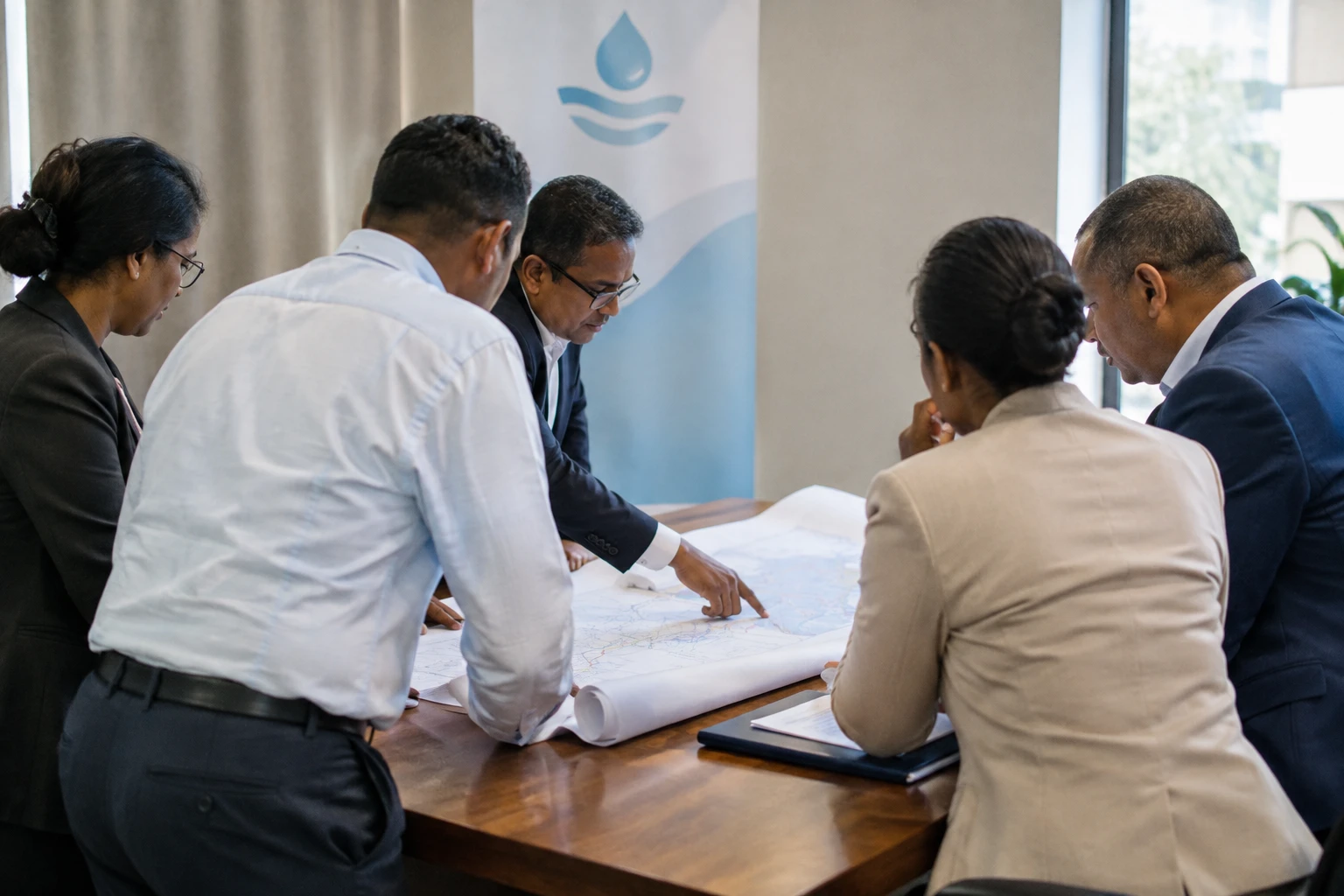
In Mauritius, the water shortage is measured not only by reservoir levels. It affects households, but also crops, hotels and electricity production. International funding announced in Port Louis is now intended to address the emergency while tackling weaknesses in the network.
An agreement still awaiting approval
On 10 November 2026, in Paris, Mauritian Prime Minister Navin Ramgoolam discussed a €120 million package with Christophe Lecourtier, chief executive of the French Development Agency (AFD). The proposed package would comprise a €100 million AFD loan and a €20 million European Union grant. The Mauritius Broadcasting Corporation and the Mauritian daily L’Express Maurice report the same amounts and breakdown.
The funding has not yet been secured, however. Approval by the AFD’s board remains necessary, with a decision expected next week, according to information published on 11 November. The discussions concern investments to improve drinking water production and distribution, reduce losses and manage resources more effectively. Further cooperation on waste and renewable energy is being considered from 2027.
Reserves fall sharply
Pressure on supply has intensified markedly. As of 8 October 2026, the island’s main reservoirs were 57.1% full, compared with 87.4% a year earlier. At Mare-aux-Vacoas, one of the main storage facilities, the level stood at 35.7%. These figures, reported by Mauritian media outlet Défi Media, are consistent with government data published a few days earlier: on 6 October, Mare-aux-Vacoas was 35.9% full, compared with 88.6% on the same date in 2025.
Low rainfall is contributing to the strain. According to Statistics Mauritius, the island received 3,402 million cubic metres of rainfall in 2025, 16.6% less than in 2024. Not all rainfall becomes usable reserves: some runs off or evaporates, while storage capacity and the condition of infrastructure determine what can be retained and distributed.
Demand is divided among several uses. In 2025, agriculture accounted for 31% of total water use, domestic, industrial and tourism needs for 37%, and hydroelectricity for 32%, according to Statistics Mauritius. Restrictions can therefore have different consequences in different places and sectors: households facing outages, farms dependent on irrigation, or businesses needing to secure their supply.
The challenge goes beyond drought
Water availability does not depend on the weather alone. The World Bank estimates that 61% of water produced in Mauritius generates no revenue. This indicator includes leaks, but also water consumed without being billed and other commercial losses. It points to a structural weakness in the network: producing more will not be enough if a large share of the water fails to reach users or is not properly accounted for.
The World Bank also notes that nearly 40% of goods exports and more than a quarter of Mauritian jobs depend on sectors that use large amounts of water, including tourism, agriculture and fishing. The announced investments could therefore protect both services for residents and activities that are vital to the economy. But the results will depend on the projects selected, their timetable and the authorities’ ability to measure the losses avoided.
At the same time, the authorities have introduced emergency measures: boreholes, mobile treatment units, water tankers and assistance with buying household water tanks. These solutions can ease pressure on the worst-affected areas, but they do not replace the renewal of pipes or sustainable demand management. Their effectiveness also depends on how water is allocated between areas, especially as reserves fall.
A regional issue for islands
Mauritius is a member of the Southern African Development Community (SADC), which brings together 16 states and organises some regional cooperation. The country’s island status gives it a particular profile: it cannot rely on a large river basin shared with its neighbours. Securing water therefore depends largely on its infrastructure, reserves and ability to anticipate droughts.
The issue highlights a broader challenge for African island and coastal countries: adapting networks to irregular rainfall, limiting losses and protecting people’s access without undermining productive activities. For Mauritius, the next concrete step will be AFD approval of the funding. The timetable for the works and their measurable impact on leaks and service continuity will then show whether the package addresses the immediate crisis while strengthening water security over the long term.