Algeria
 Egypt
 Libya
 Morocco
 Sudan
 Tunisia
 Benin
 Burkina Faso
 Cabo Verde
 Côte d'Ivoire
 Ghana
 Guinea
 Guinea-Bissau
 Liberia
 Mali
 Mauritania
 Niger
 Senegal
 Sierra Leone
 The Gambia
 Togo
 Cameroon
 Central African Republic
 Chad
 DR Congo
 Equatorial Guinea
 Gabon
 Republic of the Congo
 São Tomé and Príncipe
 Burundi
 Comoros
 Djibouti
 Eritrea
 Ethiopia
 Kenya
 Madagascar
 Malawi
 Mauritius
 Mozambique
 Rwanda
 Seychelles
 Somalia
 South Sudan
 Tanzania
 Uganda
 Angola
 Botswana
 Eswatini
 Lesotho
 Namibia
 South Africa
 Zambia
 Zimbabwe
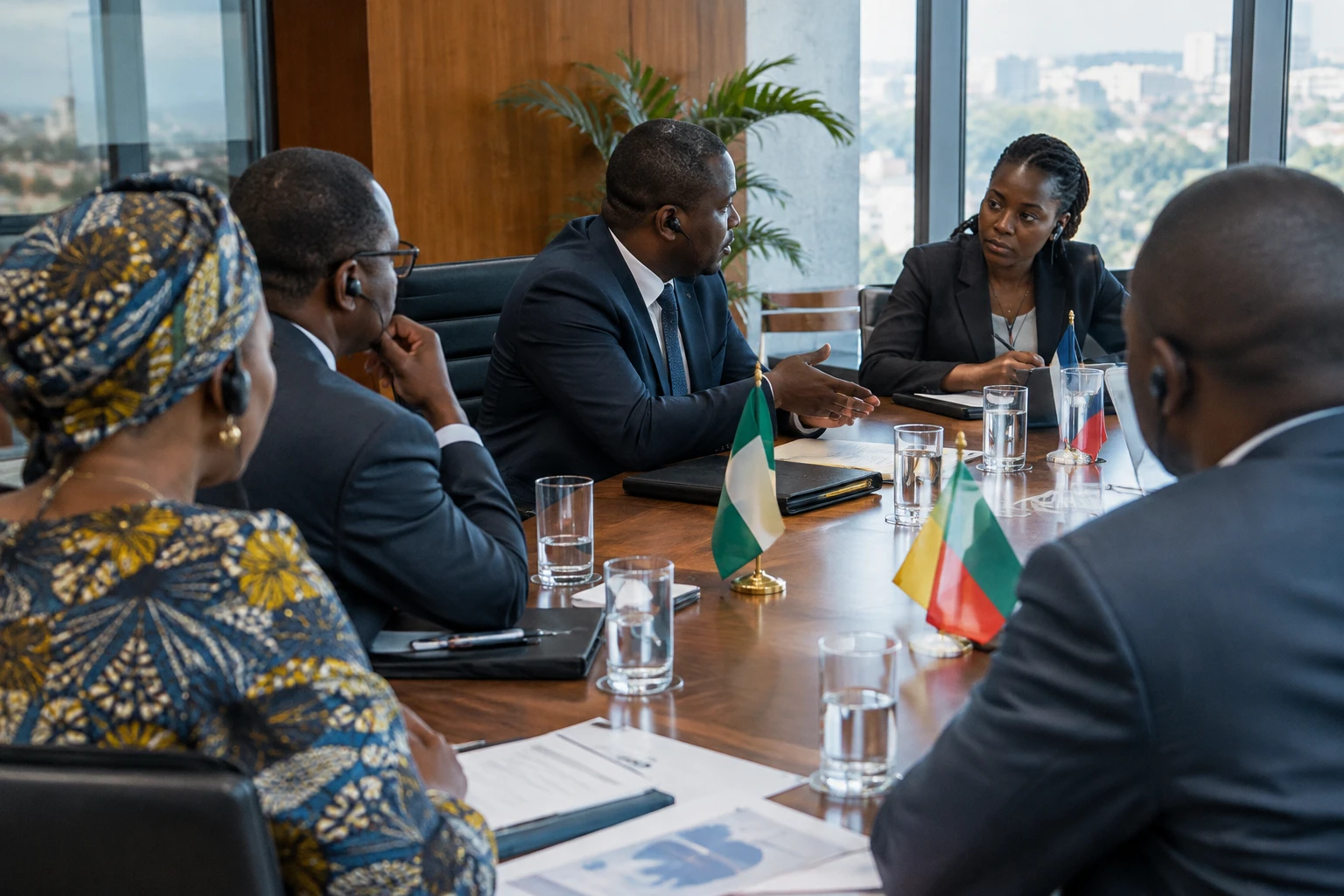
For a small Nigerian business selling abroad, receiving digital dollars can be quick and convenient. But from 5 November 2026, these payments can no longer escape foreign exchange rules when facilitated by a platform. The Central Bank of Nigeria (CBN) aims to improve oversight of transactions while imposing new requirements on industry players.
A market already embedded in trade
Stablecoins are digital assets designed to maintain a value linked to a currency, often the US dollar. In Nigeria, tokens such as USDT and USDC are used for cross-border transfers, supplier payments and exchanges between individuals on so-called P2P, or peer-to-peer, platforms.
Their growth has come amid severe currency pressures. The depreciation of the naira, inflation and difficulties accessing foreign currency have increased interest in dollar-pegged assets. After restrictions were imposed in 2021 on banks serving crypto platforms, some activity shifted to less regulated P2P channels.
The International Monetary Fund estimates that Nigeria received about $59 billion in cryptoasset-related flows between July 2023 and June 2024. It also accounts for nearly 60% of stablecoin inflows into sub-Saharan Africa since 2019. These figures measure digital-asset flows, not export earnings or foreign exchange reserves.
What the new rules change
The CBN framework, entitled “Regulations for the Operations of Non-Security Virtual Assets in Nigeria”, came into force on 5 November 2026. It covers digital assets not classified as securities, as well as related payment, transfer, custody and settlement services. The Securities and Exchange Commission retains its role in activities falling under capital markets.
For cross-border payments and transfers, the rules require express authorisation from the central bank. Operators must also comply with Nigerian foreign exchange rules, customer identification requirements and anti-money laundering obligations. The CBN may restrict tokens, customers, amounts or channels used. Thus, authorisation to trade an asset is not enough to permit its use as a means of payment.
Platforms facilitating P2P exchanges must obtain the required licences and specific approval. Before releasing tokens, they must verify that the name and Bank Verification Number (BVN), Nigeria’s national bank identifier, match the customer and the account used for payment in naira. Third-party accounts therefore cannot be used freely as intermediaries. The rules distinguish these facilitated transactions from direct private transfers between two people without a platform.
The CBN divides stablecoins into two categories. Tokens linked to the naira fall into class 1. Those linked to a foreign currency, including the dollar, fall into class 2. Issuing them in Nigeria requires a company incorporated in the country, a central bank licence and approval for each token. The announced minimum capital requirements are 10 billion naira for class 1 and 15 billion for class 2.
These thresholds apply to issuers, not to every exporter that accepts a stablecoin. Service providers face their own authorisation and capital requirements. The framework provides for a 180-day transition period for existing operators, according to reports published after the rules were released. Compliance does not therefore mean that every commercial transaction must be individually approved by the CBN: obligations depend on the activity and the intermediary’s role.
Between traceability and compliance costs
For Abuja, the aim is to gain a better understanding of foreign currency flows outside the usual banking channels. P2P data can influence the prices at which naira and digital dollars are exchanged. By requiring platforms to identify customers and monitor transactions, the central bank is seeking to reduce blind spots in payment and foreign exchange market oversight.
The system could, however, impose costs on businesses. Large companies and fintechs are better placed to afford legal teams, verification procedures and sufficient capital. For small exporters, online sellers and freelancers, access to an approved operator could become more complex or expensive. The impact will depend on the fees charged, the number of authorised providers and how quickly licences are issued.
Greater traceability may also conflict with the practical appeal of stablecoins: speed, availability and remote settlement. If authorised channels remain costly or difficult to access, some trading could seek less visible routes. This is a risk to monitor, not an outcome already demonstrated. The transition period will show whether volumes shift to compliant services or decline.
A test for the region
Nigeria is moving ahead in a regional context where cross-border payments remain fragmented across currencies, banks and national systems. ECOWAS, the Economic Community of West African States, is seeking to strengthen economic integration, but foreign exchange rules and financial supervision remain largely national. Nigeria’s framework could therefore attract the interest of other regulators, without constituting a common policy or a model already adopted across the region.
The regulation is also part of broader institutional coordination. In July 2026, Nigeria’s presidency announced a Virtual Assets Coordination Council, bringing together the CBN and SEC, among others, to clarify responsibilities between regulators. The practical implementation of the new rules, the first licences issued and the treatment of P2P platforms will be key indicators. For businesses and individuals alike, the balance will be between controlling flows, protecting users and maintaining accessible means of payment.